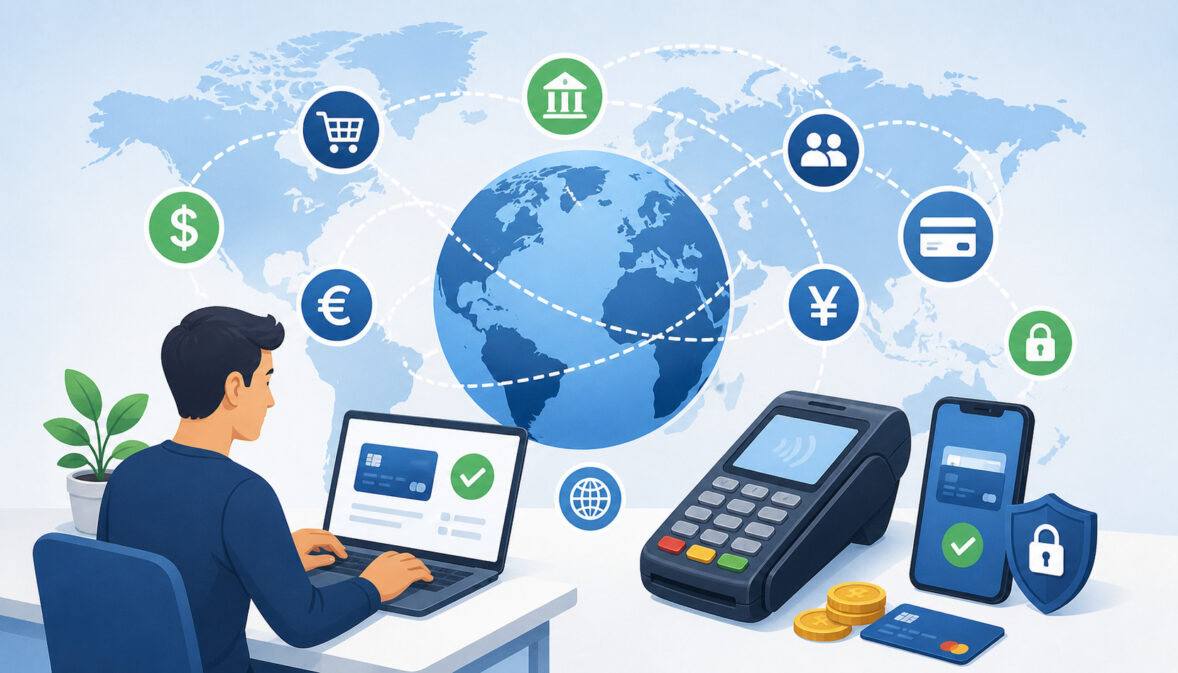
International payment processing helps businesses accept payments from customers, clients, and buyers in different regions. For ecommerce sellers, contractors, freelancers, service providers, and growing companies, this can open the door to larger markets, higher order volume, and more flexible ways to get paid.
But global payments come with more moving parts than local transactions. A customer may want to pay in a different currency. A card may be issued by a bank in another region.
A payment gateway may need to run fraud checks, handle currency conversion, confirm authorization, and route funds through several financial institutions before the money reaches your account.
That is why choosing the right international payment processing setup matters. It affects customer convenience, approval rates, payment settlement, fees, chargebacks, compliance requirements, payment security, and your ability to reconcile deposits accurately.
This global payment processing guide explains how the process works, what fees to expect, how to reduce risk, and how to choose global payment solutions that fit your business.
What Is International Payment Processing?
International payment processing is the process of accepting payments from customers located in different regions, using different currencies, banks, cards, wallets, or payment systems. It allows a business to sell products, services, subscriptions, invoices, or digital goods beyond its local market.
A transaction may be considered international when the customer’s payment method, issuing bank, billing address, currency, or payment network is connected to another region. This can happen even when the customer pays online and the business never physically ships anything.
International payment processing usually involves several tools working together:
- A payment gateway to securely collect and transmit payment details
- A payment processor to route the transaction through payment networks
- An international merchant account or acquiring relationship to receive funds
- Fraud prevention tools to review risk
- Currency conversion tools for foreign currency payments
- Settlement systems that deposit funds into the business account
For example, an ecommerce seller may display prices in one currency, allow the customer to pay in another, and receive settlement in a preferred currency.
A consultant may send invoices to overseas clients and accept card payments, bank transfers, or payment links. A digital service provider may use global ecommerce payments to support subscriptions from customers in several regions.
The goal is not only to “accept a payment.” A good setup should help the customer complete checkout confidently while helping the business control cost, reduce fraud, meet processor requirements, and understand how much money will actually arrive after fees and conversion.
How Cross-Border Payment Processing Works
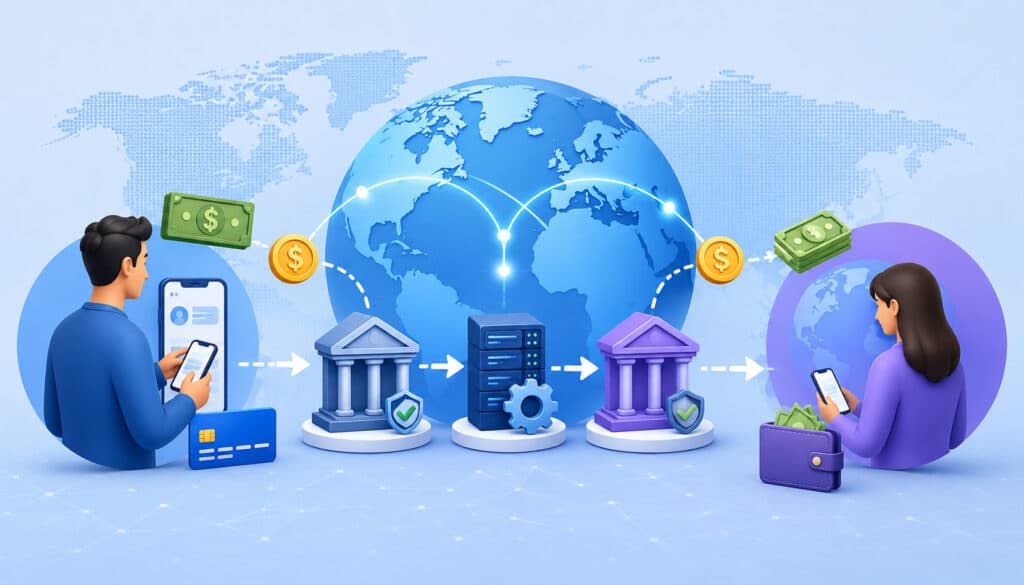
Cross-border payment processing follows a series of steps from checkout to deposit. While the customer may only see a few seconds of activity, the transaction moves through multiple systems behind the scenes.
At checkout, the customer enters payment details or selects a saved method, wallet, bank transfer, payment link, or invoice option. The payment gateway captures the information securely and sends it for authorization. Fraud tools may check billing details, device signals, order behavior, location patterns, and transaction velocity.
If the payment is approved, the transaction moves toward capture, clearing, currency conversion if needed, and payment settlement. Fees may be deducted at different points depending on the provider, payment method, and merchant agreement.
For merchants, the most important part is understanding that the amount paid by the customer may not be the same amount deposited. Currency conversion, cross-border payment processing fees, gateway charges, chargeback costs, and settlement fees can all affect the final amount.
For a deeper explanation of the merchant-side flow, this resource on how cross-border payments work for merchants is useful.
| Step | What Happens | Why It Matters |
| Customer checkout | Customer selects a payment method and currency | Impacts conversion and customer trust |
| Gateway capture | Payment details are securely collected | Protects sensitive payment data |
| Fraud review | Risk tools evaluate the transaction | Helps reduce fraud and chargebacks |
| Authorization | Issuer approves or declines the payment | Determines whether the sale can proceed |
| Currency conversion | Funds may be converted into another currency | Affects the final amount received |
| Clearing | Payment networks and banks exchange transaction data | Moves the payment toward settlement |
| Settlement | Funds are deposited into the merchant account | Impacts cash flow and reconciliation |
| Reporting | Fees, disputes, refunds, and deposits are recorded | Helps with accounting and margin tracking |
Payment Authorization
Payment authorization is the step where the customer’s payment method is checked and approved. For card payments, the transaction request usually travels from the payment gateway to the processor, then to the card network, and then to the customer’s issuing bank.
The issuing bank checks whether the account is valid, whether funds or credit are available, whether the transaction appears suspicious, and whether authentication is required. If the issuer approves the request, the payment can move forward. If not, the transaction is declined.
International authorization can be more complex because banks may treat cross-border transactions as higher risk. A mismatch between billing address, currency, device location, or merchant region can increase the chance of decline.
Businesses can improve authorization outcomes by using accurate billing fields, clear business descriptors, secure authentication, and payment gateways that support global routing and fraud tools.
Currency Conversion
Currency conversion happens when a transaction involves more than one currency. This may occur when the customer pays in their preferred currency but the business receives funds in another currency.
Conversion can affect the final amount because exchange rates fluctuate and providers may add a markup. Some processors convert at authorization, some at capture, and others at settlement. Each model can create different reporting and reconciliation outcomes.
For businesses, the key questions are:
- What currency does the customer see?
- What currency is the transaction authorized in?
- What currency is deposited?
- What exchange rate is used?
- What conversion fee or markup applies?
- Are fees shown separately or bundled into the rate?
Multi-currency payment processing can improve the customer experience, but it must be managed carefully. Displaying familiar currencies may increase trust, while poor FX transparency can reduce margins.
A helpful related resource is this guide to cross-border assessment fees vs currency conversion fees.
Settlement and Deposits
Settlement is the process of moving approved funds through banks, processors, payment networks, and merchant accounts until the money reaches the business. It is separate from authorization. A payment can be authorized quickly, but settlement may take longer.
Settlement timing depends on the payment method, risk profile, processor rules, currency, banking route, and whether additional review is needed. Card payments, bank transfers, wallets, wires, and local payment methods may all follow different settlement timelines.
Some providers settle in one default currency. Others offer multi-currency settlement, allowing businesses to hold funds in different currencies and convert later. This can be useful when a business pays suppliers, contractors, or expenses in multiple currencies.
Deposits should be reconciled carefully. The payout amount may include several transactions, refunds, chargebacks, processor fees, gateway fees, and currency conversion adjustments.
Common International Payment Methods
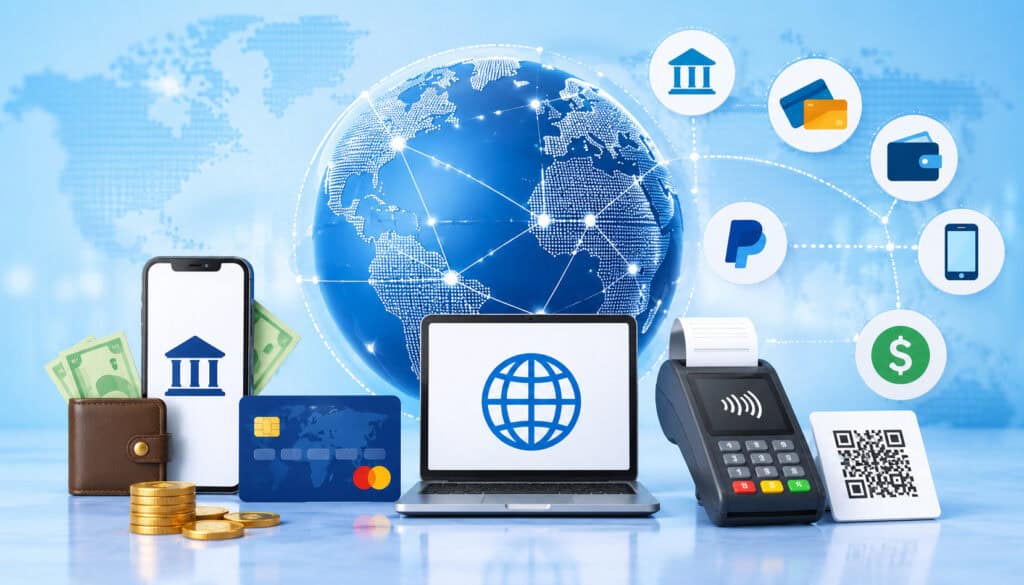
Businesses accepting international payments should offer methods that match how their customers prefer to pay. Cards are common, but they are not the only option. Depending on your business model, customer base, and transaction size, other payment methods may be more cost-effective or familiar.
Credit and debit cards are widely used for global ecommerce payments because they are fast and familiar. They are useful for ecommerce, subscriptions, digital services, and invoice payments. However, card payments can involve higher cross-border fees, fraud risk, and chargebacks.
Bank transfers may be useful for larger invoices, recurring business payments, or service contracts. They can sometimes cost less than cards, but settlement timing and customer experience vary. Wire transfers are often used for high-value payments, though intermediary bank fees and tracking issues can occur.
Digital wallets can improve checkout speed, especially on mobile devices. They may reduce typing, add authentication, and increase customer confidence. Local payment methods can also matter because customers in different regions may prefer bank-based payments, wallets, vouchers, QR payments, or real-time payment systems.
Payment links and invoices are helpful for contractors, agencies, consultants, freelancers, and service providers. Instead of building a full ecommerce checkout, the business can send a secure link where the customer pays online.
International payment systems may include:
- Credit and debit cards
- Digital wallets
- Bank transfers
- Wire transfers
- Local payment methods
- Payment links
- Hosted invoices
- Subscription billing
- Ecommerce checkout pages
- Marketplace payment tools
The best option depends on how customers buy. A freelancer may need simple invoice links. An ecommerce seller may need localized checkout. A software company may need subscription billing, account updater tools, and fraud monitoring.
Key Fees in International Payment Systems
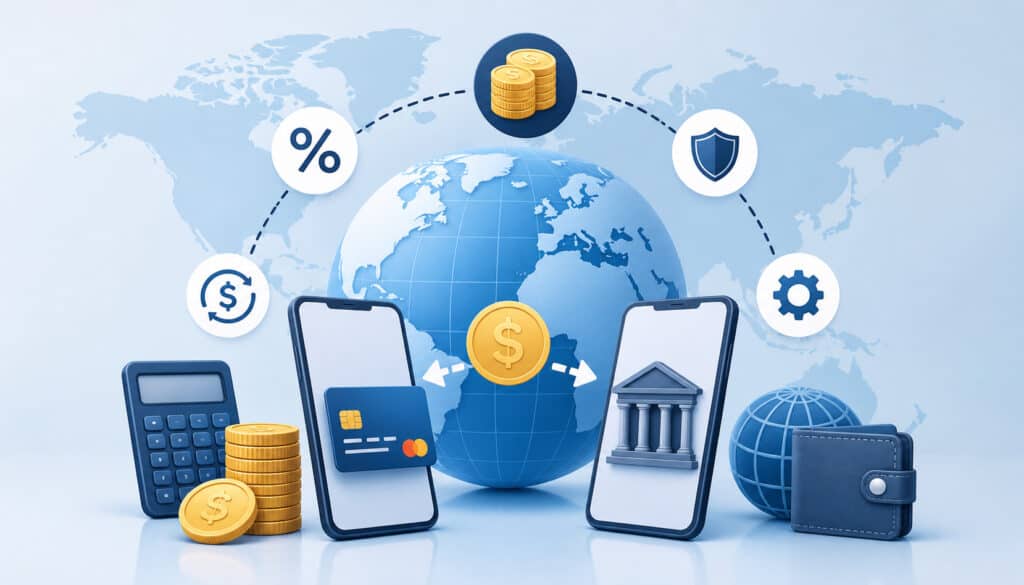
International payment systems can include several types of fees. Some are visible on statements, while others are bundled into exchange rates or deducted before settlement. Understanding these costs is essential because small percentages can reduce margins quickly when volume grows.
Common fees include processing fees, cross-border fees, currency conversion fees, chargeback fees, payment gateway fees, wire fees, monthly platform fees, refund fees, settlement fees, and optional fraud-tool fees.
A business may pay a transaction fee for each payment, such as a percentage plus a fixed amount. If the card or bank account is connected to another region, a cross-border fee may apply. If the transaction requires FX, a currency conversion fee or exchange-rate markup may also apply.
Chargebacks can create additional costs. Even if the business wins a dispute, the processor may still charge a dispute fee. Too many disputes can also lead to higher reserves, stricter review, or account restrictions.
Gateway fees may apply for access to hosted checkout, APIs, fraud tools, tokenization, subscriptions, reporting, or payment links. Wire transfers may involve sending bank, intermediary bank, and receiving bank fees.
For more detail on fee categories, this resource on common types of cross-border payment fees can help.
Cross-Border and Currency Conversion Fees
Cross-border and currency conversion fees are often confused, but they are not always the same. A cross-border fee may apply because the customer’s payment method and the merchant’s processing setup are connected to different regions. Currency conversion fees apply when one currency is exchanged for another.
A transaction can involve one, both, or neither depending on the setup. For example, a customer may pay in the merchant’s currency with a foreign-issued card. That may create a cross-border fee without merchant-side currency conversion. In another case, the customer pays in one currency and the merchant settles in another, creating FX costs.
These fees can vary based on:
- Card network
- Payment method
- Customer bank location
- Merchant acquiring setup
- Transaction currency
- Settlement currency
- Processor pricing
- Risk category
- Volume and contract terms
Businesses should ask providers whether cross-border fees are passed through, marked up, bundled, or included in a flat international rate.
Chargeback and Dispute Costs
Chargebacks happen when a customer disputes a transaction through their bank or payment provider. International chargebacks can be harder to manage because communication, shipping proof, billing descriptors, refund expectations, and banking rules may differ.
For physical goods, merchants may need delivery confirmation, tracking details, proof of shipment, customer communication, and refund records. For digital goods or services, businesses should keep login records, usage logs, signed agreements, IP data where appropriate, and clear service delivery documentation.
Chargeback fees can apply whether the merchant wins or loses. In addition to direct fees, disputes can create operational costs, lost product, refund exposure, and processor scrutiny.
To reduce disputes, businesses should use clear billing descriptors, transparent refund policies, accurate delivery timelines, confirmation emails, and responsive customer support.
Payment Security and Fraud Prevention
Payment security is essential for international payment processing. Cross-border transactions can attract higher fraud risk because fraudsters may exploit distance, unfamiliar merchants, different shipping regions, and weaker verification signals.
A secure payment gateway helps protect customer data by encrypting payment details, using tokenization, and reducing how much sensitive information touches the merchant’s systems. Tokenization replaces card data with a secure token, allowing businesses to process repeat payments without storing raw card details.
Fraud prevention tools can review transaction behavior before approval. These tools may check billing address, shipping address, device fingerprint, IP location, order velocity, customer history, card testing patterns, email risk, and unusual order values.
3D Secure can add another layer of cardholder authentication. Risk scoring can help separate normal customers from suspicious activity. Transaction monitoring can flag unusual patterns after payment. Refund controls can reduce abuse by limiting who can issue refunds and requiring approval for high-risk cases.
Strong payment security protects both the customer and the business. It can reduce fraud losses, prevent chargebacks, improve issuer trust, and support long-term processing stability.
For a related overview, see this guide on accepting global payments with minimal risk.
Protecting Customer Payment Data
Businesses should avoid manually storing card numbers, security codes, screenshots of payment details, or customer banking information. Manual storage creates unnecessary risk and can increase compliance obligations.
Instead, use secure payment tools that provide hosted checkout, encrypted fields, tokenization, and role-based access. A hosted checkout can keep sensitive card data away from your website. Embedded payment fields can preserve your checkout design while still protecting payment details.
Access should be limited to people who need it. Staff should not share payment logins, download unnecessary customer data, or process refunds outside approved systems. Strong passwords, multi-factor authentication, and audit logs can help protect payment accounts.
Businesses should also review plugins, checkout scripts, and integrations. Outdated software can create vulnerabilities that affect payment security.
Reducing International Payment Fraud
Reducing international payment fraud requires a balance between security and customer experience. If fraud rules are too weak, losses rise. If rules are too strict, legitimate customers may be blocked.
Start with basic verification. Compare billing details, shipping details, order history, device signals, and payment method behavior. Watch for unusual patterns such as multiple failed attempts, many cards from one device, urgent shipping requests, unusually large first-time orders, or mismatched contact details.
Use fraud filters thoughtfully. Set rules by risk level, product type, order value, region, and fulfillment method. High-value orders may need manual review, while low-risk repeat customers should not face unnecessary friction.
Keep documentation for every order. Save invoices, delivery records, emails, signed agreements, service confirmations, refund requests, and tracking information.
Clear refund and delivery policies also reduce fraud and disputes. Customers should know what to expect before they pay.
Compliance Considerations for Global Payments
Payment compliance means following the rules required by processors, payment networks, banks, data security standards, and applicable business obligations. This section is practical, not legal advice. Businesses should work with qualified professionals for specific regulatory questions.
Global payments may involve tax documentation, customer data protection, sanctions screening, export restrictions for certain products, prohibited business categories, refund rules, and processor underwriting requirements.
Even small businesses may face extra review if they sell regulated goods, digital services, subscriptions, high-ticket items, or products with elevated dispute risk.
Processors may ask for business documents, website policies, ownership details, fulfillment information, refund terms, and expected transaction volume. They may also review your website for clear pricing, contact information, terms, privacy practices, delivery timelines, and product descriptions.
Data privacy matters because international payment systems collect customer names, billing details, addresses, emails, device information, and transaction history. Businesses should collect only what they need, protect it securely, and avoid keeping payment information longer than necessary.
Sanctions and restricted-party screening may be relevant when selling into certain regions or handling high-risk goods. Export restrictions may apply to specific products, software, technical services, or controlled items.
How to Choose Global Payment Solutions
Choosing global payment solutions should start with your business model, not with the provider’s marketing page. The right solution for a freelancer sending invoices may not be the right solution for a marketplace, ecommerce brand, subscription company, travel business, agency, or B2B supplier.
Start by identifying where your customers are, what currencies they prefer, and how they expect to pay. Then review whether the provider supports those currencies, payment methods, local options, and settlement preferences.
Fees are important, but they are not the only factor. A low rate may not help if approval rates are poor, chargebacks are high, reporting is confusing, or settlement is slow. A slightly higher rate may be worthwhile if the provider improves conversion, reduces fraud, and simplifies reconciliation.
Evaluate global payment solutions based on:
- Supported currencies
- Payment methods
- Payment gateway quality
- Multi-currency payment processing
- International merchant account options
- Settlement timing
- Settlement currency
- FX transparency
- Fraud prevention tools
- Chargeback support
- Reporting and reconciliation
- Integrations with ecommerce, invoicing, accounting, or CRM tools
- Customer support
- Scalability
- Compliance documentation
A strong payment setup should help you grow without creating operational confusion.
Match Payment Methods to Your Customers
Customers are more likely to complete payment when the checkout feels familiar. That means familiar currencies, trusted payment methods, clear pricing, and a smooth mobile experience.
If customers usually pay by card, card acceptance is essential. If they prefer bank transfers, wallets, or local payment methods, offering only cards may reduce conversion. For invoices, payment links and bank payment options may be more practical than a full shopping cart.
Customer preference also depends on purchase type. A small digital purchase may work well with cards or wallets. A large B2B invoice may be better suited to bank transfer or wire. A subscription business may need saved payment methods, account updater tools, and automatic retry logic.
The goal is to reduce hesitation at the payment step. When customers understand the amount, currency, method, and confirmation process, they are more likely to complete the transaction.
Review Settlement Currency and Timing
Settlement currency and timing directly affect cash flow. Before choosing a provider, confirm when funds arrive, what currency they arrive in, and what fees are deducted before deposit.
Some businesses prefer one settlement currency because it simplifies accounting. Others benefit from multi-currency settlement because they also pay suppliers, contractors, or refunds in those currencies.
Timing matters too. Faster settlement may improve cash flow, but it may cost more or depend on risk review. Some processors delay settlement for new merchants, high-risk industries, unusual volume spikes, or elevated dispute activity.
Ask providers for sample reports. A good report should show transaction amount, customer currency, settlement currency, exchange rate, fees, refunds, chargebacks, and payout batch details.
Best Practices for Accepting International Payments
The best international payment processing setups combine customer convenience, cost control, security, and operational discipline. You do not need to build everything at once, but you should create a payment process that is clear, secure, and easy to manage.
Start with transparent pricing: Show customers the currency, total amount, taxes or extra charges where applicable, shipping costs, and refund terms before payment. Surprise costs create abandoned checkouts and disputes.
Use clear invoices and payment confirmations: Include invoice numbers, service descriptions, due dates, accepted payment methods, currency, and support contact details. After payment, send a receipt that matches the billing descriptor customers will see.
Maintain strong refund policies: Make them easy to find and consistent across checkout, invoices, terms, and support replies. For international customers, explain timelines because refunds and bank postings may take longer.
Keep delivery documentation: For goods, save tracking and delivery proof. For services, save agreements, approvals, project milestones, and communication history. For digital products, keep access logs and fulfillment records.
Reconcile deposits regularly: Match gross sales, fees, refunds, chargebacks, FX adjustments, and net deposits. This helps catch hidden costs and reporting errors early.
Useful best practices include:
- Display currency clearly
- Offer familiar payment methods
- Use secure payment gateways
- Confirm orders immediately
- Keep refund policies visible
- Monitor fraud patterns
- Review chargeback reasons
- Track effective payment cost
- Reconcile every payout
- Keep customer support responsive
Common Mistakes to Avoid
Many businesses start accepting international payments before they fully understand the cost, risk, and operational impact. That can lead to lower margins, higher disputes, accounting confusion, and poor customer experience.
One common mistake is ignoring currency conversion fees. A business may focus on the processor’s transaction rate but overlook FX markups. Over time, conversion costs can have a major impact.
Another mistake is offering only one payment method. If customers cannot pay in a familiar way, they may abandon the purchase or request manual alternatives. This is especially important for ecommerce, invoices, subscriptions, and high-value services.
Unclear refund policies also create problems. Customers who cannot find refund terms may file disputes instead of contacting support. International disputes can be more difficult to resolve because proof, timelines, and communication may be less straightforward.
Weak fraud controls are another risk. Businesses that approve every order without review may face card testing, stolen payment methods, chargebacks, and fulfillment losses. On the other hand, overly strict fraud rules can block legitimate customers.
Poor checkout localization can reduce trust. Missing currency clarity, confusing form fields, unsupported addresses, unclear shipping timelines, and unfamiliar payment pages can all hurt conversion.
Failing to reconcile deposits is also costly. If you do not track fees, FX, refunds, and chargebacks, you may not know your true profit per transaction.
Avoid these mistakes:
- Ignoring conversion fees
- Offering too few payment methods
- Using unclear refund policies
- Skipping fraud checks
- Failing to track chargebacks
- Not reviewing payment reports
- Accepting unsupported products or regions
- Choosing providers based only on headline rates
- Not testing settlement and refund workflows
- Overlooking customer support needs
FAQs
What is international payment processing?
International payment processing is the system businesses use to accept payments from customers in different regions or currencies. It can involve cards, bank transfers, digital wallets, local payment methods, payment gateways, merchant accounts, fraud tools, currency conversion, and settlement systems.
How do cross-border payments work?
Cross-border payments usually begin when a customer submits payment at checkout, through an invoice, or by using a payment link. The payment gateway securely captures the payment details and sends the transaction for authorization, fraud checks, currency conversion, clearing, and settlement.
What fees apply to international payments?
Common fees include processing fees, cross-border fees, currency conversion fees, payment gateway fees, wire fees, monthly fees, chargeback fees, refund fees, and settlement-related costs. Some fees are listed separately, while others may be included in exchange rates or deducted before payout.
Can businesses accept multiple currencies?
Yes, many payment providers support multi-currency payment processing. This allows customers to see or pay in different currencies, while the business may settle funds in one or more preferred currencies.
Are international payments secure?
International payments can be secure when businesses use trusted payment gateways, encryption, tokenization, fraud monitoring, authentication tools, and secure account access. Businesses should avoid manually storing payment details and use secure systems designed to protect customer data.
How long do international payments take to settle?
Settlement timing depends on the payment method, processor, currency, risk profile, banking route, and merchant account terms. Some payments may settle quickly, while others take longer due to clearing, currency conversion, review, or intermediary banks.
What is a payment gateway for global payments?
A payment gateway is the technology that securely collects and transmits customer payment information. For global payments, it may also support multiple currencies, fraud screening, payment routing, authentication, local payment methods, and settlement reporting.
How can businesses reduce international payment fraud?
Businesses can reduce international payment fraud by verifying billing details, monitoring unusual order patterns, using fraud prevention tools, enabling authentication when appropriate, keeping delivery proof, and setting clear refund policies.
Conclusion
International payment processing helps businesses accept payments across borders, support customer convenience, manage currencies, and grow into new markets. But it also introduces important decisions around payment methods, currency conversion, payment settlement, fees, fraud prevention, chargebacks, payment security, and compliance.
The right setup depends on your customers, business model, transaction size, risk level, settlement needs, and internal operations. A freelancer may need secure invoices and payment links.
An ecommerce seller may need localized checkout and global ecommerce payments. A subscription company may need recurring billing, tokenization, and strong fraud controls. A B2B service provider may need bank transfer options, clear invoices, and predictable deposits.
Start with the basics: choose reliable global payment solutions, support the payment methods your customers prefer, understand all fees, protect customer data, document transactions, and reconcile every payout. As volume grows, review approval rates, fraud trends, FX costs, disputes, and settlement performance.
International payments are not just a checkout feature. They are part of your customer experience, financial operations, and growth strategy. A thoughtful international payment processing setup can help your business get paid reliably, reduce avoidable costs, and build trust with customers wherever they are.