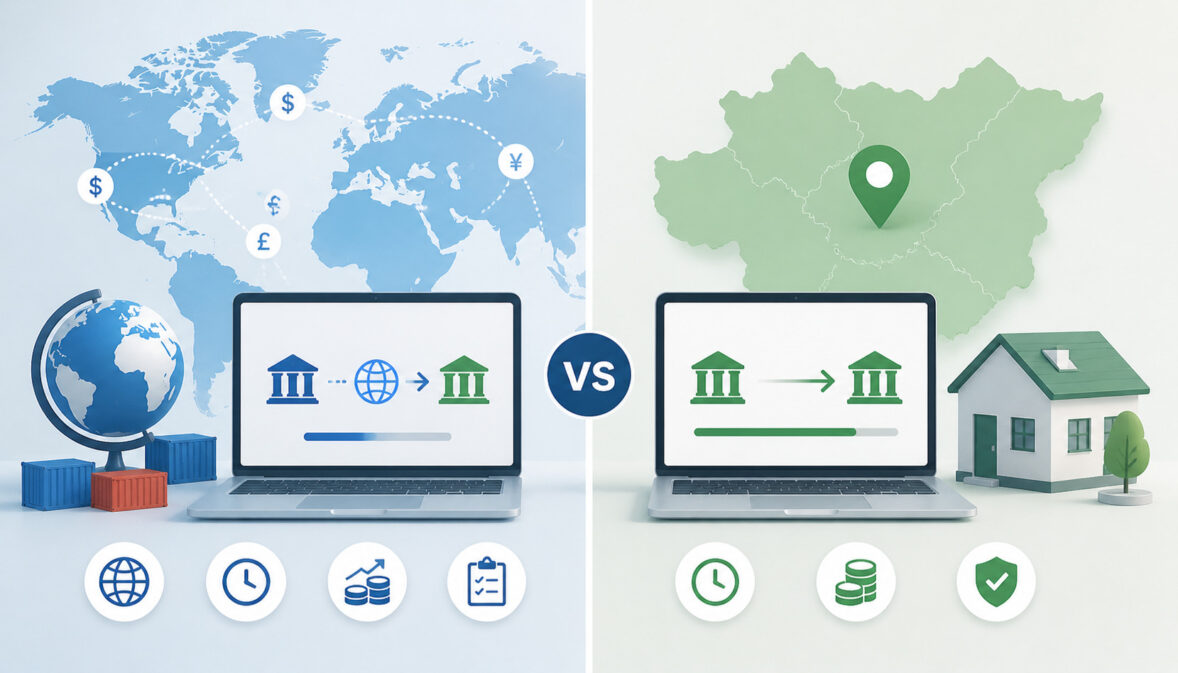
For any business that accepts payments, sends invoices, pays contractors, or sells online, understanding cross-border payments vs domestic payments is essential.
A payment may look simple on the surface, but the process behind it can affect how quickly funds arrive, how much the transaction costs, what compliance steps apply, and how much risk the business carries.
Domestic payments usually happen within one local financial system. Cross-border payments involve different countries, currencies, banking networks, payment gateways, and regulatory expectations.
That makes the difference between cross-border and domestic payments important for pricing, cash flow, reconciliation, fraud prevention, and customer experience.
A local invoice paid through a bank transfer may settle quickly with predictable fees. An international invoice may involve currency conversion, intermediary banks, extra verification, and higher transaction costs.
For ecommerce sellers, contractors, service providers, and growing businesses, the payment method chosen can directly affect margins and customer trust.
This guide explains domestic vs international payments in a practical way, including speed, fees, currency conversion, settlement, risk, compliance, and payment method selection.
What Are Domestic Payments?
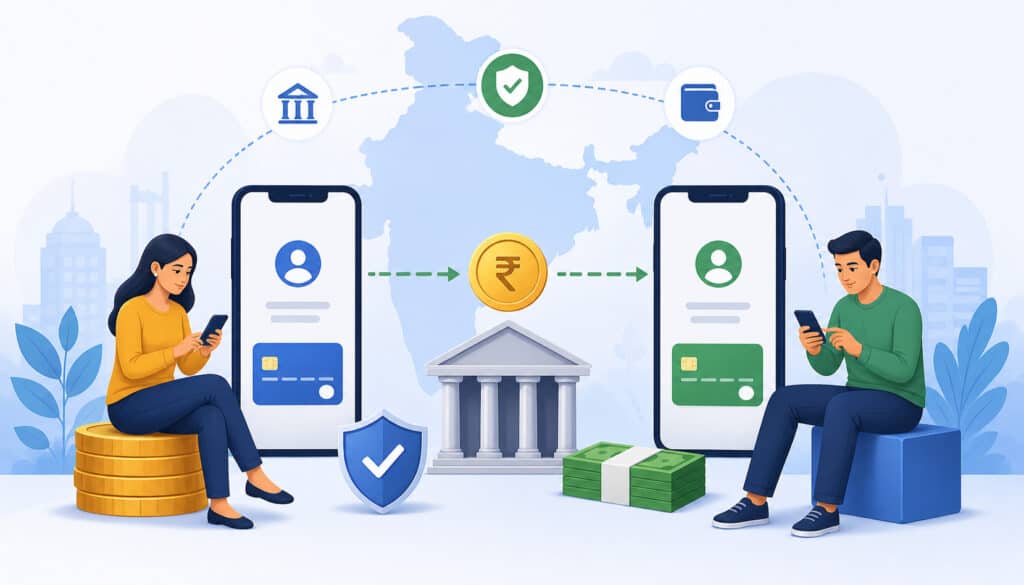
Domestic payments are transactions where the payer and recipient are located within the same national payment environment. In most cases, the payment uses the same currency, follows one set of local banking rules, and moves through familiar domestic payment methods.
Common domestic payment methods include:
- ACH payments
- Local bank transfers
- Debit and credit card payments
- Domestic wire transfers
- Checks
- Digital wallets
- Real-time or instant payment systems
- Local payment apps
For businesses, domestic payments are usually easier to manage because they are more standardized. The customer pays in the same currency the business expects to receive. The payment processor, bank, or gateway typically applies familiar rules for authorization, clearing, settlement, disputes, and reporting.
A service provider billing a local client may accept an ACH payment, card payment, or bank transfer. An ecommerce seller may accept domestic card payments through a payment gateway.
A contractor may receive funds through a digital wallet or bank transfer. These transactions can still involve fees, delays, chargebacks, or fraud checks, but the process is usually more predictable than an international payment.
Domestic payments also tend to be easier to reconcile. The invoice amount, payment amount, and deposited amount are often in the same currency. Fees may be deducted by the processor or bank, but businesses can usually estimate them with more confidence.
Domestic payments are not automatically risk-free. Card-not-present fraud, failed bank debits, disputed charges, and payment reversals can still happen. However, local regulations, familiar payment rails, and standardized dispute processes usually make domestic payments easier to monitor and manage.
What Are Cross-Border Payments?
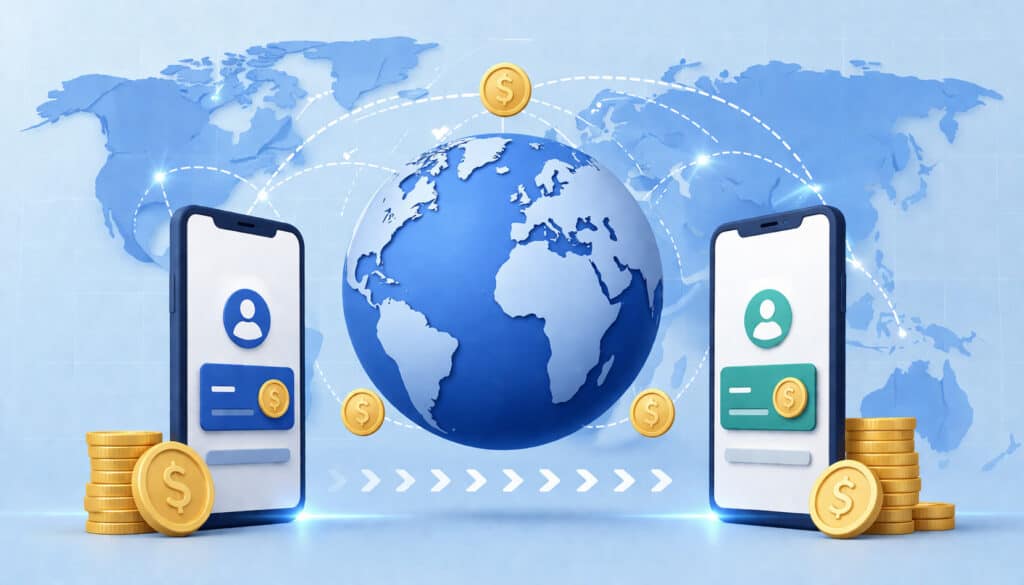
Cross-border payments are transactions where money moves between parties in different countries, different banking systems, or different currencies. A cross-border payment may involve an international customer paying a merchant, a business paying an overseas contractor, a marketplace sending payouts, or a company collecting payments from clients abroad.
Common cross-border payment methods include:
- International card payments
- International wire transfers
- Global payment gateways
- Multi-currency merchant accounts
- Cross-border digital wallets
- International bank transfers
- Marketplace payout systems
- Alternative local payment methods supported through global platforms
The main difference in a cross-border payment vs local payment is complexity. A domestic payment usually stays within one payment system. A cross-border transaction may involve multiple banks, card networks, acquiring banks, issuing banks, correspondent banks, currency conversion providers, fraud tools, and compliance checks.
Currency conversion is one of the most important factors. If the customer pays in one currency and the business settles in another, the transaction may include an exchange rate, conversion fee, or foreign exchange spread. The final amount received may differ from the amount expected if fees are not clearly understood.
Cross-border payments may also require additional data. Banks and payment providers may need beneficiary details, business names, addresses, purpose of payment, tax information, or compliance documentation. Missing or incorrect information can delay settlement or cause failed payments.
For a deeper look at international payment infrastructure, this guide on international payment gateways is a useful companion resource.
Cross-border payments help businesses expand beyond local customers, but they require planning. Without the right setup, international payment risks, hidden fees, longer settlement times, and reconciliation issues can reduce profit margins.
Cross-Border Payments vs Domestic Payments: Core Differences
The core difference between cross-border payments vs domestic payments comes down to payment routing, currency, cost, compliance, and risk. Domestic payments usually move through local systems with fewer parties involved.
Cross-border payments often travel through international payment systems, multiple financial institutions, and sometimes more than one currency.
For business owners, this difference affects everyday decisions. How should you price international orders? Should you accept cards from overseas buyers? What payment method should you use for international contractors? How long should you wait before shipping goods or starting work? How much should you reserve for fees?
Here is a practical comparison:
| Factor | Domestic Payments | Cross-Border Payments | Why It Matters |
| Currency | Usually one currency | May involve multiple currencies | Currency conversion can change the final amount received |
| Fees | Usually lower and more predictable | Often higher and more layered | Extra costs can reduce margins |
| Settlement time | Often faster | May take longer | Delays can affect cash flow |
| Payment routing | Local banks and processors | International banks, gateways, and intermediaries | More parties can mean more complexity |
| Compliance | Local rules | Local and international requirements | More checks may be needed |
| Fraud risk | Usually easier to assess | Often harder to verify | Businesses need stronger monitoring |
| Disputes | More standardized | Can be more complex | Chargebacks and reversals may be harder to manage |
| Customer experience | Familiar local methods | May require local currencies and payment options | Checkout friction can reduce conversions |
The difference between cross-border and domestic payments is not just distance. It is the number of systems involved. Every added layer can affect transaction speed, cost, transparency, and risk.
Transaction Speed and Settlement Time
Payment settlement time is one of the clearest differences between domestic and international payments. Domestic payments often settle faster because they move through local networks with standardized rules and fewer intermediaries.
For example, a domestic card transaction may authorize almost instantly and settle according to the merchant’s processor schedule. ACH payments may take longer than cards, but the timing is usually predictable. Domestic wire transfers may settle quickly, especially for high-value or urgent payments.
Cross-border payments can take longer because several additional steps may be involved. These can include currency conversion, compliance screening, correspondent banking, international routing, and time-zone cutoffs. Even when a payment is initiated quickly, the final settlement may not happen until all required checks and conversions are complete.
A cross-border wire transfer may pass through intermediary banks before reaching the recipient’s bank. Each bank may have its own processing schedule, cutoffs, and fees. A global payment gateway may simplify this experience, but the underlying payment still depends on international payment systems and settlement rules.
Settlement speed matters because it affects cash flow. If a business ships goods before funds are confirmed, it may carry more risk. If a contractor depends on international payments, a delay can create payment disputes or relationship issues. Businesses should set realistic payment terms based on the method used.
Fees and Costs
Domestic payments usually have lower and more predictable fees. A business may pay a standard card processing rate, ACH fee, bank transfer fee, or wire fee. While these costs still matter, they are often easier to estimate and include in pricing.
Cross-border payments can include additional charges. Common cross-border transaction fees may include:
- International card processing fees
- Cross-border assessment fees
- Currency conversion fees
- Foreign exchange spreads
- Intermediary bank fees
- Receiving bank fees
- Payment gateway fees
- Chargeback fees
- Compliance or investigation fees
These costs may appear separately or be built into the exchange rate. That makes cross-border payment pricing harder to evaluate. A provider with a low transfer fee may still apply a less favorable currency conversion rate. A card transaction may include both normal processing fees and cross-border costs.
For more detail, this guide to common types of cross-border payment fees explains how different fee layers can appear in international transactions.
Fees directly affect margins. If an ecommerce seller earns a small profit on each order, a currency conversion cost or cross-border card fee can make an international sale less profitable than expected. Businesses should review payment statements regularly and adjust pricing where appropriate.
Currency and Conversion
Domestic payments usually use one currency from start to finish. The customer pays, the business receives, and the accounting records match the same currency. This makes reconciliation easier.
Cross-border payments often involve currency conversion. A customer may pay in one currency while the business settles in another. A contractor may invoice in one currency but receive funds in a different one. A marketplace may collect payments globally and pay sellers after converting balances.
Currency conversion creates three key issues:
- The exchange rate used
- The timing of conversion
- The fee or spread added by the provider
Exchange rates can change throughout the day. If a payment is authorized at one rate and settled at another, the final amount may differ. Some providers lock the rate at checkout, while others convert at settlement. Businesses need to understand when conversion happens and who absorbs the cost.
Currency conversion also affects customer experience. Some buyers prefer to see prices in their own currency. Others may prefer to pay in the merchant’s currency if their card offers a better rate. Businesses should balance transparency, convenience, and cost.
Payment Methods Comparison
Payment method selection is a major part of comparing cross-border payments vs domestic payments. The same payment method may behave differently depending on whether it is used locally or internationally.
Cards, bank transfers, ACH payments, wire transfers, and digital payments all have different strengths. Cards are convenient and familiar for customers, but they can bring chargeback risk and higher fees.
ACH payments are useful for local recurring billing, but they are generally not a simple global solution. Wire transfers are useful for larger payments, but international wires may be expensive and slower. Digital wallets can improve convenience, but availability varies by market.
A business should not choose payment methods based only on popularity. The better question is: what payment method matches the transaction type, customer location, risk level, and cash-flow need?
For example, a local subscription business may prefer ACH payments for recurring billing because they are cost-effective. An ecommerce seller may prefer cards and digital wallets because customers expect fast checkout. A consultant billing international clients may prefer a global payment platform that supports multiple currencies and transparent fees.
Domestic Payment Methods
Domestic payment methods are usually simpler because they operate under one local framework. Businesses often have access to standardized banking details, familiar card rules, and predictable settlement schedules.
Common domestic payment methods include:
- ACH payments: Often used for invoices, payroll, subscriptions, and recurring billing.
- Domestic cards: Useful for retail, ecommerce, and service payments.
- Local bank transfers: Common for invoices and direct payments.
- Domestic wire transfers: Often used for high-value or urgent payments.
- Checks: Still used in some business workflows, although slower.
- Digital wallets: Convenient for consumer-facing payments and mobile checkout.
ACH payments are often attractive because they can be lower cost than card payments. However, they may not be instant and can fail if the payer has insufficient funds or incorrect account details. Card payments are convenient but may have higher processing costs and chargeback exposure.
Domestic payment tracking is usually easier because the payment reference, invoice currency, and settlement currency match. Accounting teams can reconcile deposits more efficiently and forecast cash flow with greater confidence.
Cross-Border Payment Methods
Cross-border payment methods require additional processing layers. These may include currency conversion, international routing, compliance checks, and coordination between multiple financial institutions.
Common cross-border payment methods include:
- International credit and debit cards
- Cross-border wire transfers
- Global payment gateways
- Multi-currency merchant accounts
- International digital wallets
- Local payment methods offered through global platforms
- Marketplace or platform payouts
International cards are convenient for customers, especially ecommerce buyers. However, card payments can include cross-border transaction fees, higher decline rates, and chargeback risk. Some international customers may prefer local payment methods that are more familiar in their market.
Cross-border wire transfers are often used for larger B2B payments, supplier payments, and contractor payouts. They can be reliable, but intermediary fees and settlement delays may create confusion if the recipient receives less than expected.
Global payment processing platforms can help businesses accept multiple currencies and payment methods through one system. These platforms may also provide fraud tools, reporting dashboards, and settlement options. However, businesses still need to understand fees, conversion rates, and payout schedules.
Security and Risk Factors
Security is important for all payments, but the risk profile changes when comparing domestic vs international payments. Domestic payments usually rely on familiar identity signals, local banking rules, and established dispute procedures. Cross-border payments may involve unfamiliar customer behavior, different fraud patterns, and more complex verification.
Payment security includes more than preventing stolen card use. Businesses must also consider account takeover, invoice fraud, fake supplier details, phishing, chargebacks, refund abuse, identity mismatch, and suspicious transaction patterns.
Payment gateways and processors often provide built-in security tools, such as tokenization, encryption, fraud scoring, address checks, device fingerprinting, velocity rules, and transaction monitoring. These tools are useful, but they must be configured based on the business model.
For cross-border transactions, fraud screening can be harder. A billing address, shipping address, card issuing location, IP address, and customer location may not all match. Sometimes this is normal. Other times, it signals risk. Businesses need rules that reduce fraud without blocking legitimate international customers.
Domestic Payment Security
Domestic payment security benefits from consistency. Payment providers can often evaluate risk using local patterns, familiar address formats, known banking identifiers, and standardized customer behavior.
For domestic card payments, businesses can use tools such as:
- Address verification
- Card security code checks
- 3D Secure where appropriate
- Fraud scoring
- Velocity limits
- Chargeback alerts
- Customer authentication
For ACH payments and bank transfers, businesses should verify account ownership where possible and protect stored banking details. Invoice-based businesses should also watch for payment redirection scams, where a fraudster changes bank details through a fake email.
Domestic payments may have lower complexity, but they still require strong internal controls. Staff should confirm large payment changes, secure customer data, and review unusual transactions.
Cross-Border Payment Risks
Cross-border payment risks are often higher because more parties, currencies, and regulations are involved. Fraudsters may exploit distance, unfamiliar markets, and verification gaps.
Common international payment risks include:
- Higher card fraud exposure
- Chargeback abuse
- Identity verification challenges
- Sanctions or restricted-party concerns
- Currency volatility
- Intermediary fee deductions
- Delayed settlement
- Failed payments due to incorrect banking details
- Disputes caused by unclear pricing or conversion costs
Cross-border ecommerce sellers may face increased chargebacks if customers do not recognize billing descriptors, misunderstand currency conversion, or experience shipping delays. Contractors and service providers may face delayed international invoices if bank details are incomplete or compliance checks pause the payment.
This resource on cross-border payment risks for merchants provides a deeper look at risk areas businesses should monitor.
Compliance and Regulations
Compliance is one of the biggest differences in cross-border payments vs domestic payments. Domestic payments generally follow local payment rules, banking standards, tax expectations, privacy requirements, and consumer protection laws. Cross-border payments may involve more than one legal and regulatory environment.
Cross-border payment compliance can include:
- Customer identity verification
- Business verification
- Anti-money laundering checks
- Sanctions screening
- Restricted activity monitoring
- Transaction reporting
- Tax documentation
- Data protection requirements
- Purpose-of-payment information
- Recordkeeping obligations
Businesses do not always handle these steps directly. Banks, processors, payment gateways, and platforms often manage much of the compliance process. However, businesses still need to provide accurate information and maintain clear records.
For example, an international wire transfer may require the recipient’s full legal name, bank name, account number, bank identifier, address, and payment purpose. If the information is incomplete or inconsistent, the payment may be delayed, returned, or investigated.
Compliance also affects onboarding. A global payment gateway may ask for business documents, ownership details, processing volume, industry information, and expected transaction locations. Higher-risk industries or unusual transaction patterns may require additional review.
Compliance should not be treated as a one-time setup task. Businesses should review payment activity, update customer records, monitor unusual transactions, and keep documentation for refunds, disputes, and audits. Good compliance practices also support better fraud prevention and smoother settlement.
Impact on Businesses
The practical impact of cross-border payments vs domestic payments shows up in daily operations. Payment method choice affects pricing, cash flow, customer satisfaction, accounting, fraud management, and growth strategy.
Domestic payments usually support stable operations. Businesses can forecast payment timing, understand fees, and reconcile deposits more easily. Cross-border payments open access to international customers, contractors, and suppliers, but they require more planning.
Key business impacts include:
- Cash flow: Settlement delays can affect working capital.
- Pricing: Fees and currency conversion must be included in margins.
- Customer experience: Local currencies and familiar methods can improve conversion.
- Accounting: Multi-currency reconciliation can add work.
- Risk management: International fraud and compliance checks require stronger controls.
- Operations: Refunds, disputes, and failed payments can take more time.
A business selling only locally may focus on domestic payment methods that reduce cost and improve convenience. A business selling internationally must decide which currencies to support, which payment gateways to use, and how to manage cross-border transaction fees.
For a broader explanation of transaction-level differences, see this guide on cross-border vs domestic transactions.
Managing Domestic Payments
Managing domestic payments is usually about efficiency, cost control, and customer convenience. Businesses should offer payment methods that match how customers prefer to pay while keeping fees manageable.
For invoices, bank transfers and ACH payments may reduce processing costs. For ecommerce, cards and digital wallets may support faster checkout. For high-value transactions, domestic wire transfers may provide speed and certainty.
Good domestic payment management includes:
- Clear invoices with due dates
- Accurate payment references
- Automated reminders
- Secure storage of customer payment data
- Reconciliation between invoices and deposits
- Monitoring for failed payments
- Chargeback tracking
- Regular fee review
Domestic payments can still create problems when businesses rely on manual tracking. Missed invoice references, delayed deposits, and unclear payment records can slow accounting. Payment software or integrated accounting tools can reduce these issues.
Managing Cross-Border Payments
Managing cross-border payments requires more attention to fees, currencies, settlement timing, and documentation. Businesses should decide how they will quote prices, collect funds, absorb fees, and communicate payment expectations.
Important cross-border payment decisions include:
- Which currencies to accept
- Whether to settle in one currency or multiple currencies
- Which payment gateways to use
- Whether to offer local payment methods
- How to handle currency conversion
- Whether to pass fees to customers or include them in pricing
- How long to wait before fulfilling an order
- How to manage international refunds
International invoices should be especially clear. They should state the currency, amount due, payment method, bank details, payment deadline, and responsibility for any transfer fees. If the payer sends a wire transfer, the invoice should clarify whether intermediary bank fees may reduce the received amount.
Businesses should also review international payment performance. If certain countries, currencies, or payment methods create frequent declines, chargebacks, or delays, the business may need better routing, stronger fraud checks, or clearer checkout messaging.
How to Choose Between Domestic and Cross-Border Payment Methods
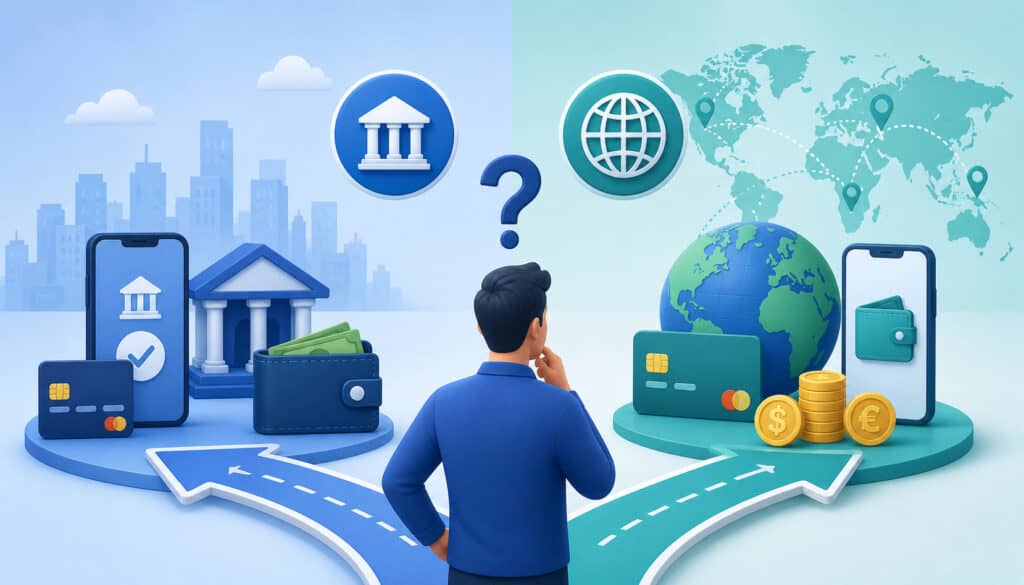
Choosing between domestic and cross-border payment methods depends on where your customers, clients, contractors, or suppliers are located. It also depends on transaction size, currency, urgency, risk tolerance, and operational capacity.
Start with the payment use case. A small ecommerce purchase, a recurring subscription, a contractor payout, and a high-value supplier invoice may each require a different method.
Consider these questions:
- Is the payer local or international?
- Is the payment one-time or recurring?
- What currency does the payer prefer?
- What currency does the business need to receive?
- How quickly must funds settle?
- How much fee variation can the business tolerate?
- Is the transaction high risk?
- Is the customer familiar with the payment method?
- Will the payment need to be refunded or disputed?
For local customers, domestic payment methods are usually the best first choice. ACH payments, local cards, bank transfers, and digital wallets are familiar and often cost-effective.
For international customers, businesses should think beyond simply “accepting cards.” A strong cross-border setup may include multi-currency pricing, global payment gateways, localized checkout, fraud screening, and clear settlement reporting.
High-value B2B transactions may be better suited to wire transfers or bank-based methods, especially when both parties need detailed records. Lower-value consumer transactions may work better through cards, wallets, or local payment options.
The best payment strategy is flexible. As a business grows, it may need to add new currencies, switch gateways, negotiate pricing, or use different providers for different regions. Regular review helps keep payment operations aligned with business goals.
Best Practices for Handling Both Payment Types
Businesses that handle both domestic and cross-border payments need a consistent payment strategy. The goal is not just to accept payments, but to accept them in a way that protects margins, improves cash flow, and creates a better customer experience.
Start by documenting your payment process. List every method you accept, the fees involved, settlement timelines, refund rules, and dispute procedures. This helps staff answer customer questions and reduces confusion when payments fail or settle late.
Best practices include:
- Offer multiple payment options where appropriate.
- Use secure payment gateways with fraud tools.
- Show currency and total cost clearly before payment.
- Track fees by payment method.
- Review settlement reports regularly.
- Use invoice numbers and order references.
- Set clear payment terms for international clients.
- Monitor chargebacks and failed payments.
- Keep customer and business records updated.
- Review provider pricing and exchange rates periodically.
Payment gateways can simplify both domestic and international payment processing. However, businesses should still understand how each gateway handles settlement, conversion, refunds, chargebacks, and reporting.
For international payments, transparency is especially important. Customers should know what currency they are paying in, whether conversion may apply, and how refunds are handled. Businesses should know whether they receive funds gross or net of fees.
Automation can also help. Integrated invoicing, accounting, and payment systems reduce manual errors. Automated reconciliation can save time, especially when handling multiple currencies and payment methods.
Common Mistakes to Avoid
Many payment problems happen because businesses treat cross-border payments like domestic payments. The checkout may look similar, but the cost, risk, settlement, and compliance requirements can be very different.
One common mistake is ignoring currency conversion. A business may focus on the transaction fee but overlook the exchange-rate spread. Over time, this can reduce margins more than expected.
Another mistake is failing to offer suitable local payment options. International customers may abandon checkout if they do not recognize the payment method, cannot pay in a familiar currency, or worry about hidden fees.
Businesses should avoid these mistakes:
- Assuming international payments settle as quickly as domestic payments
- Ignoring cross-border transaction fees
- Overlooking currency conversion costs
- Using unclear international pricing
- Not explaining who pays transfer fees
- Accepting high-risk payments without fraud controls
- Shipping goods before payment risk is understood
- Failing to reconcile multi-currency deposits
- Using weak billing descriptors
- Not reviewing chargeback patterns
- Treating all international markets the same
Weak fraud protection is another serious issue. Businesses may either approve too many risky transactions or block too many legitimate customers. Both outcomes are costly. Fraud rules should be adjusted based on transaction value, customer history, payment method, and region.
Poor tracking can also create hidden losses. If a business does not separate domestic and international payment costs, it may not know which channels are profitable. Payment reporting should show fees, settlement timing, refunds, failed payments, and disputes by method and currency.
FAQs
What is the difference between cross-border and domestic payments?
Domestic payments happen within one local payment environment, usually using one currency and one set of banking rules. Cross-border payments involve different countries, currencies, banking systems, or international payment networks.
Why are cross-border payments more expensive?
Cross-border payments are often more expensive because they may include currency conversion, international card fees, intermediary bank charges, payment gateway fees, and additional compliance checks.
How long do cross-border payments take?
Cross-border payment settlement time depends on the payment method, currency, provider, banking route, and verification checks. Some payments are fast, while others may take longer due to intermediary banks or currency conversion.
Are domestic payments more secure than international payments?
Domestic payments are not automatically more secure, but they are often easier to monitor because they use familiar local rules and payment systems. International payments may involve more fraud, compliance, and verification challenges.
What payment methods are best for cross-border transactions?
The best methods depend on the transaction type. International cards, global payment gateways, multi-currency accounts, digital wallets, and wire transfers are commonly used for cross-border transactions.
How can businesses reduce international payment costs?
Businesses can reduce costs by comparing payment providers, reviewing exchange rates, using multi-currency tools, offering local payment methods, reducing failed payments, and tracking cross-border transaction fees.
Do all businesses need cross-border payment systems?
No. Businesses that only serve local customers may not need cross-border payment systems. However, businesses that sell online, work with international clients, or accept foreign-issued cards may benefit from them.
What are common risks in cross-border payments?
Common risks include fraud, chargebacks, currency conversion losses, delayed settlement, intermediary bank fees, failed payments, compliance reviews, and unclear customer expectations.
Conclusion
Cross-border payments vs domestic payments differ in speed, cost, complexity, compliance, currency handling, and risk. Domestic payments usually move through familiar local systems with more predictable fees and settlement timelines.
Cross-border payments can open valuable growth opportunities, but they require more planning because they may involve currency conversion, global payment processing, international payment systems, added fees, and stronger risk controls.
For business owners, contractors, service providers, and ecommerce sellers, the right payment method can improve cash flow, protect margins, and create a smoother customer experience. The key is to understand how each payment type works, compare total costs, choose secure payment gateways, and set clear terms before money moves.
A strong payment strategy does not treat every transaction the same. It matches the payment method to the customer, currency, transaction value, settlement need, and risk level. Businesses that understand both domestic and cross-border payments are better prepared to grow, serve more customers, and manage payments with confidence.