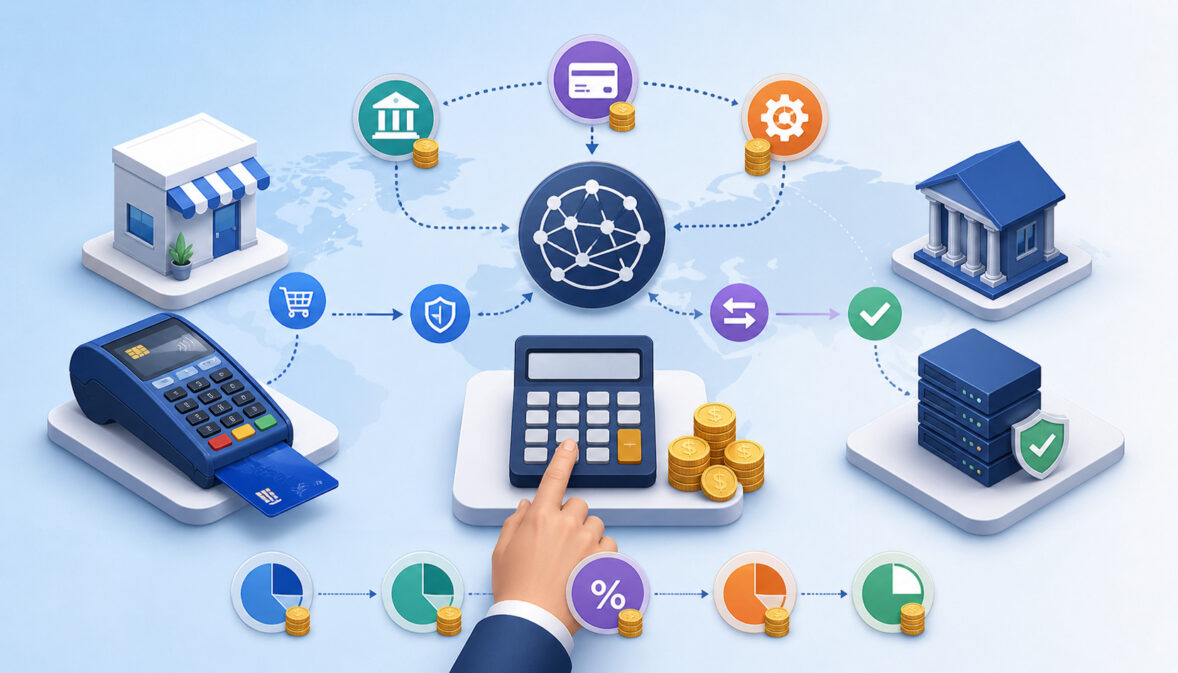
Every card or digital payment has a cost behind it. For merchants, those costs affect profit margins, pricing decisions, customer experience, and cash flow.
A sale may look simple at checkout, but behind the scenes it can involve interchange fees, assessment fees, processor markup, payment authorization costs, settlement activity, fraud controls, and sometimes cross-border transaction fees.
Understanding how to Calculate Payment Networks Transaction Costs helps business owners see why one payment may cost more than another. A tapped debit card, an online rewards credit card, a keyed invoice payment, and an international ecommerce order can all carry different fees.
Payment networks use transaction data to help determine the cost structure. That data may include the card type, transaction method, merchant category, card-present or card-not-present status, risk level, currency, location indicators, settlement details, and processor pricing model.
For merchants, the goal is not to memorize every fee code. The practical goal is to understand the major cost layers, read merchant statements more confidently, and ask better questions when comparing payment providers.
What Are Payment Network Transaction Costs?
Payment network transaction costs are the fees connected to accepting electronic payments through card networks, payment processors, banks, and related service providers. These costs are usually deducted before funds reach the merchant’s bank account or billed later on a merchant statement.
A single card transaction may involve several parties. The customer, also called the cardholder, uses a debit card, credit card, mobile wallet, or stored payment credential. The merchant accepts the payment through a terminal, ecommerce checkout, invoice link, gateway, or payment app.
The issuing bank is the financial institution that issued the customer’s card. The acquiring bank or merchant acquirer supports the merchant’s ability to accept payments.
The payment processor handles transaction communication, reporting, risk tools, and movement of payment data. The gateway securely transmits online payment information. The card network provides the rules, routing, authorization, clearing, and settlement infrastructure.
Because several parties participate in the transaction, merchant transaction costs are not usually one single fee. They are often a layered payment processing cost structure made up of:
- Interchange fees
- Assessment fees
- Payment processor fees
- Gateway or platform fees
- Authorization fees
- Monthly or merchant statement fees
- Chargeback and refund-related costs
- Cross-border transaction fees, when applicable
These fees support the systems that make card payments fast, secure, and widely accepted. They also compensate different participants for risk, infrastructure, fraud management, and account services.
For example, a merchant accepting an online credit card payment may pay more than a merchant accepting an in-person debit card payment. The online payment may carry higher fraud risk, involve a gateway, and use a rewards credit card with higher interchange.
For a deeper look at international fee categories, this guide on common cross-border payment fees is useful when comparing domestic and international processing costs.
How Payment Networks Calculate Transaction Costs
Payment networks and payment providers calculate transaction costs by applying several fee layers to the transaction. The exact calculation depends on the card brand, card type, transaction channel, merchant category, authorization data, settlement details, processor agreement, and whether the transaction is domestic or cross-border.
The phrase transaction cost calculation payment processing refers to the way these different layers combine into the final amount a merchant pays. In many cases, the processor statement shows some fees clearly and bundles others into broader categories.
The most common layers are interchange fees, network assessment fees, processor markup, gateway fees, payment authorization costs, risk-related charges, and cross-border fees. Some merchants also pay monthly account fees, PCI-related fees, batch fees, statement fees, or chargeback fees.
Here is a practical breakdown:
| Cost Component | Who Charges It | What It Covers | Why It Matters |
| Interchange fees | Usually set by card networks and paid to issuing banks | Issuer risk, card funding, fraud exposure, cardholder benefits | Often the largest portion of credit card processing fees |
| Assessment fees | Card networks | Network access, routing, clearing, settlement, brand infrastructure | Usually applies across card volume and may vary by transaction type |
| Authorization fees | Processor, network, or gateway | Approval/decline request handling | Can apply even when a transaction is declined |
| Processor markup | Payment processor or merchant service provider | Account service, reporting, support, risk tools, profit margin | This is often negotiable or comparable across providers |
| Gateway fees | Gateway or platform provider | Secure online payment transmission and tokenization | Common for ecommerce, invoicing, subscriptions, and virtual terminals |
| Chargeback fees | Processor, acquirer, or platform | Dispute handling and administrative work | Can raise total merchant transaction costs significantly |
| Cross-border fees | Network, acquirer, processor, or currency service provider | International acceptance, location mismatch, currency handling, added risk controls | Important for ecommerce, travel, SaaS, marketplaces, and global sellers |
| Statement or monthly fees | Processor or merchant account provider | Account maintenance, reporting, compliance, support | Can affect smaller merchants more heavily |
The final cost may be shown as a percentage, a fixed per-transaction fee, or both. For example, a merchant may pay a percentage of the sale amount plus a small fixed fee per authorization. Some pricing models bundle these costs into one flat rate, while others list interchange and assessments separately.
Interchange Fees
Interchange fees are usually paid to the card-issuing bank. They compensate the issuer for handling cardholder risk, funding the transaction, supporting rewards programs, and maintaining card account services.
Interchange is one of the most important parts of payment network transaction fees because it often represents a large share of total processing cost. It is typically influenced by card type, transaction method, merchant category, and risk level.
A standard debit card may cost less than a premium rewards credit card. A card-present transaction may cost less than a card-not-present transaction because the physical card, chip, tap, or wallet credential can help reduce fraud risk. A keyed transaction may cost more because it lacks the same verification signals as a chip or contactless payment.
Interchange can also vary by merchant category. Some industries have different risk profiles, refund patterns, chargeback rates, average ticket sizes, or regulatory requirements. Networks and issuers may use merchant category codes to classify the business and apply the appropriate interchange category.
Business cards, corporate cards, rewards cards, and international cards may carry different interchange costs. That is why two transactions for the same sale amount can produce different merchant fees.
Assessment and Network Fees
Assessment fees are charged by card networks for access to their payment infrastructure. These card network fees help support transaction routing, authorization messaging, clearing, settlement, network security, compliance, and brand operations.
Unlike interchange, which is generally paid to the issuing bank, assessment fees are network-level charges. They may be calculated as a percentage of sales volume, a per-item fee, or a specific charge based on transaction characteristics.
Assessment fees can apply to credit card processing fees and debit card processing fees. They may also increase when transactions involve international cards, cross-border indicators, currency conversion, card-not-present activity, or special network services.
Merchants often see assessments grouped under labels such as “dues and assessments,” “network fees,” “card brand fees,” or similar categories. In bundled pricing, they may not be visible as separate line items.
This is one reason merchant statements can be confusing. A processor may collect assessment fees from the merchant and pass them through to the network, but the statement may show them under the processor’s fee section.
For businesses accepting international cards, the difference between network assessments and currency conversion fees can matter. This guide on cross-border assessment fees and currency conversion fees explains how those costs differ.
Processor Markup and Service Fees
Processor markup is the amount charged by the payment processor or merchant services provider for its role in the payment chain. This may include transaction handling, reporting, merchant support, risk monitoring, chargeback tools, fraud screening, gateway access, software integrations, and account maintenance.
Processor markup is different from interchange and assessment fees. Interchange and assessments are usually driven by card networks and issuing banks. Processor markup is the provider’s pricing for serving the merchant.
This layer may appear in several ways. Some processors charge a percentage markup over interchange. Others charge a fixed per-transaction fee, a monthly service fee, a gateway fee, a statement fee, or a bundled flat rate.
Processor fees may also cover value-added services. These can include recurring billing tools, hosted checkout pages, tokenization, subscription management, fraud filters, virtual terminals, next-day funding, analytics, customer support, or integrations with accounting and ecommerce platforms.
The challenge for merchants is that processor markup can be hard to identify when pricing is bundled. A simple rate may be easy to understand, but it may not show how much goes to interchange, assessment fees, or processor profit.
Factors That Affect Payment Processing Cost Structure

Payment processing cost structure varies because not all transactions carry the same risk, data quality, funding source, or operational requirements. A card network and processor may evaluate each transaction based on many characteristics before the final cost is calculated.
The card brand matters because different networks maintain different fee schedules, rules, assessment categories, and transaction classifications. Debit cards and credit cards also differ because debit transactions pull from available bank account funds, while credit cards extend credit and may include rewards or financing features.
Rewards cards, business cards, corporate cards, and premium cards often cost more because the issuing bank may receive higher interchange to support benefits and risk. A basic debit card transaction may have a lower cost structure than a premium travel rewards credit card transaction.
Transaction size also matters. Percentage-based fees rise as ticket size increases, while fixed per-transaction fees have a larger impact on small-ticket sales. A merchant with many small payments may feel per-item fees more heavily than a merchant with fewer large invoices.
The transaction method is another major driver. Swiped, dipped, tapped, tokenized wallet, keyed, invoice, phone, ecommerce, recurring, and stored-card transactions may qualify differently. Online and keyed payments may cost more because the card is not physically present.
Risk factors also influence merchant transaction costs. Chargeback rates, refund frequency, industry category, average ticket size, international volume, fraud exposure, and unusual transaction patterns can all affect pricing.
Card Type and Rewards Programs
Card type has a major effect on transaction cost calculation and payment processing. A standard debit card, standard credit card, rewards credit card, premium card, business card, and corporate card may each carry different fee structures.
Debit card processing fees are often lower than credit card processing fees because debit payments are tied to bank account funds. Credit cards may carry more issuer risk because the issuing bank is extending credit to the cardholder.
Rewards cards can be more expensive because points, cash back, travel benefits, purchase protections, and other perks have to be funded. Those benefits may be supported partly through interchange revenue.
Business and corporate cards can also carry higher costs. These cards may include expense management tools, higher credit limits, reporting features, and different risk characteristics. They are common in B2B payments, contractor payments, travel, software subscriptions, and professional services.
Premium cards may cost more than standard cards even when the sale amount is identical. The merchant does not usually choose which card the customer uses, but the merchant can still monitor card mix on statements.
Card-Present vs Card-Not-Present Transactions
Card-present transactions usually occur when the customer physically interacts with a terminal using chip, tap, swipe, or mobile wallet. Card-not-present transactions include ecommerce payments, invoice payments, phone orders, keyed transactions, stored card payments, and some recurring billing.
Card-present payments are often priced differently because the payment environment provides stronger verification signals. A chip card, contactless card, or wallet token can help confirm that the customer has access to the payment credential.
Card-not-present transactions carry more fraud exposure. The merchant may not see the cardholder, the physical card may not be available, and the transaction may depend on billing address, CVV, device data, IP signals, fraud scoring, or 3D Secure tools.
This is why online payments can cost more than in-person payments. The higher cost is not only about the technology. It reflects higher fraud risk, dispute risk, gateway involvement, and additional security measures.
Keyed payments can also be more expensive because they may lack card-present authentication data. For service providers and contractors, this matters when taking payment over the phone or manually entering card details after a job.
Merchant Category and Risk Profile
The merchant category affects pricing because different industries have different risk patterns. A restaurant, retail shop, ecommerce seller, contractor, subscription business, travel provider, software company, and professional service firm may all process payments differently.
Card networks use merchant category codes to classify business activity. These categories can influence interchange qualification, risk review, compliance expectations, and processor underwriting.
Risk profile also matters. A business with high chargeback rates, delayed fulfillment, large average ticket sizes, recurring billing, international customers, or high refund volume may face higher processor scrutiny. In some cases, pricing may include reserves, higher markup, or stricter account terms.
Transaction patterns can also trigger pricing or review changes. Sudden spikes in sales, unusual international volume, inconsistent ticket sizes, or high decline rates may indicate risk to the processor or acquirer.
For ecommerce merchants, fraud prevention and accurate product descriptions matter. For contractors and service providers, signed invoices, clear refund policies, and documented customer approvals can help reduce disputes.
Domestic vs Cross-Border Transaction Costs
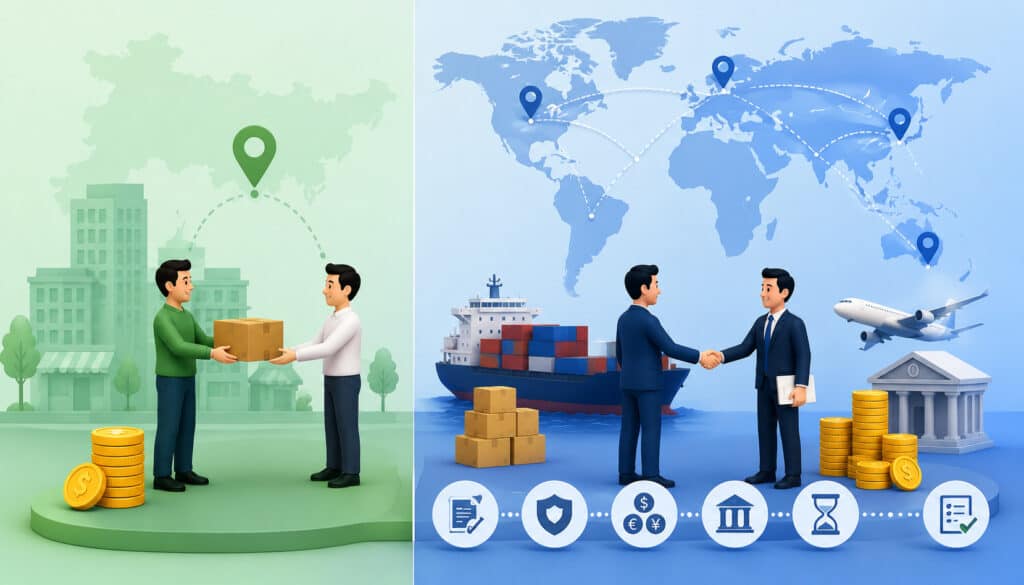
Domestic transactions are usually simpler because the cardholder, merchant, acquiring setup, currency, and settlement path may all operate within the same market framework. Cross-border payments can introduce added layers because the customer’s card, merchant account, acquiring bank, currency, or settlement route may involve different jurisdictions.
Cross-border transaction fees may apply when a card is issued in one location and used with a merchant account or acquiring setup associated with another. These fees may appear as cross-border assessments, international service fees, international acquiring fees, foreign card fees, or similar merchant statement labels.
Currency adds another layer. A customer may pay in one currency while the merchant settles in another. Currency conversion may happen through the issuer, network, acquirer, processor, gateway, or dynamic currency conversion provider. Even when the transaction is displayed in the customer’s familiar currency, the payment may still be considered cross-border.
Cross-border payments may also involve higher fraud controls. Processors and networks may evaluate country indicators, billing address, IP location, shipping address, card issuing location, transaction currency, and historical fraud patterns.
For merchants, cross-border costs can affect pricing strategy, refund handling, checkout design, and profit margins. Businesses selling internationally should understand whether their provider supports multi-currency pricing, local acquiring, fraud tools, and detailed reporting.
A helpful companion resource is this guide on cross-border vs domestic transactions, especially for merchants trying to separate local processing costs from international acceptance costs.
How Authorization, Clearing, and Settlement Affect Costs
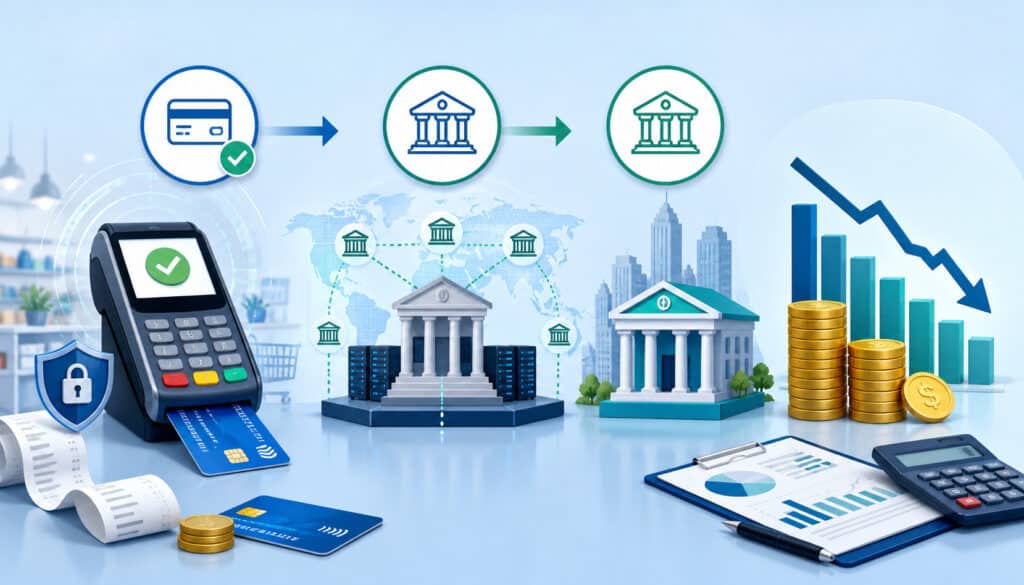
Every card transaction moves through a lifecycle. The customer sees a fast approval or decline, but the payment continues through authorization, clearing, and settlement before the merchant receives final funding.
These stages affect costs because different data points are captured, verified, classified, and finalized along the way. Some fees may be connected to the authorization request. Others may be applied during clearing or reflected during settlement.
Authorization is the first approval step. The merchant asks whether the card is valid and whether funds or credit are available. The issuer responds with approval, decline, or another message.
Clearing happens after authorization, when transaction details are finalized for posting. This stage may confirm the final transaction amount, card data, merchant category, currency, and other details used to classify fees.
Settlement is the movement of funds between financial institutions. The issuer sends funds through the network to the acquirer, and the acquirer or processor funds the merchant after deducting applicable fees.
The timing and data quality of each stage matter. If transaction data is incomplete, late, mismatched, or entered manually, the transaction may not qualify for the most favorable category.
For businesses, this means payment costs are not only about rates. They are also about how payments are accepted, batched, submitted, verified, and settled.
Authorization
Authorization is the moment when a payment is approved or declined. The merchant sends a request through the processor and network to the issuing bank. The issuer checks the account, available funds or credit, fraud signals, card status, and transaction details.
Payment authorization costs may be small, but they can add up for high-volume businesses. Some providers charge a per-authorization fee, and that fee may apply whether the transaction is approved or declined.
Authorization attempts are common in ecommerce, subscriptions, hotels, rentals, service deposits, and account verification. A business may also see authorization activity when storing cards, retrying failed payments, or validating customer credentials.
Declines can create cost and operational friction. A declined authorization may not produce revenue, but it may still create a processing event. High decline rates can also signal fraud, outdated stored cards, insufficient customer verification, or poor checkout routing.
Authorization quality depends on accurate data. Billing address, CVV, tokenization, 3D Secure, device information, and fraud tools can all help improve approval outcomes.
Clearing and Settlement
Clearing is where the approved transaction becomes ready for final posting. The transaction details are submitted, categorized, and prepared for settlement between institutions.
During clearing, networks and processors may classify transactions based on card type, merchant category, transaction method, currency, location indicators, and other data. This classification can affect interchange, assessment fees, and cross-border charges.
Settlement is the final funds movement. The issuing bank provides funds through the network to the acquiring side. The merchant receives the net deposit after fees, adjustments, refunds, reserves, or chargebacks are handled according to the processor agreement.
Settlement timing can affect cash flow. Some merchants receive next-day funding, while others may wait longer depending on processor settings, risk review, bank holidays, batch timing, or account status.
Refunds and chargebacks can complicate settlement. A refund may reverse revenue while some original fees may not be returned. A chargeback may create a dispute fee, temporary debit, evidence requirement, and potential loss of goods or services.
Pricing Models Merchants Should Understand
Payment processors package fees into different pricing models. The pricing model determines how visible the underlying card network fees, interchange fees, assessment fees, and processor markup are on the merchant statement.
The most common models include flat-rate pricing, interchange-plus pricing, tiered pricing, subscription pricing, and blended pricing. None is automatically best for every business. The right fit depends on volume, average ticket size, card mix, transaction method, international activity, and the merchant’s need for transparency.
Flat-rate pricing is easy to understand because the merchant pays one predictable rate for many transactions. This can work well for very small businesses, seasonal sellers, or merchants that value simplicity over detailed fee visibility.
Interchange-plus pricing separates interchange and assessment fees from the processor’s markup. This can provide better transparency and may be useful for growing merchants or businesses with meaningful processing volume.
Tiered pricing groups transactions into broad categories, often based on qualification levels. It can be harder to audit because merchants may not know why a transaction was placed in one tier instead of another.
Subscription pricing may charge a monthly fee plus lower per-transaction markup. Blended pricing combines multiple cost layers into a simplified rate.
Flat-Rate Pricing
Flat-rate pricing charges a simple rate, often a percentage plus a fixed transaction fee. Many merchants like this model because it is easy to estimate and simple to explain.
The main advantage is predictability. A merchant does not have to study every interchange category or network assessment line. This can be useful for new businesses, small merchants, occasional sellers, and businesses with limited accounting support.
The tradeoff is visibility. Flat-rate pricing may hide individual network and interchange costs. The merchant sees one bundled rate instead of seeing what portion went to interchange, assessment fees, processor markup, gateway fees, or other costs.
Flat-rate pricing can be cost-effective for some low-volume merchants. However, as volume grows, the convenience premium may become expensive. A merchant with many debit card transactions may pay more than necessary if the same flat rate applies to both lower-cost and higher-cost cards.
Flat-rate models can also make it harder to understand cross-border fees, card-not-present costs, and premium card costs.
Interchange-Plus Pricing
Interchange-plus pricing separates the underlying interchange and assessment costs from the processor’s markup. A merchant may see the actual card network and issuer-related costs passed through, plus a defined processor fee.
This model is often valued for transparency. It allows merchants to understand how much of their cost comes from non-negotiable or less controllable network and issuer layers, and how much comes from processor markup.
For example, a merchant may pay interchange, assessment fees, and a stated processor markup. The exact cost still varies by transaction, but the markup is clearer.
Interchange-plus can be especially useful for businesses with higher volume, mixed card types, B2B transactions, ecommerce sales, or international payments. It helps merchants see why certain transactions cost more.
The downside is complexity. Statements can be longer and harder to read. Merchants may need help analyzing line items such as card brand fees, authorization fees, cross-border assessments, gateway charges, and monthly costs.
Tiered or Bundled Pricing
Tiered pricing groups transactions into categories. These categories may be labeled qualified, mid-qualified, and non-qualified, or they may use similar bundled classifications.
The appeal is that the statement may look simpler than full interchange detail. The problem is that the merchant may not know exactly why a transaction falls into a higher-cost category.
A transaction may be downgraded or placed into a more expensive tier because of card type, keyed entry, card-not-present status, rewards card use, missing data, delayed settlement, or business card acceptance. This can make tiered pricing harder to audit.
Bundled pricing can also hide assessment fees and processor markup. A merchant may see a few broad categories instead of a detailed cost breakdown.
This does not mean tiered pricing is always bad. Some merchants prefer simplicity. However, businesses should understand how transactions are classified and how often sales fall into higher-cost tiers.
How to Read Merchant Statements for Transaction Costs
Merchant statements show the real cost of accepting payments, but they are often difficult to read. A statement may include deposits, gross sales, refunds, chargebacks, interchange, assessments, processor markup, gateway fees, batch fees, monthly fees, PCI fees, cross-border fees, and merchant statement fees.
Start with the summary section. Look for total card sales, total fees, number of transactions, average ticket, chargebacks, refunds, and net deposits. Then review detailed fee sections.
Common line items may include:
- Interchange fees
- Card network fees
- Assessment fees
- Authorization fees
- Processor discount fees
- Per-transaction fees
- Gateway fees
- Batch fees
- Monthly account fees
- Merchant statement fees
- PCI compliance or non-compliance fees
- Chargeback fees
- Refund fees
- Cross-border transaction fees
- Debit network fees
- Address verification fees
The key is to separate volume-based fees from item-based fees and monthly fees. A percentage fee affects larger tickets more. A fixed per-item fee affects small transactions more. Monthly fees affect low-volume merchants more.
Also look for international or cross-border categories. If you accept cards from international customers, you may see cross-border assessments, foreign card fees, international service fees, currency conversion charges, or higher ecommerce rates.
This guide to merchant account fees for international payments can help merchants identify fee categories that often appear when accepting payments from customers outside the merchant’s usual market.
Calculate Your Effective Rate
Your effective processing rate shows the real percentage cost of accepting card payments. It is calculated by dividing total processing fees by total card sales.
Formula:
Effective Rate = Total Processing Fees ÷ Total Card Sales
For example, if a business processes 50,000 in card sales and pays 1,650 in total processing fees, the effective rate is 3.3%.
This calculation helps merchants move beyond advertised rates. A processor may promote a low percentage, but the final effective rate may be higher after assessment fees, authorization fees, gateway fees, statement fees, chargeback fees, and cross-border fees are included.
Merchants should calculate the effective rate monthly and compare it over time. If the rate rises, investigate changes in card mix, online volume, refunds, chargebacks, international sales, keyed transactions, or new statement fees.
Effective rate is especially useful when comparing pricing proposals. Ask each provider to estimate the effective rate using your real transaction history, not generic examples.
Watch for Hidden or Bundled Fees
Some fees are easy to miss because they are small, bundled, renamed, or placed in different statement sections. These may include merchant statement fees, monthly minimums, PCI non-compliance fees, gateway costs, batch fees, chargeback fees, retrieval fees, refund fees, international fees, or account update fees.
Hidden does not always mean improper. Some fees are legitimate service charges. The issue is whether the merchant understands them and agreed to them.
Bundled pricing can make this harder. A merchant may see one rate and assume it covers everything, only to find extra charges for gateway access, chargebacks, cross-border activity, PCI issues, or monthly minimums.
Watch for vague labels such as service fee, non-qualified fee, miscellaneous fee, international fee, network access fee, or card brand fee. Ask the processor to explain each line item and whether it is charged by the network, issuer, acquirer, gateway, or processor.
Also review contract terms. Some fees may not appear every month, but they can still apply when certain events happen.
How Businesses Can Manage Payment Transaction Costs
Businesses cannot eliminate every payment fee, but they can manage many cost drivers. The best approach is to combine statement review, better payment practices, fraud prevention, and transparent provider comparison.
Start by reviewing merchant statements monthly. Track total fees, effective rate, transaction count, average ticket, chargebacks, refunds, keyed payments, online payments, and cross-border volume. Look for changes rather than only totals.
Compare pricing models using your real data. Flat-rate pricing may be convenient, but interchange-plus may offer better visibility. Tiered pricing may be simple, but classification rules can raise costs. Subscription pricing may work for higher-volume merchants if monthly fees are justified.
Reduce keyed transactions where possible. Use chip, tap, mobile wallet, secure invoice links, hosted checkout, and stored token credentials instead of manual card entry. This can improve data quality and reduce fraud exposure.
Use fraud tools wisely. Address verification, CVV checks, velocity rules, device fingerprinting, 3D Secure, and order review workflows can reduce disputes. However, overly strict controls can decline legitimate customers, so monitor approval rates.
Prevent chargebacks by using clear billing descriptors, accurate product descriptions, delivery confirmation, signed work approvals, refund policies, and responsive customer service. Chargebacks are expensive because they can include lost revenue, dispute fees, shipping loss, and operational time.
For large invoices, consider ACH or bank transfer options when appropriate. Card payments are convenient, but larger tickets can make percentage fees more expensive.
Train staff on payment acceptance. A team that knows when to tap, dip, send a secure payment link, verify customer details, or avoid manual entry can reduce avoidable costs.
Common Mistakes to Avoid
One common mistake is focusing only on headline rates. A low advertised rate may not include assessment fees, gateway fees, PCI fees, authorization fees, statement fees, chargeback fees, or cross-border transaction fees.
Another mistake is ignoring card mix. If many customers use rewards cards, business cards, corporate cards, or international cards, costs may be higher than expected. A merchant with mostly debit card transactions may have a different cost profile than one with premium credit card volume.
Many businesses also overlook card-not-present volume. Online, keyed, phone, invoice, and stored-card payments may cost more than in-person card-present payments. If the business shifts from retail sales to ecommerce, processing costs may rise.
Chargebacks are another overlooked cost. Merchants may focus on the dispute fee but ignore the lost sale, lost product, shipping cost, staff time, and potential pricing impact from higher risk.
Some merchants misunderstand flat-rate pricing. A simple rate may be convenient, but it can hide lower-cost transactions and make it harder to see where money is going.
Failing to review statements is also costly. Fees can change, new line items can appear, and transaction patterns can shift. A business that never reviews statements may miss avoidable costs for months.
Finally, merchants should avoid accepting unclear processor terms. Before signing, ask about cancellation fees, monthly minimums, PCI fees, gateway charges, batch fees, chargeback fees, cross-border fees, equipment leases, and pricing changes.
FAQs
How do payment networks calculate transaction costs?
Payment networks calculate transaction costs by applying fee rules based on transaction details such as card type, merchant category, transaction method, authorization data, settlement timing, currency, location indicators, and risk level. The final merchant cost may include interchange fees, assessment fees, processor markup, authorization fees, gateway fees, and other related charges.
What are payment network transaction fees?
Payment network transaction fees are charges connected to the infrastructure used to route, authorize, clear, and settle card transactions. These may include assessment fees, network access fees, cross-border assessments, authorization-related fees, and other card brand charges.
What is the difference between interchange and assessment fees?
Interchange fees are generally paid to the issuing bank that provided the customer’s card. Assessment fees are charged by the card network for access to network infrastructure, transaction routing, clearing, settlement, and related services. Both are part of payment network transaction fees, but they go to different participants.
Why do some card payments cost more than others?
Some card payments cost more because they carry different risk, reward, and processing characteristics. Premium rewards cards, business cards, corporate cards, keyed payments, online payments, international cards, and higher-risk transaction types may increase merchant transaction costs.
Are online payments more expensive than in-person payments?
Online payments are often more expensive than in-person payments because the card is not physically present. This can increase fraud and dispute risk. Online payments may also involve gateway fees, fraud tools, tokenization, stored credentials, and additional verification services.
How do cross-border payments affect transaction costs?
Cross-border payments can add network assessments, international service fees, currency conversion costs, foreign card charges, fraud controls, and settlement complexity. Costs may depend on the customer’s card issuing location, transaction currency, acquiring setup, and processor pricing.
What is an effective processing rate?
An effective processing rate is the total processing cost divided by total card sales. It shows the real cost of accepting payments after all fees are included, including interchange, assessment fees, processor markup, gateway fees, monthly fees, and other charges.
How can businesses reduce payment processing costs?
Businesses can reduce avoidable payment processing costs by reviewing statements, reducing keyed transactions, using secure payment methods, preventing chargebacks, improving fraud controls, comparing pricing models, training staff, and asking processors to explain fees clearly.
Conclusion
To Calculate Payment Networks Transaction Costs, merchants need to understand more than one rate. The real cost of accepting payments may include interchange fees, assessment fees, payment processor fees, gateway charges, authorization costs, merchant statement fees, risk-related charges, settlement factors, and cross-border transaction fees.
The most important cost drivers are card type, transaction method, merchant category, risk profile, pricing model, settlement process, and whether the transaction is domestic or cross-border. Once merchants understand these layers, payment statements become easier to review and pricing proposals become easier to compare.
A practical approach works best: calculate your effective rate, review statements regularly, monitor card-not-present and cross-border volume, reduce manual entry, prevent chargebacks, and choose a pricing model that gives the right balance of simplicity and transparency.
Payment costs are part of doing business, but they should not be mysterious. With better visibility and disciplined payment practices, businesses can manage merchant transaction costs more effectively and make smarter decisions about how they accept payments.