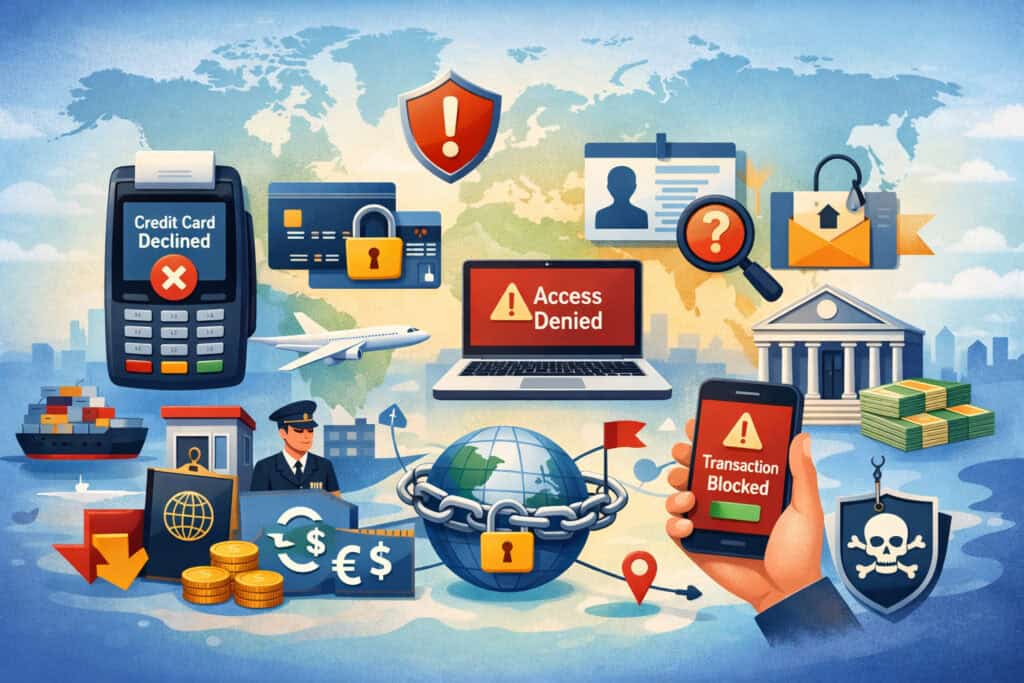
If you sell internationally, you’ve probably seen it: a customer is ready to buy, the cart is full, and then—payment declines. Not because your product isn’t wanted, but because the issuer (the customer’s bank) decided that a specific transaction wasn’t safe, wasn’t allowed, or didn’t look “normal” enough to approve.
That approval moment is what cross-border authorization rates measure: the share of international card payment attempts that receive authorization approval from the issuer.
For ecommerce merchants, subscription businesses, marketplaces, and finance/ops teams, these rates are more than a payment KPI—they’re a signal of how much issuer trust you’ve earned, how clean your data is, and how predictable your transaction patterns look across borders.
This guide explains what are cross-border authorization rates, why international card authorization rates behave differently than domestic ones, and how to approach improving cross-border payment authorization rates responsibly—without “retry spam,” without dark patterns, and without assuming one-size-fits-all issuer behavior.
You’ll also learn how to separate genuine fraud from false declines, use 3DS intelligently, align retries to reason codes, and build monitoring so you can diagnose issues quickly when cross-border transaction approval rates move.
What cross-border authorization rates are (and what they are not)
Cross-border authorization rates are the percentage of card payment authorization attempts that get approved when the transaction is considered “cross-border.” A customer uses a card issued in a different market than the one your acquiring setup is aligned to, so the issuer evaluates the transaction with additional distance and uncertainty.
A transaction is typically treated as cross-border when one or more of these conditions are true (the exact logic can vary by network, issuer, acquirer, and routing path):
The card’s BIN/IIN indicates it was issued outside the market associated with your acquiring entity.
The transaction is routed through an acquirer outside the cardholder’s usual region.
The currency presented is unusual relative to the cardholder’s historical spending patterns.
The merchant location signals (including acquirer and processing metadata) don’t match the cardholder’s profile.
This is why the question “what counts as cross-border?” rarely has a single universal answer. Your gateway, processor, or acquirer may label cross-border using their own rules, and issuers may assess “distance” using their own models.
Authorization rate ≠ conversion rate
Authorization is only one step in your funnel. Your checkout conversion rate includes:
Product fit and pricing
Shipping/delivery clarity
Taxes and fees transparency
Payment UX and trust signals
Authentication friction (like 3DS challenges)
Post-decline recovery experience
So even if you improve authorization performance, conversion may not rise proportionally. And the reverse is also true: you can improve conversion (better UX, better localization) while authorization stays flat. It’s important to measure both and avoid conflating them.
Practical definition you can use internally
Most teams benefit from a simple internal definition for reporting:
Cross-border authorization rate = Approved authorizations / Total authorization attempts (where card issuer region differs from your acquiring region)
If your processor provides a cross-border flag, use it. If not, approximate with BIN/IIN country vs acquiring entity—but treat it as directional, not perfect.
Key terms glossary (and how teams misuse them)
Payments teams often talk past each other because they use the same word to mean different things. Here’s a working glossary that will keep finance, ops, product, and risk aligned—especially when you’re discussing international card authorization rates and the steps after authorization.
Term
Plain-English Meaning
What It Does Not Mean
Why It Matters for Cross-Border
Authorization rate
% of authorization attempts approved by issuer
Not the same as conversion rate
Issuers apply stricter patterns when cross-border risk is higher
Approval rate
Often used interchangeably with authorization rate (confirm your definition)
Not always net of retries
Different dashboards may count attempts differently
Decline rate
% of authorization attempts declined
Not necessarily fraud
Many declines are policy, limits, or soft declines
Soft decline
Decline that may succeed if conditions change (e.g., authentication required)
Not “try forever”
Use reason-code-based logic; avoid aggressive retries
Hard decline
Decline unlikely to succeed without a real change (e.g., invalid account)
Not always permanent
Some “hard” declines are mislabeled; confirm patterns
Capture
The step where you finalize the authorized amount for clearing
Not the same as settlement timing
Authorization can be approved but later fail to capture
Clearing
Messages that finalize transaction details for settlement
Not instant funding
Cross-border clearing details can affect reconciliation
Settlement
Funds movement through the network/acquirer to you
Not always same-day
Cross-border settlement can vary by region and currency
Refund
Returning funds after settlement
Not a reversal
Refunds can increase operational costs and disputes
Reversal
Cancels an authorization before capture
Not guaranteed
Useful when order fails or inventory changes
The most common operational mistake is treating authorization like the only event that matters. But cross-border performance is often shaped by what happens after authorization too: disputes, chargebacks, refunds, and customer complaints can influence issuer trust over time.
How authorization works across borders: authorization → clearing → settlement
Understanding the lifecycle makes it easier to diagnose why cross-border outcomes look different. At a high level, card payments move through three phases:
Authorization: You ask the issuer if the cardholder can pay this amount, right now, under these conditions.
Clearing: Transaction details are exchanged for posting and reconciliation.
Settlement: Funds are moved through the acquiring chain and paid out.
For most merchants, the “decline pain” is concentrated in authorization. But cross-border complexity can show up in each phase.
Authorization vs capture vs refund
Authorization checks availability and risk. The issuer decides approve/decline based on account status, limits, and risk scoring.
Capture tells the network you’re finalizing the charge (full or partial) for clearing.
Refund is a post-settlement return of funds.
Reversal/void (when supported and timely) cancels the authorization before capture.
This is why “authorization vs capture” matters for performance. A merchant may have strong authorization rates but still experience revenue issues due to:
Late capture (authorization expires)
Capture amount mismatches
Partial shipments not handled correctly
Excessive partial captures triggering issuer concern over time
Partial approvals and incremental authorizations (brief but important)
Two special cases matter for certain business models:
Partial approvals: Sometimes issuers approve less than the requested amount (more common in certain contexts). Your checkout logic must decide whether to accept partial approval, request another payment method, or reduce the cart amount.
Incremental authorizations: Common in variable-amount scenarios (tips, deposits, add-ons, usage-based billing). If you use incrementals, your patterns must look consistent and transparent to avoid “surprise charge” declines.
Cross-border adds sensitivity here because issuers are more cautious when they cannot easily validate the merchant’s context.
Why cross-border approvals differ from domestic approvals
Cross-border card-not-present (CNP) payments carry a different risk profile than domestic ones because the issuer has fewer familiar signals. Domestic transactions often align with a cardholder’s typical spending patterns, merchant recognition, and local ecosystem norms. Cross-border transactions can break those patterns in multiple ways at once.
Here are the core reasons cross-border transaction approval rates tend to be lower—without assuming any “rule” applies universally.
Issuer risk controls and customer behavior patterns
Issuers decide in milliseconds using internal models. They look at:
Whether the transaction resembles the cardholder’s recent behavior
Whether the merchant is recognized (by descriptor, category, and history)
Whether spending is unusually large, frequent, or distant
Whether the transaction “looks automated” or inconsistent
Cross-border often triggers multiple “out-of-pattern” flags: foreign merchant signals, different currency, different time-of-day activity, and unusual merchant descriptors.
Merchant risk profile and MCC (high-level)
Your merchant category code (MCC) provides the issuer a shorthand for what you sell and the risk profile associated with that category. Some categories are more frequently associated with disputes, fraud, or buyer’s remorse. Even if your own business is clean, the category-level risk can influence issuer controls.
Marketplaces also have a more complex profile: multiple sellers, varying fulfillment performance, and more support complexity. That can raise issuer scrutiny unless you maintain strong operational controls.
Fraud signals vs false declines
Fraud signals can be real (stolen cards, account takeover), but they can also be false positives. Common cross-border triggers include:
Device and IP mismatch with billing data
Unusual velocity (many attempts, many cards, or rapid retries)
Shipping address patterns that don’t match the cardholder profile
New account + high-value cart + expedited delivery
Data inconsistencies (email, phone, address formatting)
Issuers may decline even legitimate customers if the signals look too “risky” and they don’t have enough trust in the merchant and transaction context.
Currency and presentment choices
Multi-currency presentment vs settlement matters. Presentment is what the customer sees at checkout. Settlement is how funds move through your acquiring chain. A mismatch between what customers expect and what appears on their statement can increase disputes, which can harm future approvals.
Fulfillment risk and delivery timelines
Issuers care about the likelihood of post-transaction dissatisfaction:
Digital goods can look high-risk if fraud is prevalent, but may also have clearer fulfillment proof.
Physical goods with long delivery times can increase dispute likelihood.
Pre-orders and backorders can be risky if communication is weak.
Common cross-border issuer declines: categories and what they usually mean
Issuer decline codes and reason codes vary by network, issuer, and processor. You’ll often see generic labels like “Do Not Honor,” which don’t explain much. Still, most declines fall into a small set of categories, and your response should be different for each.
Soft declines vs hard declines (why the difference matters)
Soft declines indicate a condition that might be resolved—often by authentication (3DS), a different attempt timing, or a corrected data element.
Hard declines suggest the transaction is not permitted, the account data is invalid, or the issuer will not approve under current conditions.
The problem: some processors label declines as “hard” when they’re effectively soft, or vice versa. That’s why you should base retry logic on observed recovery patterns and reason codes rather than a single “soft/hard” flag.
Fraud vs false declines (how to avoid guessing)
A fraud decline is not always proof of fraud; it’s proof the issuer’s model didn’t like the signals. Your job is to decide whether to:
Add authentication
Improve data quality
Adjust routing
Improve customer transparency
Or block the attempt (if your fraud model agrees it’s risky)
Done well, you can improve approvals without raising fraud—by reducing uncertainty rather than relaxing controls.
Table: Common cross-border decline reasons (issuer-side) and what merchants can do
This table is intentionally high-level because issuers and networks differ. Use it as a playbook starter and refine it with your own data.
Decline Category
Typical Issuer Interpretation
What Merchants Can Do (Responsibly)
What to Avoid
Suspected fraud / “Do not honor”
Risk model sees unusual pattern or low trust
Improve descriptor clarity, reduce velocity, use targeted 3DS, improve device/email/phone signals, consider local acquiring where feasible
The biggest drivers of international card authorization rates in 2026
In 2026, issuer decisioning is increasingly shaped by real-time risk scoring, stronger authentication expectations for certain scenarios, tokenization adoption, and a growing emphasis on merchant behavior consistency. What follows are the biggest levers merchants can influence—without pretending you can control issuer models.
Risk scoring and issuer trust (the invisible metric you’re building)
Issuers maintain internal trust models for merchants and patterns. They infer trust from:
Low dispute and chargeback rates
Low refund abuse and complaint volume
Consistent capture timing and amounts
Stable descriptors and merchant name clarity
Stable traffic and transaction patterns (no sudden spikes without context)
Low confirmed fraud and low “customer says I didn’t do this” claims
You can’t see issuer trust directly, but you can see its shadow in how approvals behave when you make changes.
Data integrity at checkout (small inconsistencies become big problems cross-border)
Cross-border CNP approvals are sensitive to “messy data.” Common issues:
Missing or low-quality billing address fields
Phone number formats that don’t validate well
Emails that look disposable or inconsistent
Name fields that don’t match typical patterns
Shipping vs billing mismatch without explanation
You don’t need to over-collect data, but what you collect must be accurate, consistently formatted, and used intelligently.
Transaction patterns and velocity limits
Issuers watch for patterns that resemble testing stolen cards:
Many attempts from one device
Many cards used on one account
Many declines followed by rapid retries
Small-dollar “probing” charges
Sudden high-value attempt after many small attempts
Even legitimate customers can trigger these patterns if your checkout UX creates duplicates or if your recovery logic is too aggressive.
Chargeback rate impact on approvals
Chargebacks are not just a loss event; they’re a signal. High disputes can:
Increase issuer caution for your merchant profile
Trigger more step-up authentication demands
Increase “Do not honor” frequency in certain scenarios
Encourage issuers to prefer strong authentication for your transactions
This is why authorization optimization is inseparable from dispute management and customer communication.
3DS / Strong Customer Authentication (high-level)
3DS can help approvals when issuers want additional verification, but it can also add friction and reduce conversion if used indiscriminately. In 2026, the right strategy is:
Use 3DS as a targeted tool, not a blanket rule
Use exemptions and risk-based flows where applicable (depending on region, issuer, and scheme rules)
Design the UX so challenges don’t feel like a surprise
Improving cross-border payment authorization rates: a responsible playbook
This section is your practical checklist for improving cross-border payment authorization rates while staying compliance-aware and customer-friendly. The goal is not “more approvals at any cost.” It’s more approvals for legitimate customers, with fewer false declines and fewer downstream disputes.
1) Clean, consistent checkout data (without over-collecting)
Focus on a few fields and make them reliable:
Billing address: Use autocomplete + normalization; allow customers to edit.
Postal code: Validate format gently; don’t hard-fail on minor spacing.
Phone/email: Encourage real contact details; use format-aware inputs.
Name: Don’t force unnatural formatting (all caps, strict middle names).
Shipping vs billing: If they differ, explain why you’re asking and reassure customers.
If you do AVS/CVV checks, align strictness to risk. Overly strict AVS handling can increase false declines, especially with international address formats.
2) Payment method mix and wallets (high-level)
Cards are not the only way customers want to pay. Adding relevant methods can reduce cross-border card declines and preserve conversion:
Wallets (as available and relevant to your audience)
Bank-transfer-style methods (where appropriate)
Local methods (when you have operational support for them)
The aim isn’t to replace cards, but to provide a smooth fallback when issuers block a card attempt.
3) 3DS strategy: when to trigger, friction vs lift
A practical 3DS strategy often includes:
Step-up 3DS on higher-risk cross-border signals (new customer + high value + mismatch + high velocity)
3DS after a soft decline that indicates authentication required
Skip 3DS on low-risk returning customers with stable history—where your risk and compliance posture supports it
Measure both authorization uplift and conversion friction. The best outcome is fewer declines and a clean customer experience.
4) Smart retries and retry logic (reason-code-based)
Retries work when the reason is transient. They backfire when they look like fraud.
A responsible retry framework:
Only retry soft declines and certain technical failures
Space attempts (avoid immediate repeated hits)
Change one thing per attempt (authentication, currency, route)—not everything at once
Cap retries and provide a clear fallback (another card or method)
For subscriptions, your retry logic should resemble normal customer behavior, not a bot.
Offering multi-currency pricing can help by reducing customer surprise and increasing statement recognition—if you are transparent:
Show the currency clearly before the customer commits
Display taxes/fees clearly
Keep the descriptor consistent with what the customer expects
Avoid switching currency after a decline without telling the customer
This is less about issuer rules and more about reducing disputes and “I didn’t recognize this charge.”
6) Local acquiring vs cross-border acquiring (conceptual)
Local acquiring routes the transaction through an acquiring setup aligned closer to the cardholder’s region. It can improve approvals by making the transaction look less “foreign” to issuer models. But it adds complexity:
More acquirers, contracts, and reconciliation
More routing logic and risk alignment
More compliance and operational overhead
A multi-acquirer setup can help, but only if you manage it intentionally.
7) Tokenization and network tokens (especially for subscriptions)
Tokenization can improve resilience and reduce credential exposure. In some cases, network tokens can improve approvals because they support lifecycle management and may be treated more favorably in issuer risk models—though outcomes vary.
Segment by seller cohort; one bad cohort can drag all approvals
Subscription payments: improving renewals without looking like fraud
Subscriptions are where cross-border declines can quietly become churn. Issuers are especially sensitive to recurring patterns that resemble automated abuse—so your recovery strategy must be deliberate.
Dunning sequences that don’t resemble card testing
A good dunning program balances persistence with normalcy:
Don’t fire retries in rapid succession after a decline
Avoid multiple attempts in the same minute/hour unless a customer actively updates details
Use time-of-day patterns that resemble legitimate customer activity (based on your audience behavior)
Cap the total number of retries per billing cycle and provide a clear “update payment” path
Design your dunning so the customer is part of the process, not a bystander.
Retry logic + customer communications
Recovery improves when customers understand what happened and what to do:
Send an immediate message that a payment didn’t go through (neutral tone)
Provide a secure link to update payment method
Explain common reasons simply (funds, bank verification, expired card)
Offer alternative methods if possible
Avoid telling customers to “call their bank” as your only guidance. Instead, give them a clear next step they can complete quickly.
Expired cards, saved credentials, and best practices
For subscriptions, saved-credential hygiene matters:
Use tokenization when possible
Use account updater where supported
Mark transactions correctly as merchant-initiated vs customer-initiated
Keep descriptors stable so customers recognize renewals
If you allow plan upgrades or add-ons, align the billing flow so it doesn’t create surprise amounts that trip issuer risk controls.
High-ticket and contractor-style payments: reduce “surprise charge” declines
High-ticket payments often fail cross-border not because the customer can’t pay, but because the issuer interprets the transaction as unusual or high-risk. Your goal is to make the charge expected, explainable, and easy to verify.
Staged billing, deposits, and payment framing
Staged billing can improve approvals by reducing the “shock” of a single large charge:
Take a deposit that matches the customer’s expectations and documentation
Capture remaining amounts aligned to milestones (delivery, completion, acceptance)
Send invoices/receipts that match descriptors and amounts
Staging is not a loophole—it’s a customer-aligned approach that can also reduce disputes.
Descriptor and merchant name clarity matters more at high amounts
At higher values, customers are more likely to question a statement entry. Make sure:
Your statement descriptor matches your brand name customers recognize
Receipts show the same merchant name customers will see
Support can quickly confirm the charge and provide proof
Even if the issuer declines initially, customers who recognize the merchant are more likely to approve via verification steps.
Proof of authorization and issuer communication readiness
Sometimes issuers (or customers) will ask for confirmation. Build a simple internal playbook:
Order/invoice reference
Proof of delivery or service agreement
Customer consent records (checkout timestamp, confirmation emails)
Refund/cancellation policy
You’re not trying to argue with issuers. You’re trying to make legitimate purchases easy to validate.
Most common issuer decline categories explained simply (with practical responses)
Here’s how to interpret the categories you’ll see most often—and what “good” merchant behavior looks like in response.
Suspected fraud / “Do not honor”
This category is the catch-all for issuer uncertainty. Respond by improving signals:
Tighten velocity and reduce duplicate attempts
Add selective 3DS for higher-risk cohorts
Improve device and customer identity signals
Ensure descriptor clarity and consistent merchant naming
Consider routing adjustments if you have multiple acquirers
Avoid trying to “hack” approvals by making random changes on each retry. Issuers may treat that as even riskier.
Insufficient funds
This is often timing-based. Practical responses:
Offer another payment method (wallet, bank method)
Allow split payments or smaller initial payment where appropriate
Encourage customer to try again later (with a clear UI)
Don’t machine-gun retries; it rarely helps and can trigger velocity blocks.
Authentication required / soft decline
This is where 3DS can help. Best response:
Trigger 3DS and reattempt after the authentication flow
Improve UX so the challenge feels expected
Track approval vs abandonment for challenged flows
Incorrect CVV/AVS mismatch
This can be a genuine error or formatting mismatch. Improve:
Address normalization and international-friendly entry
Clear prompts for CVV and address
Don’t over-reject on partial AVS mismatches; use risk-based interpretation
Velocity and spending limits
Fix the causes:
Space out retries
Prevent duplicate submissions
Remove hidden “double attempt” patterns caused by page refreshes or SDK behavior
Merchant category restrictions
You can’t force approval if the issuer policy blocks the category. Your best options are:
Offer alternate methods
Reduce disputes and confusion
Ensure your category and descriptors accurately reflect your business
Technical issues / timeouts
Treat these as reliability problems:
Implement idempotency and duplicate prevention
Retry once with backoff, then offer a different path
Use routing fallback carefully (avoid double billing)
Realistic scenarios: decline patterns and best responses (no fake stats)
Below are practical situations you’ll recognize. The goal is to show how decisions differ based on signals and reason categories—without pretending outcomes are guaranteed.
Scenario 1: Cross-border ecommerce checkout decline on first attempt
Pattern: New customer, mid-range cart, shipping address differs from billing, customer is using mobile, and the issuer declines with a generic “Do not honor.”
Best response:
Don’t immediately retry the exact same transaction multiple times.
Offer a clean fallback: “Try another card or wallet” plus a path to authenticate if available.
If your risk model is comfortable, trigger step-up 3DS for that cohort and rerun once after successful authentication.
Ensure your checkout collects usable email/phone and normalizes address data.
Why it works: You reduce issuer uncertainty and avoid looking like a bot. You also reduce abandonment by giving the customer clear options.
Scenario 2: Subscription renewal failures across multiple billing cycles
Pattern: Renewal attempts fail with mixed responses: some “insufficient funds,” some “authentication required,” some “expired card.” Customer churn risk rises.
Best response:
Use tokenization and account updater where available to reduce expired-card failures.
Segment retries by decline type:
Funds-related: retry later, fewer attempts, and prompt customer update.
Authentication-required: prompt a customer-initiated action (reauth) where your flow supports it.
Expired/invalid: stop retries and request updated payment details.
Send a clear dunning message: what happened, what to do, and a secure update link.
Keep retry cadence modest and consistent.
Why it works: Issuers may view repeated silent attempts as suspicious. Customer involvement improves both legitimacy and recovery.
Scenario 3: High-ticket international deposit decline
Pattern: Customer is paying a large deposit for a service. Issuer decline indicates suspected fraud or limit/velocity concerns.
Best response:
Offer staged billing (smaller deposit first, then milestone-based captures).
Ensure descriptor clarity and provide an invoice that matches the charge amount.
Use step-up authentication for the deposit if your risk policy supports it.
Encourage the customer to complete the payment in-session (customer-initiated) rather than multiple back-office retries.
Why it works: You reduce surprise and create documentation the customer can recognize and confirm. You also avoid patterns issuers associate with unusual merchant behavior.
Scenario 4: Travel-related MCC or wallet payments (high-level)
Pattern: Merchant sees inconsistent approvals depending on whether the customer uses a card directly or a wallet. Issuer declines are clustered around certain times and devices.
Best response:
Treat wallets as both a conversion and risk tool: they can simplify authentication and reduce data entry errors.
Keep descriptors and receipts consistent so wallet and card transactions are recognizable.
Monitor approval differences by payment method and device type.
Avoid forcing one method; let customers choose and present the most stable options first.
Why it works: Wallet flows can reduce friction and sometimes improve issuer confidence by adding device-level security signals, but results vary.
Local acquiring, multi-acquirer setups, and smart routing (high-level)
Routing is one of the most powerful—but also most dangerous—levers. Done well, routing helps match transactions to the path issuers approve more often. Done poorly, it creates duplicates, confuses reconciliation, and can spike disputes.
Local acquiring vs cross-border acquiring
Cross-border acquiring: You process through one primary acquirer that may be “foreign” relative to many cardholders.
Local acquiring: You process through an acquirer aligned closer to the cardholder’s market.
Local acquiring can reduce “foreignness,” but it increases operational complexity. It’s not a universal fix, and it can introduce new failure modes if not governed well.
Use routing rules based on issuer response patterns, not vendor promises.
Ensure strict idempotency to avoid duplicate charges.
Limit cascades to specific scenarios (technical failures, specific soft declines).
Monitor uplift vs increased disputes and customer confusion.
Routing should be treated as controlled experimentation with change management—not as a permanent “black box” optimization.
AVS/CVV checks, BIN/IIN insights, and reducing mismatched signals
Cross-border card-not-present payments can fail due to preventable mismatches. But you need to apply checks in a way that respects international variability.
AVS/CVV checks (high-level)
CVV is usually a strong signal when present and correctly entered.
AVS depends heavily on address formatting norms and issuer support; results vary.
Best practices:
Use address autocomplete and allow manual edits.
Don’t force rigid formatting that breaks international addresses.
Interpret AVS results with risk context instead of binary pass/fail.
BIN/IIN country and card type
BIN/IIN data can help you:
Predict debit vs credit vs prepaid behavior
Identify potential cross-border routing options
Decide when to offer alternate methods
But don’t overfit rules. BIN tables change, and issuers behave differently even within the same card type.
Descriptor and merchant name clarity
When customers recognize you, disputes drop and issuer trust grows. Make sure:
Your statement descriptor matches your brand
Your support contact info is easy to find
Your confirmation email mirrors the descriptor name
Monitoring and troubleshooting: what to track and how to isolate root causes
If you want to improve cross-border authorization rates, you need measurement that is precise enough to diagnose, not just report.
What to track (and how to segment)
At minimum, track authorization outcomes by:
Card issuer BIN/IIN groupings (or issuer identifiers if available)
Card type (credit/debit/prepaid)
Currency presented
Payment method (card entry vs wallet)
New vs returning customer
First attempt vs retries
3DS triggered vs not triggered (and challenge vs frictionless where available)
Fulfillment type (digital vs physical) and delivery speed
If you don’t separate them, you’ll “optimize” the wrong thing. For example, raising fraud thresholds may increase approvals but also increase disputes and long-term issuer distrust.
A/B testing and change control
Payments changes are high-impact. Use disciplined change control:
One major change at a time (or clearly separated cohorts)
This is a practical dashboard template for finance/ops and payments teams.
Metric
How to Segment
Alert Threshold (Example Logic)
Reporting Cadence
Owner
Cross-border authorization rate
Card type, currency, issuer BIN groups, method
Drop vs trailing 7/28-day baseline
Weekly + daily watch
Payments/Ops
First-attempt approval rate
New vs returning, 3DS vs non-3DS
Sudden drop for returning customers
Weekly
Payments
Soft decline rate
Reason category, 3DS required flags
Spike in auth-required declines
Daily
Risk/Payments
Hard decline rate
Invalid/expired, restricted, do-not-honor
Increase in invalid/expired
Weekly
Support + Payments
Technical failure rate
Gateway/acquirer route
Spike in timeouts or errors
Real-time alerting
Engineering
Retry volume and success
Attempt number, spacing, decline category
Retry success drops while retries increase
Weekly
Payments/Risk
Chargeback rate (cross-border)
Product line, fulfillment type, seller cohort
Rising disputes aligned with declines
Weekly/monthly
Risk/Ops
Refund rate and time-to-refund
Currency, product category
Higher refunds correlate with disputes
Weekly
Ops/Finance
3DS challenge rate and abandonment
Device type, method, cohort
Challenge rate spikes or conversion drops
Weekly
Product/Payments
Descriptor-related tickets
Support tags, cross-border cohort
Ticket spikes after descriptor changes
Weekly
Support/Ops
Common mistakes that quietly lower cross-border approval rates
Most approval damage comes from well-intended changes that create noisy signals.
Retrying too aggressively
Aggressive retries can look like card testing. They also create customer confusion (“Why do I see multiple attempts?”) and can increase disputes.
Better: reason-based retries, spaced attempts, and clear customer involvement.
Forcing 3DS everywhere without a strategy
Blanket 3DS can reduce fraud in some cases but can also reduce conversion and increase abandonment—especially for low-risk returning customers. It can also create operational complexity for subscriptions.
Better: targeted 3DS where risk is higher or when issuers signal it’s required.
Switching currencies without transparency
Changing currency after a decline can reduce confusion for some customers—but doing it silently can increase disputes and harm trust.
Better: transparent currency choice with clear totals and clear statements.
Ignoring decline patterns
If “Do not honor” clusters by one route, one currency, one issuer group, or one product, that’s actionable. If you only look at total declines, you’ll miss the lever.
Better: segment, test one change, and measure.
FAQ
Q1) What are cross-border authorization rates?
Answer: Cross-border authorization rates measure the percentage of international card payment authorization attempts that issuers approve. “Cross-border” generally means the card is issued in a different market than your acquiring setup or processing route. Exact classification can vary by processor, network, and issuer.
Q2) Why are international card payments declined more often?
Answer: Issuers typically have less familiar context for cross-border transactions. Differences in region signals, currency, merchant recognition, and transaction patterns can increase perceived risk. Data quality issues and mismatches are also more common in cross-border checkouts.
Q3) What’s the difference between a soft decline and a hard decline?
Answer: A soft decline indicates the transaction may succeed if something changes—often authentication (3DS), corrected data, or timing. A hard decline is less likely to succeed without a meaningful change (like updated card details). Labels can vary by processor, so validate with actual recovery patterns.
Q4) Does 3DS improve authorization rates?
Answer: Sometimes. 3DS can improve approvals when issuers want extra verification, especially for cross-border CNP payments. But it can also add friction and reduce conversion. The best approach is targeted 3DS based on risk signals and issuer response patterns.
Q5) How do retries affect approval rates?
Answer: Smart, spaced, reason-based retries can recover some soft declines. Aggressive retries can lower approvals by triggering velocity and fraud controls, and can increase customer confusion and disputes. Track first-attempt vs eventual approval separately.
Q6) What is local acquisition and why does it matter?
Answer: Local acquiring routes transactions through an acquiring setup aligned closer to the cardholder’s region. It can reduce the “foreignness” of the transaction for some issuers and improve approvals, but it adds operational complexity and requires disciplined routing governance.
Q7) Does multi-currency pricing help approvals?
Answer: It can help indirectly by reducing customer surprise and improving statement recognition, which can reduce disputes. Effects on authorization depend on issuer patterns and customer behavior. If you offer multi-currency, make it transparent and consistent.
Q8) How do chargebacks impact future approvals?
Answer: High dispute and chargeback rates can reduce issuer trust and increase caution for your transactions over time. This may lead to more issuer declines or more frequent authentication requirements. Dispute reduction is part of sustainable approval optimization.
Q9) What should I track weekly to monitor international approvals?
Answer: Track cross-border authorization rate by card type, currency, issuer BIN groupings, method, and customer cohort (new/returning). Also monitor soft declines, retry success, 3DS challenge and abandonment, technical failures, and dispute/refund trends.
Q10) Can I improve cross-border approval rates without increasing fraud?
Answer: Yes—when you focus on reducing uncertainty rather than loosening controls. Improve data quality, use targeted authentication, avoid retry storms, strengthen descriptors and customer transparency, and improve dispute outcomes. Sustainable gains come from better signals and trust.
Q11) What’s the difference between authorization and capture?
Answer: Authorization is the issuer approving (or declining) the attempt. Capture finalizes the authorized amount for clearing. You can have an approved authorization that later fails to capture if timing, amount, or fulfillment flows are inconsistent.
Q12) Why do “Do not honor” declines happen so often cross-border?
Answer: “Do not honor” is often a generic issuer risk response. It can reflect uncertainty rather than a specific failure. Reduce uncertainty with better data, clearer descriptors, selective 3DS, and stable transaction patterns.
Q13) Should I block customers after multiple declines?
Answer: Not automatically. Some declines are harmless (funds timing, authentication required). Use decline categories to decide: stop on invalid/expired, pause and prompt customer action on authentication-required, and avoid repeated rapid attempts that mimic fraud.
Q14) Are wallets better than cards for international approvals?
Answer: Sometimes wallets reduce friction and data entry errors and may provide additional device security signals. But performance varies by customer base and issuer behavior. If wallets outperform, audit your card form and routing—wallets may be masking issues.
Q15) What’s the safest first step to improve cross-border transaction approval rates?
Answer: Start with measurement and data hygiene: segment authorization outcomes, fix duplicate attempts, normalize checkout fields, improve decline messaging, and implement reason-based retry spacing. These changes are low-risk compared to major routing overhauls.
Conclusion
Improving cross-border authorization rates isn’t about chasing loopholes or forcing approvals. It’s about making legitimate transactions easier for issuers to trust and easier for customers to recognize.
The highest-impact levers are:
Data quality and consistency: Clean billing details, stable signals, fewer mismatches.
Authentication strategy: Use 3DS where it helps, not everywhere by default.
Retry discipline: Reason-based, spaced retries—especially for subscriptions.
Routing and acquiring strategy: Local acquiring and multi-acquirer routing where it’s operationally justified.
Tokenization and credential hygiene: Network tokens and updater flows for recurring payments.
Trust and transparency: Clear descriptors, predictable billing, and lower disputes/chargebacks.
You won’t control every issuer decision. But you can reduce uncertainty, improve customer intent signals, and build a payment program that performs well across borders without increasing risk.
Get A Free Quote
Reduce Your Fees, Upgrade Your Service, Guaranteed!
The #1 Rated Merchant Services
Your information will not be distributed
Thank You!
We received your request. A payments specialist will reach out shortly.