
International sales can expand a business’s customer base, but they also add layers to the payment process that may be difficult to see at checkout.
A customer enters card details, clicks the payment button, and receives an approval or decline within seconds. Behind that brief interaction, several financial institutions and payment technologies exchange information to determine whether the transaction should proceed.
The costs connected with that approval request are commonly described as international card authorization costs. They may include a per-request authorization charge, gateway pricing, cross-border assessments, fraud-screening expenses, authentication charges, processor markup, or other costs associated with handling a foreign-issued card.
Authorization is only the first major stage in the card payment lifecycle. Approval does not mean the merchant has received the money, and a successful authorization can still be followed by capture errors, expired holds, refunds, disputes, or settlement differences.
Understanding where authorization ends and settlement begins helps businesses interpret merchant statements more accurately.
These costs are especially relevant to ecommerce merchants, subscription businesses, digital product sellers, travel-related businesses, exporters, service providers, and companies that collect payments through online invoices or payment links.
International transactions may involve unfamiliar issuing banks, different currencies, card-not-present risk, additional authentication, and longer payment routes.
This guide explains what international authorization costs are, where they may appear, why they can be more complex than domestic authorization costs, and how businesses can review them responsibly.
It provides general educational information rather than legal, financial, accounting, banking, cybersecurity, contractual, regulatory, or payment-compliance advice.
What Are International Card Authorization Costs?
International card authorization costs are payment-related charges associated with asking an issuing bank to approve a card transaction that has an international element.
The card may have been issued in another country, the customer may have an international billing address, the transaction may be routed through a foreign acquiring setup, or the billing and settlement currencies may differ.
Some merchant pricing arrangements include a specific authorization fee for every request. Others bundle authorization into a broader transaction rate. Additional charges may be triggered when the card-issuing country differs from the merchant’s acquiring location, even when the transaction is presented in the merchant’s usual currency.
This means international card authorization fees are not necessarily one single charge. They may be a collection of costs arising at different points in the payment chain.
For example, an online authorization request might involve:
- A payment gateway authorization fee
- A processor authorization charge
- A card-not-present pricing adjustment
- A cross-border assessment
- Fraud-screening or authentication costs
- Currency-related processing
- A processor markup
- A separate charge for declined attempts
Not every provider uses these fee categories, and the same cost may be labeled differently from one statement to another. Businesses should therefore review both the pricing agreement and the actual merchant statement rather than assuming a familiar term always represents the same service.
What Card Authorization Means
Card authorization is the stage in which the merchant asks the customer’s issuing bank whether a proposed payment can proceed. The request normally contains the transaction amount, card credentials, merchant information, currency, and relevant security data.
The request travels from the merchant’s checkout or terminal through a payment gateway, processor, acquiring bank, and card network. The issuing bank then reviews the account and transaction information before returning a response.
The response may be:
- Approved
- Declined
- Partially approved in supported situations
- Referred for additional authentication
- Rejected because of invalid data
- Interrupted by a technical error or timeout
An approval indicates that the issuer has accepted the transaction at that moment and may place an authorization hold on the customer’s available funds or credit. It does not mean the merchant has received a final deposit.
The merchant must usually capture the transaction before it proceeds through clearing and settlement. If capture does not occur within the applicable authorization period, the approval may expire.
Why International Authorization Can Cost More
International payment authorization may require a longer or more complex route than a transaction involving a locally issued card. The request may pass through international network infrastructure, foreign issuing systems, regional fraud controls, currency checks, and additional gateway rules.
The issuer may also evaluate more risk signals. A foreign merchant location, unfamiliar billing currency, unusual purchase amount, international shipping address, or cross-border card-not-present transaction may fall outside the customer’s usual spending pattern.
Additional costs can result from:
- Cross-border network assessments
- Enhanced fraud screening
- 3D Secure authentication
- International gateway routing
- Currency-related processing
- Higher-risk card-not-present pricing
- Repeated authorization attempts
- Manual risk review
- Foreign-issued debit card handling
- Processor-specific international pricing
Merchants should distinguish between true request-level authorization costs and percentage-based cross-border payment fees charged on completed transactions. Both may appear in the same payment relationship, but they do not necessarily cover the same activity.
For more context on the factors influencing approvals, merchants can review this explanation of cross-border authorization rates, including issuer decisioning, authentication, checkout data, and decline behavior.
Authorization vs Capture, Clearing, and Settlement

Authorization, capture, clearing, and settlement are connected stages, but they perform different functions. Confusing them can lead businesses to misinterpret processing reports or assume that an approval guarantees a deposit.
Authorization asks whether the transaction can proceed. Capture communicates the merchant’s intent to collect the approved amount. Clearing organizes and exchanges the final transaction data. Settlement moves the financial value through the acquiring chain toward the merchant account.
A basic payment flow looks like this:
- The customer submits card information.
- The merchant sends an authorization request.
- The issuing bank approves or declines the request.
- The merchant captures the approved transaction.
- Transaction data is submitted for clearing.
- Settlement funds move through the network and acquirer.
- The merchant receives a deposit after applicable deductions.
The stages may happen close together, especially in a standard ecommerce sale. However, they can also be separated by hours or days in travel, hospitality, rental, service, preorder, and delayed-shipment transactions.
Authorization Is Not the Final Deposit
An authorization approval confirms that the issuer is allowing the transaction to continue under the conditions presented. It may reduce the customer’s available balance through an authorization hold, but the payment has not necessarily settled.
Several events can prevent an approved authorization from becoming a completed deposit:
- The merchant never captures the transaction.
- The authorization expires before capture.
- The capture amount exceeds permitted tolerances.
- The transaction is voided.
- The order is canceled.
- A technical problem interrupts batch submission.
- The issuer rejects a late or mismatched capture.
- The transaction is reversed before settlement.
This difference is particularly important when reconciling daily sales. An authorization report can show successful approvals that are not present in the settlement report. Conversely, a captured payment may settle in a later batch or appear in a different reporting period.
Finance teams should reconcile authorization, capture, and settlement reports rather than using approval totals as a substitute for deposited revenue.
How Capture and Settlement Complete the Payment
Capture follows authorization and confirms the amount the merchant intends to collect. In an immediate-sale environment, authorization and capture may be performed together. In a delayed-capture environment, the merchant may authorize at checkout but capture after shipment, service completion, or confirmation of the final amount.
Clearing transmits finalized transaction details between participants. It supports posting, calculation of applicable fees, reconciliation, and preparation for settlement.
Settlement is the movement of funds through the card-payment system toward the merchant’s acquiring relationship. The merchant deposit may be the gross transaction amount minus processing fees, reserves, refunds, adjustments, or other deductions, depending on the agreement.
A business can therefore incur:
- Authorization costs when requesting approval
- Capture or gateway costs when finalizing the payment
- Interchange and assessment fees during processing
- Cross-border fees because of issuing and acquiring locations
- Currency-conversion costs
- Settlement or funding-related adjustments
Separating these categories makes it easier to understand international credit card processing costs as a complete payment lifecycle rather than one advertised transaction rate.
International Card Authorization Costs Compared
The following table outlines common authorization-related cost categories. Actual terminology, calculation methods, and applicability vary by payment provider, gateway, card type, transaction channel, and contract.
| Cost Type | Where It May Appear | What May Trigger It | What to Review |
| Authorization fee | Merchant statement or processor pricing | Each approval request | Per-request pricing and whether declines are charged |
| Cross-border authorization fee | Merchant statement | Authorization involving a foreign-issued card | Cross-border fee definitions |
| Gateway authorization fee | Gateway report or pricing plan | Online authorization request | Included volume and overage pricing |
| Fraud-screening cost | Gateway or risk-tool billing | AVS, CVV, device checks, risk scoring, or 3D Secure | Tool settings and per-screening charges |
| Card-not-present authorization cost | Merchant pricing | Ecommerce, invoice, phone, or remote payment | Ecommerce and virtual-terminal pricing |
| Preauthorization cost | Merchant statement | Temporary hold or delayed capture | Hold duration and capture practices |
| Decline-related cost | Processor or gateway report | Failed authorization attempt | Charges for declines and technical retries |
| Currency-related cost | Statement or settlement report | Currency conversion or international presentment | Billing and settlement currency |
| Processor markup | Merchant statement | Provider-added pricing | Markup method and bundled charges |
| Network assessment | Merchant statement | Card-network processing | Assessment description and calculation |
| Authentication charge | Gateway or authentication report | 3D Secure or step-up authentication | Per-attempt and per-success pricing |
| Account updater cost | Recurring billing report | Stored credential lifecycle update | Per-update or subscription pricing |
How to Use the Table When Reviewing Fees
Begin by identifying which charges apply to the authorization request itself. These are often flat per-attempt charges, although some providers bundle them into a monthly platform fee or transaction rate.
Next, separate fees triggered by the transaction’s international characteristics. A cross-border assessment may be calculated as a percentage of the transaction amount rather than a flat authorization cost. Currency conversion may be another separate component.
Then examine supporting services. Fraud screening, AVS, CVV handling, device analysis, 3D Secure, tokenization, and account updating may be included, optional, or billed individually.
A useful review divides payment expenses into four groups:
- Request costs: Authorization and gateway request fees
- International costs: Cross-border assessments and international service charges
- Risk costs: Fraud screening, authentication, and manual review
- Completion costs: Capture, processing, clearing, settlement, and currency conversion
This prevents a percentage-based cross-border fee from being mistaken for a flat authorization fee or a customer’s foreign transaction fee from being mistaken for a merchant expense.
Why Fee Names Can Vary
Payment providers do not always use standardized statement labels. One statement might use “auth fee,” while another lists “transaction authorization,” “gateway transaction,” or “network authorization.”
Possible labels include:
- Authorization
- Auth item
- Network auth
- International auth
- Gateway auth
- Ecommerce authorization
- CNP authorization
- Foreign card fee
- International service
- Cross-border assessment
- Declined transaction
- Risk screening
- Authentication attempt
Providers may also combine multiple components under a single heading. For example, “gateway transaction” could include authorization, tokenization, and fraud screening, or it could cover only the request sent to the processor.
When a term is unclear, merchants should request a written explanation showing what triggers the fee, how it is calculated, and whether it applies to approved, declined, voided, retried, or refunded transactions.
How the International Card Authorization Process Works

An international authorization happens quickly, but the request may pass through several systems. Each participant performs a different function and may influence routing, security, approval, reporting, or cost.
A simplified authorization path includes:
- Customer
- Merchant checkout or terminal
- Payment gateway
- Payment processor
- Acquiring bank or acquirer
- Card network
- Issuing bank
- Response returned through the same chain
- Merchant confirmation displayed to the customer
The exact structure can vary. One service provider may perform gateway, processing, and acquiring functions, while another setup may use separate companies for each role.
The payment request normally includes the transaction amount, card information or token, currency, merchant category information, merchant identifier, transaction channel, and relevant security results. For recurring billing, it may also include stored-credential and merchant-initiated transaction indicators.
From Checkout to Authorization Request
The process begins when the customer enters payment details at an ecommerce checkout, uses a saved card, clicks a payment link, pays an online invoice, or presents a card at a terminal.
For an ecommerce transaction, the gateway securely passes the payment data or token to the processor. Fraud tools may evaluate the transaction before, during, or after the authorization request.
The processor routes the request through the acquiring relationship and appropriate card network. The network identifies the issuing bank and forwards the request for a decision.
International routing may be influenced by:
- The country in which the card was issued
- The merchant’s acquiring location
- The billing currency
- The settlement currency
- Card type
- Card-present or card-not-present status
- Authentication results
- Gateway routing configuration
- Merchant category
- Regional payment rules
The issuer then evaluates the account status, available funds or credit, card controls, security signals, purchase pattern, and transaction data.
From Issuer Response to Merchant Result
The issuer returns an approval or decline response through the card network, acquirer, processor, and gateway. The merchant’s system translates that response into the message shown to the customer.
An approval may include an authorization code. A decline may include an issuer response code, although the message shown to the merchant can be broad.
Common outcomes include:
- Approved
- Insufficient funds
- Incorrect security code
- Expired card
- Authentication required
- Suspected fraud
- Transaction not permitted
- Invalid card data
- Issuer unavailable
- Processing timeout
- Generic “do not honor” response
The merchant system should record the outcome without exposing sensitive card data. Authorization logs are useful for measuring approval rates, identifying repeated declines, monitoring retries, and reconciling captured transactions.
International decline reasons can be less specific because the gateway or processor may standardize many issuer responses into a smaller set of categories.
What Triggers International Card Authorization Fees?
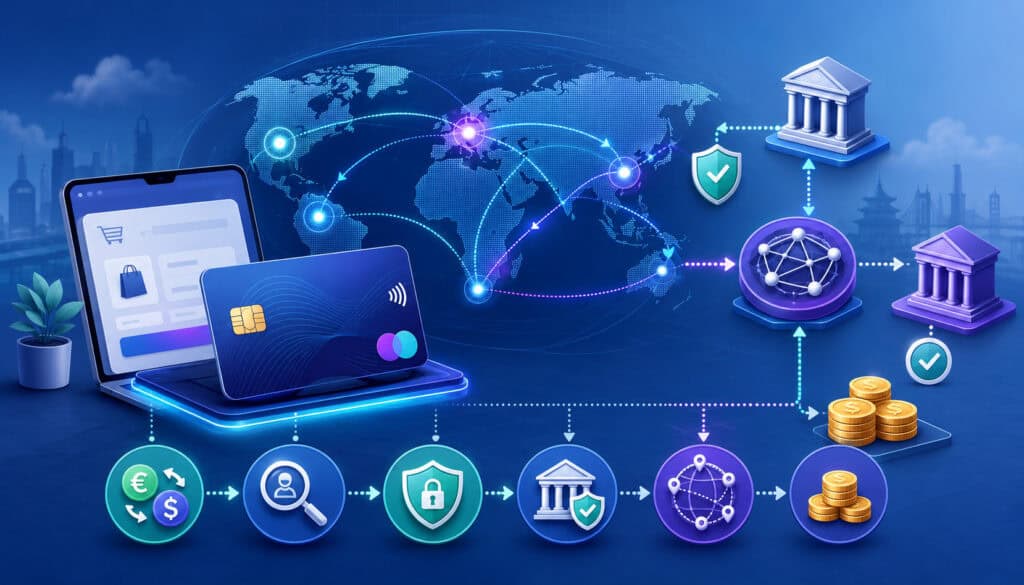
A transaction does not have to involve visible currency conversion to be considered international. Cross-border treatment may be based on the location of the card issuer relative to the merchant’s acquiring setup.
An online customer may pay in the merchant’s normal billing currency and still use a foreign-issued card. In that case, the transaction can be international even though the checkout shows no currency exchange.
Common triggers include:
- A card issued outside the merchant’s acquiring country
- An international billing address
- Cross-border acquiring or routing
- Different billing and settlement currencies
- Card-not-present processing
- 3D Secure authentication
- International debit card authorization
- Preauthorization or delayed capture
- Multiple authorization retries
- Gateway routing through another region
- Enhanced fraud review
- Foreign card network assessment
- Dynamic currency conversion
Some triggers affect whether a fee applies, while others affect the amount or type of fee. The exact result depends on the merchant agreement, network rules, processor pricing, and transaction data.
Card Issuing Country and Merchant Location
The card’s issuing country is commonly identified through card-account metadata associated with the issuer. The merchant side is generally associated with the acquiring account, merchant registration, or processing arrangement.
When those locations differ, the transaction may be categorized as cross-border. This can occur even when the customer is physically located in the merchant’s country or when both parties use the same currency.
For example, a traveler could use a foreign-issued card at a local terminal. An online buyer could place an order from a domestic address while using a card issued abroad. A business client could pay an invoice with a corporate card tied to an overseas bank.
These situations illustrate why shipping address or internet location alone does not determine whether a transaction is international.
Merchants should confirm how their provider defines:
- Domestic card
- Foreign-issued card
- Cross-border transaction
- International transaction
- Acquiring location
- Merchant location
- Billing currency
- Settlement currency
Currency and Payment Routing Factors
Currency can affect authorization even when it does not determine cross-border status by itself. The customer may be billed in one currency while the merchant settles in another. Alternatively, the merchant may present the transaction in the customer’s preferred currency and later convert the proceeds.
The authorization request must clearly identify the amount and billing currency. The issuer may convert the amount for account-display purposes or apply customer-side currency and foreign transaction fees according to the card agreement.
Routing can also influence cost and approval behavior. A gateway may route transactions through different acquiring connections based on location, currency, card type, performance, or merchant configuration.
Businesses should understand:
- Which currency the customer authorizes
- Which currency is captured
- Which currency is submitted for settlement
- Whether conversion occurs before or after settlement
- Whether the gateway uses regional routing
- Whether cross-border fees apply without conversion
- Whether dynamic currency conversion is available
- How refunds are converted
A detailed comparison of cross-border assessments and currency-conversion fees can help merchants separate location-based processing charges from foreign-exchange costs.
Card-Present vs Card-Not-Present Authorization Costs
Card-present and card-not-present transactions provide different information to the issuer. A physical terminal can collect EMV chip, contactless, or mobile-wallet security data. A remote transaction instead relies on entered credentials, tokens, authentication, device data, and customer information.
Because the card is not physically presented in ecommerce, invoice, virtual-terminal, and recurring transactions, providers may apply different risk controls or pricing. These differences can influence both authorization success and total payment authorization costs.
The transaction channel is normally transmitted as part of the authorization data. Misclassifying a transaction can create reporting, pricing, dispute, or compliance issues.
Card-Present International Authorization
A card-present international transaction occurs when a customer uses a foreign-issued card at a physical payment terminal. The card may be inserted, tapped, or represented through a mobile wallet.
EMV and contactless technologies generate transaction-specific information that helps issuers evaluate authenticity. The terminal may also request a PIN, signature, or other cardholder-verification method depending on the card, amount, terminal configuration, and applicable rules.
Card-present costs may include:
- Authorization fees
- Cross-border assessments
- Terminal or network charges
- International debit handling
- Currency-conversion costs
- Dynamic currency-conversion charges
- Processor markup
A transaction can be card-present and cross-border at the same time. Physical presentation does not make a foreign-issued card domestic.
Travel-related businesses should be especially attentive to the relationship among preauthorization, tips, deposits, incremental authorization, final capture, and customer currency choice.
Card-Not-Present International Authorization
Card-not-present authorization applies when the payment is accepted without the card being physically read by a terminal. Common examples include:
- Ecommerce checkout
- Payment links
- Virtual terminals
- Telephone orders
- Online invoices
- Stored cards
- Recurring billing
- Subscription renewals
- In-app purchases
- Digital product sales
Card-not-present authorization costs may include gateway fees, fraud screening, tokenization, AVS, CVV validation, 3D Secure, account updater services, and risk review. Some providers also use a different processing rate for remote payments.
Merchants should use a secure payment page or properly integrated checkout rather than collecting card details through unsecured messages, ordinary email, or unprotected documents. The payment-data security standards apply to entities that store, process, or transmit cardholder data, as well as systems that can affect the security of the card-data environment.
The merchant resources on payment-data security provide educational material on people, processes, technology, vendor questions, and safe payment practices.
International Authorization Costs in Ecommerce
Ecommerce merchants frequently see authorization-related expenses because every checkout attempt may generate a gateway request, risk decision, issuer response, and reporting record.
The number of attempts can be higher than the number of orders. A customer might submit incorrect card data, refresh the page, use multiple cards, abandon authentication, or retry after a decline. Automated subscription renewals can add further authorization volume.
As a result, ecommerce authorization costs should be measured using both completed sales and total attempts.
Useful metrics include:
- Total authorization attempts
- Unique checkout sessions
- Approved authorizations
- Declined authorizations
- Technical failures
- Authentication attempts
- Captured transactions
- Authorization-to-capture rate
- First-attempt approval rate
- Approval rate by issuing country
- Cost per approved order
A merchant with a low per-request fee can still face significant expense when duplicate submissions or uncontrolled retries produce a high number of unsuccessful attempts.
Why Ecommerce Authorization Requires More Checks
In a store, the terminal can read a physical chip or contactless credential. Ecommerce systems cannot use that same physical evidence, so other information helps assess the transaction.
Common checks include:
- CVV result
- Billing-address verification
- Postal-code match
- Device information
- IP and location signals
- Email and phone indicators
- Account history
- Order value
- Shipping and billing relationship
- Transaction velocity
- 3D Secure authentication
- Risk score
These tools do not all make the issuer’s final decision. Some operate at the gateway or merchant level, while the issuer applies its own risk model.
Additional checks may increase direct technology costs or add checkout friction. However, removing verification without a structured review may increase fraud, disputes, and downstream costs.
The goal is not to collect as much data as possible. It is to collect appropriate data accurately, transmit it securely, and use risk controls in a way that supports legitimate customers.
Checkout Design and Authorization Success
Checkout design can influence both data quality and customer behavior. Confusing fields, hidden currency information, restrictive address formatting, or unclear error messages may cause avoidable failures.
A well-designed international checkout should:
- Display the transaction currency before authorization
- Accept international address formats
- Identify mandatory fields clearly
- Validate without erasing entered data
- Prevent accidental duplicate submission
- Explain authentication steps
- Use a recognizable merchant name
- Show an accurate total
- Provide secure alternatives after a decline
- Avoid repeated automatic attempts
Billing address forms should accommodate regional differences in postal codes, state or province fields, character length, and phone-number formatting.
Recognizable descriptors and receipts can also reduce later confusion. A customer who does not recognize the merchant name may question the charge, initiate a dispute, or contact the issuer.
Authorization Costs for Subscriptions and Recurring Billing
Subscription businesses generate a distinct authorization pattern. The customer may actively complete the first transaction, while future renewals occur automatically using stored credentials or payment tokens.
This creates two important categories:
- Customer-initiated transactions
- Merchant-initiated recurring transactions
The initial transaction establishes the payment relationship and may include CVV, billing-address verification, and 3D Secure. Later renewals generally rely on stored-credential indicators and tokenized data rather than asking the customer to re-enter the card information.
International subscription payments can face declines caused by expired cards, replaced account numbers, insufficient funds, issuer restrictions, changed customer circumstances, authentication requirements, or unclear recurring descriptors.
Initial Authorization vs Renewal Authorization
The initial authorization usually occurs while the customer is present in the checkout experience. The customer can correct information, complete an authentication challenge, choose another payment method, or contact the issuer.
A renewal authorization occurs later. Because the customer may not be actively participating, the merchant has fewer opportunities to resolve the problem immediately.
The initial payment should establish clear expectations about:
- Billing amount
- Billing frequency
- Trial conversion
- Renewal timing
- Currency
- Cancellation process
- Merchant descriptor
- Variable or usage-based charges
Tokenization can reduce the merchant’s exposure to card credentials and support stored-payment workflows. Account updater services may refresh eligible credentials when cards are replaced or expire, depending on the provider and card relationship.
Businesses should verify how their system identifies recurring transactions and whether renewal attempts are reported separately from new purchases.
Failed Renewal Attempts and Retry Costs
A failed renewal does not always require an immediate second attempt. The correct response depends on the decline reason and available customer action.
Repeated attempts can increase:
- Gateway authorization fees
- Processor request fees
- Fraud-screening charges
- Customer complaints
- Support workload
- Issuer concern
- Account suspension risk
- Involuntary customer churn
A reason-based retry strategy may distinguish temporary conditions from permanent problems. A soft decline could potentially be resolved after authentication, a delay, or corrected information. A hard decline may require a new payment method.
Good retry management typically includes:
- A limit on total attempts
- Time between automated retries
- Customer notifications
- Secure payment-update links
- Alternative payment methods
- Response-code analysis
- Duplicate-attempt prevention
- Clear cancellation or grace-period rules
Retry schedules should be reviewed with qualified payment and compliance professionals because network rules, provider capabilities, customer-consent requirements, and regional obligations may differ.
Preauthorization, Authorization Holds, and Delayed Capture
Preauthorization reserves an estimated amount before the merchant completes the final charge. The issuer may place a temporary hold against the customer’s available credit or account balance.
Businesses commonly use preauthorization when the final amount or service completion is not yet known. Examples include:
- Hotels and lodging
- Vehicle rentals
- Equipment rentals
- Reservations
- Deposits
- Appointment-based services
- Fuel purchases
- Tips or variable totals
- Delayed shipping
- High-value custom orders
Preauthorization does not give the merchant unlimited authority to charge any later amount. The final capture must follow the applicable rules, customer agreement, processor capabilities, and transaction parameters.
When Businesses Use Preauthorization
A merchant may preauthorize a card to confirm that it is valid and that the issuer is willing to reserve an estimated amount. The merchant later captures the final amount or releases the hold.
For example, a travel-related business may authorize an estimated total at check-in and capture the final balance after additional services are known. A seller may authorize an order when it is placed and capture it after confirming shipment.
Preauthorization can reduce the risk of performing a service without a viable payment method, but it can also create customer confusion if the hold is not explained.
Before using delayed capture, businesses should understand:
- Expected authorization validity
- Permitted capture timing
- Amount-adjustment rules
- Incremental authorization support
- Partial capture support
- Reversal procedures
- Customer disclosure
- Reporting behavior
- International currency treatment
Risks of Holding Authorizations Too Long
Authorization holds do not remain valid indefinitely. If the merchant waits too long, the authorization may expire and a new request may be required.
Late capture can lead to:
- Failed capture
- A second authorization fee
- Duplicate-looking holds
- Reduced customer availability
- Support complaints
- Reconciliation differences
- Unexpected issuer review
- Currency-value differences
When an order is canceled or the merchant captures less than the authorized amount, an authorization reversal may help release the unused hold. Release timing ultimately depends on the issuer and payment system.
Businesses should monitor aging authorizations and establish procedures for capturing, reducing, reversing, or canceling them promptly.
Authorization Declines and Their Cost Impact
Declined authorizations affect more than immediate revenue. They can generate request-level fees, additional fraud checks, customer-support work, abandoned carts, and repeated payment attempts.
A decline does not always mean that the customer lacks funds. The issuer may reject a transaction because of account restrictions, fraud concerns, incorrect data, authentication requirements, unusual geography, merchant category, currency, or technical conditions.
Businesses should track decline patterns rather than treating every failure as identical.
Useful breakdowns include:
- Issuing country
- Card type
- Currency
- Transaction channel
- New or returning customer
- Initial or recurring payment
- Soft or hard decline
- Authentication result
- Gateway route
- Order value
- Time of attempt
Soft Declines vs Hard Declines
A soft decline is a rejection that may be resolved when circumstances change. Examples may include temporary insufficient funds, authentication required, issuer unavailable, processing timeout, or an unusual transaction requiring customer verification.
A hard decline is less likely to succeed without a meaningful change. Examples may include an invalid account, permanently closed card, restricted transaction, reported card, or clearly incorrect credentials.
The labels are useful but not universal. A processor may classify responses differently, and a generic issuer code may provide limited detail.
A responsible response framework might include:
- Triggering authentication when requested
- Asking the customer to correct information
- Offering another payment method
- Waiting before retrying a temporary failure
- Stopping attempts after a permanent decline
- Preventing duplicate submissions
- Escalating technical failures for review
Businesses should avoid telling customers that a decline proves fraud or insufficient funds unless the available information clearly supports that explanation.
Avoiding Unnecessary Retry Attempts
Repeated authorization attempts can resemble card testing or automated abuse. They may trigger velocity controls at the gateway, processor, network, or issuer.
Unnecessary retries may also create:
- Multiple authorization charges
- Repeated fraud-screening fees
- Duplicate holds
- Customer confusion
- Higher decline volume
- Lower measured approval rates
- Extra support tickets
- Increased risk review
Retry logic should consider the response category. A technical timeout may justify a controlled retry with duplicate protection. An authentication-required response may justify a new attempt after authentication. An invalid card response should normally direct the customer to update the payment method.
For subscriptions, spacing retries and communicating with customers can be more effective than sending multiple attempts in a short period.
Fraud Screening and Authentication Costs
Fraud screening and card authorization are connected but separate. A merchant or gateway may evaluate the transaction before sending it to the issuer. The issuer then performs its own review and makes the authorization decision.
A fraud tool may approve a transaction that the issuer declines. It may also block a transaction before the issuer sees it. Reports should distinguish merchant or gateway blocks from issuer declines.
Risk services may be priced through:
- A monthly subscription
- A charge per screened transaction
- A fee per authorization
- A fee per authentication attempt
- A percentage of payment volume
- Bundled gateway pricing
- Manual-review charges
The value of a risk tool should be reviewed through fraud losses, false positives, approval rates, operating workload, and customer impact—not only the direct per-transaction fee.
AVS, CVV, and 3D Secure
Address Verification Service, commonly called AVS, compares billing information submitted during the transaction with information available to the issuer. International support and result detail can vary.
CVV is the security code printed on or associated with the card. It helps confirm that the customer has access to card information, although it does not prove that the transaction is legitimate.
3D Secure is an authentication framework that can allow the issuer to evaluate additional information and, when needed, ask the cardholder to complete a challenge.
These tools can support risk decisions, but none should be treated as a perfect fraud test. An AVS mismatch can result from international formatting. A correct CVV can still be used in an unauthorized transaction. A 3D Secure challenge can add friction or be abandoned.
Merchants should evaluate these signals together with transaction context.
Balancing Fraud Protection and Approval Rates
Strict fraud settings can block high-risk activity, but they can also reject legitimate international customers. International addresses, devices, names, and purchasing patterns may differ from domestic expectations.
Possible false-positive triggers include:
- Different shipping and billing countries
- International phone formats
- Postal-code formatting differences
- Use of a travel connection or mobile network
- High-value first purchase
- Expedited international shipping
- Customer location different from issuing country
- Non-Latin characters
- Multiple family cards on one account
Risk rules should be reviewed using confirmed fraud, chargebacks, issuer declines, customer contacts, and manual-review outcomes.
Relaxing every rule to increase approvals would be unsafe. Conversely, blocking every mismatch can damage legitimate conversion. Qualified cybersecurity, compliance, legal, and payment professionals should review controls that affect payment-data handling and fraud exposure.
Currency Conversion and Authorization Amounts
Currency affects what the customer sees, what the issuer authorizes, what the merchant captures, and what eventually settles.
Important currency terms include:
- Display currency: The currency shown in the storefront
- Billing or presentment currency: The currency submitted for authorization
- Cardholder account currency: The currency associated with the customer’s account
- Settlement currency: The currency paid to the merchant
- Conversion rate: The rate used to translate one currency into another
A cross-border transaction can occur without merchant-side currency conversion. The card may be foreign-issued while the customer is billed and the merchant is settled in the same currency.
Foreign transaction fees are generally customer-side charges assessed under the cardholder’s agreement. They should not automatically be treated as merchant authorization costs. Consumer guidance notes that foreign transaction fees may apply to certain international purchases and can be percentage-based.
For a deeper distinction, review foreign transaction fees compared with cross-border fees.
Why the Authorized Amount May Differ From the Final Amount
The authorized amount and final captured amount may differ for legitimate reasons. A merchant might add a confirmed tip, adjust shipping, complete a partial shipment, finalize a rental total, or capture less than the original estimate.
Currency timing can create another difference. If authorization and settlement occur at different times, the amount shown in the customer’s account currency may reflect changing exchange rates or issuer practices.
Differences may arise from:
- Delayed capture
- Incremental authorization
- Partial capture
- Tips
- Taxes or shipping adjustments
- Currency-rate changes
- Estimated deposits
- Dynamic currency conversion
- Refund timing
- Issuer display practices
Merchants should avoid changing the billing currency after authorization without clear customer communication and a valid operational basis.
Currency Display and Customer Expectations
Customers should know which currency they are authorizing before submitting the transaction. A currency symbol without a currency code can be ambiguous because several currencies share similar symbols.
Clear checkout presentation should include:
- Currency code
- Final amount
- Taxes and fees
- Shipping cost
- Recurring billing currency
- Refund currency policy
- Any optional currency choice
- Whether conversion may be handled by the customer’s issuer
Clear presentation reduces support questions and disputes. It also helps customers understand why the amount shown on their card account may differ from the storefront value.
Where dynamic currency conversion is offered, the customer should receive the disclosures and choices required by applicable rules and provider procedures. Businesses should seek professional review for specific contractual, regulatory, and disclosure requirements.
International Card Authorization Costs on Merchant Statements
Merchant statements and gateway reports are the primary records for identifying authorization-related charges. The statement may show each fee separately, summarize them by category, or bundle them into a broader rate.
A merchant should compare at least three sources:
- Contract or pricing schedule
- Gateway and processor activity reports
- Monthly merchant statement
The contract explains expected pricing. Activity reports show transaction volume and outcomes. The statement shows what was actually charged.
Authorization expenses can be misunderstood when the statement includes both flat fees and percentage-based costs. For example, a business might pay a flat authorization fee for every request and a cross-border assessment on completed foreign-card volume.
Statement Terms to Look For
Possible authorization and international-payment labels include:
- Authorization fee
- Auth fee
- Transaction authorization
- Network authorization
- International authorization
- Cross-border authorization
- Gateway authorization
- Gateway transaction
- CNP authorization
- Ecommerce authorization
- Declined authorization
- Decline fee
- Foreign card fee
- International service fee
- International service assessment
- Cross-border assessment
- Currency-conversion fee
- Risk-screening fee
- Authentication fee
- Processor markup
A line item should be reviewed in context. The same phrase may refer to different services under different pricing arrangements.
Merchants should ask:
- What event triggers the fee?
- Is it flat or percentage-based?
- Does it apply to declined attempts?
- Are retries charged?
- Are voids charged?
- Is fraud screening included?
- Is 3D Secure included?
- Does the fee apply by card type or region?
- Is it assessed by a network or added by the processor?
Why Statement Review Should Be Routine
One statement provides a snapshot. Routine review reveals trends.
A monthly or quarterly process can identify:
- Rising authorization volume
- Increased decline rates
- Duplicate attempts
- Higher foreign-card volume
- Gateway overages
- Unexpected international fees
- Changes in processor markup
- More authentication attempts
- Refund or reversal problems
- Differences between approvals and captures
Calculate both total authorization expense and cost per completed order. If authorization attempts rise while completed orders remain flat, the business should investigate checkout behavior, retries, bot traffic, fraud attempts, or technical duplication.
Statements may also contain errors or descriptions that require clarification. Businesses should keep written explanations, pricing amendments, and support responses with payment records.
Authorization Approval Rates and Business Performance
Authorization approval rate measures how often payment requests receive approval. It is a central payment-performance metric, but it should not be viewed alone.
A high approval rate is not automatically good if fraud, chargebacks, or refund abuse also increase. A low approval rate is not automatically caused by issuer behavior if the merchant’s fraud system blocks many attempts before authorization.
Useful related metrics include:
- Checkout conversion rate
- Gateway acceptance rate
- Issuer approval rate
- First-attempt approval rate
- Eventual approval after retry
- Authentication completion
- Authorization-to-capture rate
- Refund rate
- Chargeback rate
- Cost per approved transaction
The cross-border authorization rate should be separated from the domestic rate because transaction characteristics and issuer behavior can differ.
What Is an Authorization Approval Rate?
A basic authorization approval-rate formula is:
Approved authorization requests ÷ Total authorization requests × 100
Suppose a merchant sends 1,000 authorization requests and receives 800 approvals. The basic approval rate is 80 percent.
However, the result depends on how attempts are counted. Ten retries from one customer can be counted as ten requests even though they represent one attempted purchase.
For better analysis, businesses may track:
- Approval per attempt
- Approval per customer
- Approval per checkout session
- First-attempt approval
- Final recovery after permitted retries
- Approval by issuing country
- Approval by currency
- Approval by payment route
Teams should agree on definitions so finance, operations, fraud, and ecommerce reports use comparable numbers.
Why False Declines Matter
A false decline occurs when a legitimate payment is rejected. It may result from issuer risk controls, merchant fraud rules, data mismatch, authentication failure, technical problems, or unusual transaction characteristics.
False declines can cause:
- Lost sales
- Customer frustration
- Increased support contacts
- Abandoned subscriptions
- Lower customer trust
- Migration to another seller
- Repeated authorization costs
The merchant cannot control every issuer decision. However, it can improve the quality of submitted data, prevent duplicate attempts, respond appropriately to authentication requests, display currency clearly, and offer secure alternative payment methods.
False-decline analysis should not involve weakening security indiscriminately. The objective is to reduce unnecessary uncertainty while maintaining appropriate fraud controls.
Refunds, Voids, and Authorization Reversals
Refunds, voids, and authorization reversals all cancel or reduce payment activity, but they occur at different stages.
A void generally stops a transaction before settlement. A refund returns money after settlement. An authorization reversal asks the issuer to release all or part of an unused authorization hold.
Each action can affect reports, customer account displays, gateway fees, and reconciliation differently.
Void vs Refund
A void is normally used when a transaction has been authorized or captured but has not completed settlement. If processed in time, it may prevent the charge from posting as a finalized transaction.
A refund occurs after settlement. The merchant submits a separate credit transaction to return money to the customer.
Refund differences may include:
- Separate processing fees
- Original fees not being returned
- Currency conversion at a different rate
- Delay before the customer sees the credit
- Partial-refund handling
- Cross-border refund costs
- Reconciliation across settlement periods
Customers may use “refund” to describe both situations, but support teams should know which event actually occurred.
Authorization Reversal Basics
An authorization reversal communicates that the merchant will not use all or part of an approved hold. It may be appropriate when an order is canceled, inventory is unavailable, or the final captured amount is lower than the preauthorized amount.
A timely reversal can help reduce the period during which funds remain unavailable to the customer. The issuer still controls how quickly the hold is reflected on the customer’s account.
Authorization reversals should be matched to the original transaction using the required identifiers. Poor matching or missing data may delay release.
Businesses should monitor:
- Uncaptured approvals
- Partially captured authorizations
- Canceled orders
- Reversal submission
- Reversal response
- Customer inquiries
- Expired holds
Ways to Reduce Avoidable International Authorization Costs
Not every international payment cost can be removed. Network assessments, legitimate fraud screening, gateway services, and secure payment infrastructure support important parts of the payment process.
The practical goal is to reduce avoidable expense caused by bad data, duplicate requests, unnecessary retries, misconfigured rules, confusing currency displays, or poor reconciliation.
Effective improvements usually involve payment operations, ecommerce, finance, fraud, support, and technical teams rather than a single pricing change.
Improve Data Quality at Checkout
Accurate transaction information gives gateways and issuers better signals. Merchants should collect appropriate information through secure, well-designed fields.
Review:
- Billing name
- Billing address
- Postal code
- Country
- Phone number
- Shipping information
- CVV handling
- Currency display
- Order total
- Merchant descriptor
Avoid imposing one regional address format on every customer. Overly strict postal-code or state-field validation can block legitimate international buyers.
Prevent customers from submitting the payment form repeatedly while the first request is processing. Use technical controls that make duplicate requests identifiable and safe to handle.
Review Gateway and Fraud Settings
Gateway defaults may not match every business model. A rule suitable for low-value domestic retail may be too restrictive for international digital services or too permissive for high-value shipments.
Review:
- AVS response handling
- CVV response handling
- 3D Secure rules
- Device and velocity controls
- Country restrictions
- Amount thresholds
- Manual-review queues
- Duplicate detection
- Retry behavior
- Routing priorities
- Stored-credential indicators
- Account updater settings
Changes should be tested and monitored. Compare approval rate, fraud, chargebacks, customer complaints, and review workload before and after an adjustment.
Use qualified professionals for changes affecting cybersecurity, payment compliance, customer data, authentication obligations, or contractual responsibilities.
International Card Authorization Cost Checklist
| Checklist Area | What to Review | Why It Matters |
| Authorization fees | Per-transaction authorization pricing | Shows request-level cost |
| Cross-border fees | International card line items | Identifies location-related payment costs |
| Gateway fees | Authorization, fraud, authentication, and routing charges | Shows online processing cost |
| Declines | Soft and hard decline patterns | Reduces ineffective follow-up |
| Retry rules | Failed-payment retry schedule | Prevents excessive attempts |
| Fraud tools | AVS, CVV, 3D Secure, risk filters | Balances protection and approval |
| Currency | Billing and settlement currency | Reduces confusion and reconciliation errors |
| Preauthorization | Holds, reversals, and capture timing | Prevents expired holds and customer issues |
| Reports | Approval rate and authorization volume | Supports performance review |
| Records | Receipts, authorization logs, disputes, and currency details | Supports reconciliation |
| Subscriptions | Stored credentials and updater results | Reduces failed renewals |
| Support | Customer-facing decline and hold guidance | Improves issue resolution |
How to Use the Checklist Before Reviewing Costs
Start with the pricing schedule and mark every fee related to authorization, gateway use, international cards, fraud screening, authentication, currency, and declines.
Next, export authorization and settlement reports for the same period. Compare:
- Total attempts
- Approved attempts
- Declined attempts
- Captures
- Settlements
- Voids
- Reversals
- Refunds
Then calculate total cost by category. Avoid placing every international line item into one group. Separate request-level costs, cross-border assessments, currency costs, risk tools, and settlement-related expenses.
Finally, investigate operational patterns. High decline volume, repeated retries, abandoned authentication, and expired preauthorizations can increase costs even when the contractual rate has not changed.
Records to Keep for Authorization Review
Maintain records according to applicable retention, privacy, security, contractual, and regulatory requirements. Sensitive card data should not be stored merely because it appears useful for analysis.
Appropriate records may include:
- Authorization logs
- Approval and decline summaries
- Issuer response categories
- Gateway reports
- Processor statements
- Capture reports
- Settlement reports
- Refund and void records
- Authorization-reversal reports
- Chargeback files
- Currency details
- Customer communications
- Pricing schedules
- Provider explanations
- Configuration-change history
Keep reports organized by processing period and merchant account. Document metric definitions so future reviewers know how approval rates and costs were calculated.
Best Practices for Managing International Authorization Costs
Managing authorization costs is an ongoing operating process. International volume, customer locations, currencies, fraud patterns, issuer behavior, gateway rules, and provider pricing can change.
Recommended practices include:
- Review merchant statements and gateway reports regularly.
- Track authorization approval rates.
- Separate authorization costs from settlement costs.
- Monitor international decline patterns.
- Use clear and flexible checkout fields.
- Display currency clearly.
- Keep billing descriptors recognizable.
- Prevent duplicate submissions.
- Avoid excessive retry attempts.
- Review fraud-screening rules.
- Use secure payment gateways.
- Avoid collecting card data through unsecured channels.
- Keep authorization and settlement records organized.
- Train support teams on authorization holds and declines.
- Compare total cost rather than only headline rates.
- Seek professional guidance for legal, accounting, banking, cybersecurity, compliance, tax, contract, and regulatory questions.
Creating an Authorization Cost Review Process
A useful authorization review can be completed monthly, with deeper quarterly analysis.
The process may include:
- Export authorization, capture, and settlement reports.
- Reconcile approvals with captured transactions.
- Calculate domestic and international approval rates.
- Review decline categories.
- Identify duplicate or rapid retry patterns.
- Measure gateway, risk, and authentication expenses.
- Review preauthorization aging and reversals.
- Compare refunds and chargebacks.
- Investigate pricing changes.
- Document actions and results.
Assign ownership for each issue. Finance may review costs, payment operations may review routing, ecommerce teams may review checkout data, and risk teams may evaluate fraud settings.
Changes should be measured against a baseline. Without before-and-after data, it can be difficult to determine whether a gateway or fraud adjustment improved authorization performance.
Training Finance and Support Teams
Finance teams need to understand why approved authorization totals may not equal settlement deposits. Support teams need to explain holds, declines, refunds, currency differences, and issuer-side fees without making unsupported claims.
Training should cover:
- Authorization versus settlement
- Pending holds
- Void versus refund
- Soft versus hard decline
- Customer foreign transaction fees
- Merchant cross-border fees
- Currency display
- Preauthorization
- Subscription retries
- Escalation procedures
Support representatives should avoid promising an exact hold-release time controlled by the issuer. They should also avoid stating that a customer was declined for fraud when the available response is only a generic issuer rejection.
How to Choose Payment Tools for International Authorization
Payment tools should be evaluated on more than the advertised processing rate. A low headline rate may be offset by gateway authorization charges, cross-border fees, authentication costs, poor approval performance, weak reporting, or expensive operational work.
Before selecting a gateway, processor, acquiring setup, risk tool, or recurring-billing platform, consider:
- Authorization pricing
- Decline pricing
- Cross-border assessments
- Supported currencies
- Settlement currencies
- Regional acquiring
- Gateway routing
- Fraud screening
- 3D Secure
- Tokenization
- Account updater
- Retry controls
- Preauthorization
- Partial and incremental capture
- Authorization reports
- Response-code detail
- Refund and reversal support
- Chargeback reporting
- Data export
- Reconciliation
- Customer support
- Contract transparency
The guide to international payment gateways provides additional context on gateway roles, multi-currency processing, security features, integrations, reporting, and international routing.
Questions to Ask Before Choosing Payment Tools
Ask potential providers:
- Is authorization billed per attempt or per approved payment?
- Are declined requests charged?
- Are gateway and processor authorization fees separate?
- How are cross-border authorization fees calculated?
- Which international assessments appear on statements?
- Are fraud checks included?
- Is 3D Secure priced per attempt or completed authentication?
- Are AVS and CVV services included?
- Are retries automatically generated?
- Can retry logic use response categories?
- Does the platform prevent duplicate requests?
- Are preauthorization and delayed capture supported?
- What are the capture deadlines?
- Can authorizations be reversed?
- Which currencies can be presented and settled?
- Where does currency conversion occur?
- Are account updater and tokenization included?
- How detailed are decline reports?
- Can reports be exported?
- How are contract changes communicated?
Request written answers where possible. Verbal explanations may not be sufficient for comparing complex pricing.
Comparing Approval Rates, Transparency, and Total Cost
The lowest authorization fee is not automatically the lowest-cost option. A tool with better reporting, duplicate prevention, authentication handling, and approval performance may produce a lower overall cost per completed payment.
A practical comparison should include:
- Total monthly cost
- Cost per authorization attempt
- Cost per approved transaction
- Cost per settled order
- First-attempt approval rate
- International approval rate
- False-decline indicators
- Fraud and chargeback outcomes
- Retry recovery
- Refund handling
- Staff workload
- Reconciliation time
- Customer experience
Compare similar transaction populations. Approval rates can differ by country, currency, business model, card type, order amount, and customer mix.
Frequently Asked Questions
What are international card authorization costs?
International card authorization costs are charges associated with sending an approval request for a transaction involving a foreign-issued card, international route, different currency, or other cross-border characteristic.
They may include a flat authorization fee, gateway fee, fraud-screening cost, authentication charge, cross-border assessment, or processor markup. The exact combination depends on the merchant agreement and payment setup.
Are international card authorization fees the same as processing fees?
Not always. An authorization fee is generally connected with requesting approval. Processing fees may include interchange, network assessments, processor markup, capture, clearing, settlement, gateway services, and other costs.
Some providers bundle authorization into the processing rate, while others list it separately. Merchants should review the pricing schedule and statement definitions.
Why do international card authorization costs appear?
They may appear because an international authorization requires gateway routing, network communication, issuer review, risk screening, authentication, or cross-border processing.
A foreign-issued card can trigger international treatment even when the customer pays in the merchant’s normal currency.
What is the difference between authorization and settlement?
Authorization is the issuer’s decision on whether a transaction can proceed. Settlement is the later movement of funds through the acquiring chain toward the merchant.
An approval is not a final deposit. The merchant generally needs to capture the transaction before clearing and settlement are completed.
Do declined international card transactions create costs?
They can. Some gateways and processors charge for every authorization attempt, including declines. Fraud screening and authentication may also be billed even when the issuer rejects the payment.
Merchants should confirm whether declines, retries, timeouts, and duplicate attempts are chargeable under their pricing arrangement.
How does currency conversion affect authorization?
The authorization request identifies the amount and billing currency. If that currency differs from the customer’s account currency, the issuer may convert it for the customer.
The merchant may also settle in a different currency. Conversion timing, exchange rates, delayed capture, and refunds can cause the amount displayed to differ across reports.
How can merchants find authorization costs on statements?
Look for terms such as authorization fee, auth fee, gateway authorization, network authorization, international authorization, CNP authorization, decline fee, cross-border assessment, international service fee, or foreign card fee.
Compare statement line items with gateway activity and contract pricing. Ask the provider for a written explanation of any unclear fee.
How can businesses reduce avoidable international authorization costs?
Businesses can improve checkout data, prevent duplicate submissions, use reason-based retry rules, review fraud settings, display currency clearly, manage preauthorizations, and monitor decline patterns.
The objective should be to reduce unnecessary requests and false declines without weakening appropriate security or compliance controls.
Conclusion
International card authorization costs are an important part of understanding the total expense of cross-border card acceptance. Authorization is the stage at which the merchant requests issuer approval, but it is only one part of a longer lifecycle that includes capture, clearing, settlement, refunds, reversals, and reconciliation.
International transactions may involve request-level authorization fees, gateway charges, card-not-present pricing, cross-border assessments, fraud screening, 3D Secure, currency conversion, processor markup, and decline-related costs. These expenses may be separately listed, bundled together, or described with unfamiliar statement labels.
Businesses can gain better control by comparing authorization attempts with completed transactions, monitoring approval rates, separating authorization from settlement costs, reviewing international decline patterns, and investigating repeated retries or duplicate requests.
Strong operational practices also matter. Accurate checkout data, clear currency displays, recognizable descriptors, secure payment tools, appropriate fraud settings, timely capture, authorization reversals, and organized records can reduce preventable friction.
Finance and support teams should understand how holds, declines, customer foreign transaction fees, merchant cross-border fees, currency conversion, voids, and refunds differ. That knowledge supports more accurate reconciliation and clearer customer communication.
Payment options should ultimately be compared based on transparency, authorization performance, fraud controls, reporting quality, total cost, and long-term operational fit—not only the lowest advertised processing rate.
Because payment contracts, card-network rules, cybersecurity requirements, regional regulations, and financial reporting obligations vary, businesses should seek qualified professional guidance for specific legal, tax, accounting, banking, cybersecurity, contractual, regulatory, and payment-compliance questions.