By Samuel Ward January 3, 2026
Cross Border Fees are the “friction costs” that appear when money, data, and compliance obligations move across borders. For most businesses, cross border fees show up as a mix of visible charges (like a stated FX markup) and invisible charges (like intermediary bank deductions, scheme assessments, routing markups, and operational overhead).
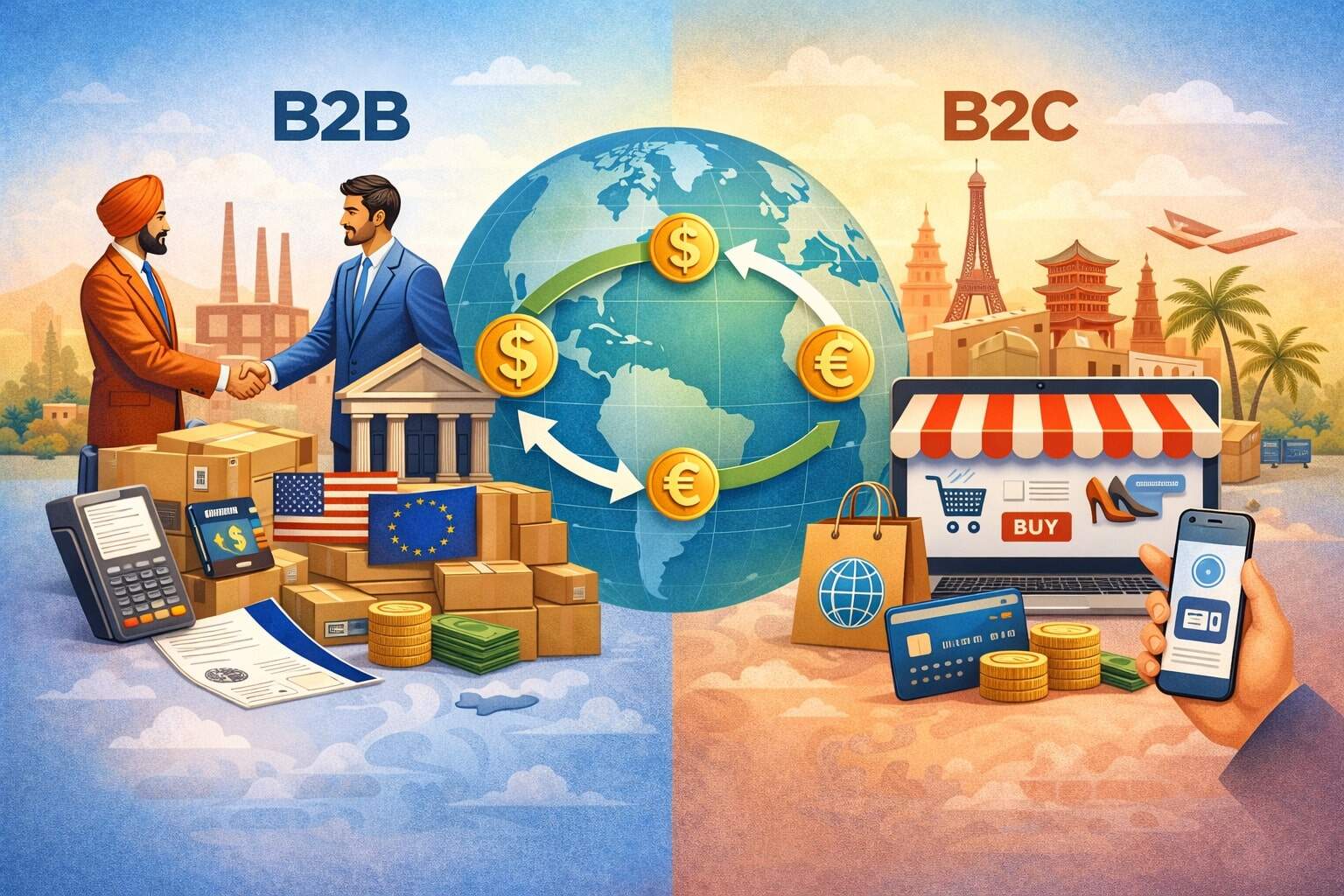
The tricky part is that cross-border fees don’t behave the same way in B2B payments as they do in B2C payments—even when the payment amount is identical.
In B2C, cross-border fees are often optimized for speed, convenience, and acceptance. Consumers care about checkout success, familiar payment methods, and clear pricing. In B2B, cross border fees are tied to invoicing, reconciliation, risk controls, and delivery terms.
Businesses care about predictable settlement, rich remittance data, audit trails, and the ability to recover or dispute errors. That’s why two cross-border transactions of the same value can have very different cross border fees depending on whether they’re B2B or B2C.
This guide breaks down cross border fees end-to-end: what they include, why they differ between B2B and B2C payments, how the latest infrastructure and standards are changing cross border fees, and what future trends mean for the next few years.
It is written for US-based businesses selling internationally or paying international suppliers, with examples that reflect common merchant and vendor workflows.
Understanding Cross Border Fees: The Full Cost Stack (Not Just the Rate)
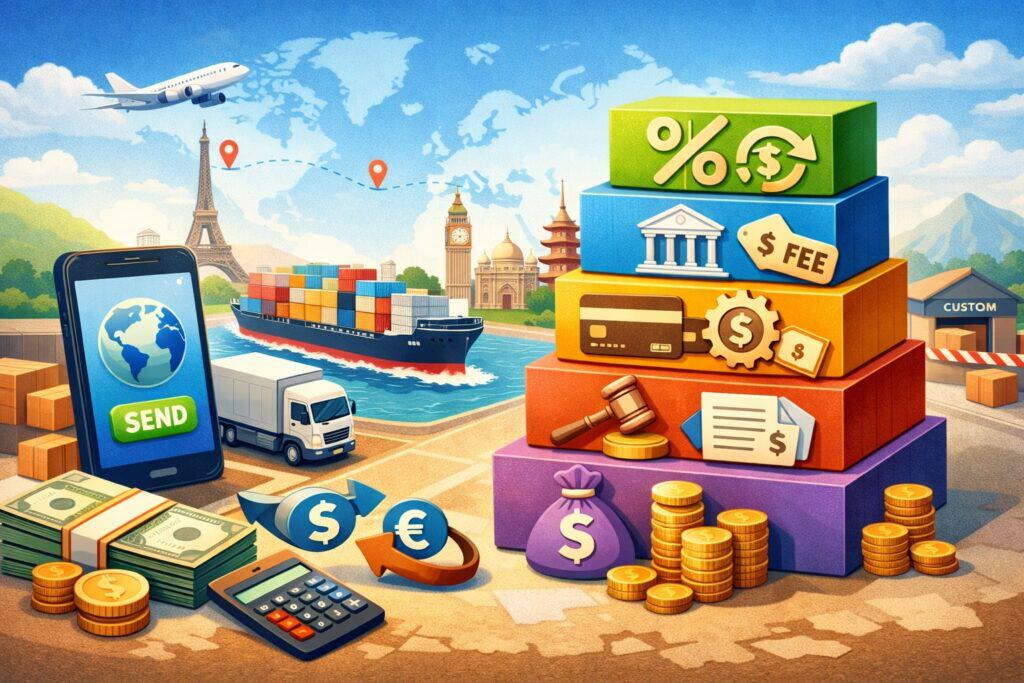
Cross-border fees are rarely a single fee. They are a stack of costs, each linked to a different party in the payment chain. When a business asks, “What are the cross border fees?” the most accurate answer is, “Which rail, which acceptance method, which currencies, which compliance checks, and which settlement route?”
That complexity exists in both B2B and B2C payments, but it’s amplified in B2B because reconciliation and risk controls are heavier.
A practical way to understand cross border fees is to group them into six categories:
1) FX conversion and spread: If currencies differ, you typically pay a conversion cost. This can be a disclosed markup or embedded in the exchange rate offered. Cross border fees rise when exotic currency pairs or illiquid corridors require wider spreads.
2) Scheme/network assessments and cross-border assessments (for card rails): Card networks apply assessments based on volume and attributes such as cross-border status (issuer country differs from merchant country).
These cross border fees are separate from interchange and processor markup. Network documents and partner updates frequently describe cross-border assessments as distinct pass-through charges.
3) Interchange and acceptance costs (for card rails): Interchange can be higher for commercial cards and certain cross-border scenarios. In B2B, buyers often use commercial cards or virtual cards to capture rewards and extend cash flow, which can increase the acceptance side of cross-border fees even if FX is competitive.
4) Banking fees, correspondent/intermediary deductions, and lifting fees (for wire-type rails). Traditional bank-based cross-border routes can involve multiple institutions. Fees can be shared, split, or deducted from principal, creating unpredictability. This unpredictability matters more in B2B, where invoices must be matched to net received amounts.
5) Compliance and risk overhead. Screening (sanctions lists, AML monitoring), KYC/KYB, and fraud controls create cost. Even when not billed as a line item, they influence pricing. Cross-border payments often face stricter compliance checks than domestic payments, which can affect speed and cost.
6) Operational costs: exceptions, returns, disputes, and reconciliation. Many businesses underestimate these cross border fees because they show up as labor time, delayed shipments, mismatched invoices, or customer support costs rather than a processor statement line.
In B2C, the buyer experience often determines which costs matter most: authorization success, frictionless checkout, and clarity. In B2B, the cost stack includes data, controls, and predictability. That’s why cross border fees are not only “how much,” but also “how manageable.”
Why Cross Border Fees Differ Between B2B and B2C Payments
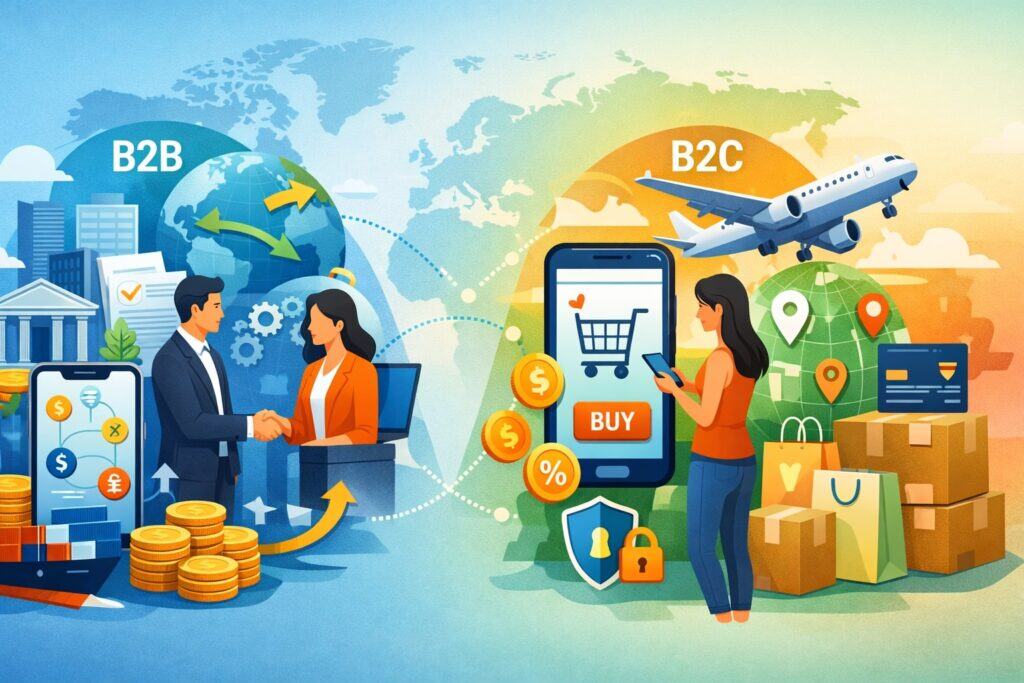
Cross border fees differ between B2B and B2C payments for one main reason: the transaction is solving a different business problem.
A consumer purchase is usually a single-event exchange—goods/services for payment—while a B2B payment is often part of a longer workflow: contract terms, partial shipments, milestone billing, tax handling, and procurement controls.
Different payment instruments drive different cross border fees
B2C payments commonly rely on cards, digital wallets, and local alternative payment methods. Those rails are built for high authorization rates and instant confirmation. The cross border fees in B2C are often “bundled” into blended processing rates or included as cross-border assessments and FX markups.
B2B payments use a wider mix: wires, bank transfers, commercial cards, virtual cards, and emerging account-to-account options. B2B cross border fees can increase because commercial card interchange and associated fees are often higher than consumer card profiles, but B2B can also reduce cross-border fees through negotiated FX, net settlement, or corridor-specific rails.
Different data requirements change the “real cost” of cross border fees
B2B requires invoice identifiers, tax references, purchase order numbers, and remittance details. When payment messaging is weak, businesses pay “hidden cross border fees” through manual reconciliation.
Industry initiatives to improve cross-border messaging and transparency—such as ISO 20022 adoption for richer structured data—aim to reduce these operational cross border fees over time.
Different risk profiles affect pricing
B2C risk is often fraud and chargebacks. B2B risk includes counterparty risk, delivery disputes, contract enforcement, and sanctions exposure.
Screening obligations can expand with higher-value B2B transfers, high-risk goods, or sensitive corridors. As a result, B2B cross border fees may be driven more by compliance, routing, and exception handling than the visible “rate.”
Different settlement expectations change the “value” of cross border fees
B2C buyers want instant confirmation. B2B sellers want predictable funds availability and fewer deductions. Even if a B2B route has slightly higher explicit cross border fees, it can be cheaper overall if it reduces payment investigations, short pays, and back-office time.
In short: B2C cross border fees are heavily shaped by acceptance and conversion, while B2B cross-border fees are heavily shaped by data, predictability, and operational efficiency.
Cross Border Fees in Card-Based Payments: What Changes in B2B vs B2C

Card rails are often the most misunderstood area of cross border fees, especially when businesses compare B2B and B2C acceptance. In B2C, cards are the default for many international ecommerce transactions.
In B2B, cards (especially virtual cards) are frequently used for payables because they automate controls and generate rebates for buyers—yet they can introduce higher acceptance costs for suppliers.
The cross border card fee stack
For card-based cross-border payments, cross border fees typically include:
- Interchange (paid to the issuer; varies by card type and transaction attributes)
- Network assessments (paid to the network; often a percentage of volume)
- Cross-border assessments (additional network charges when issuer and merchant are in different countries)
- Processor/acquirer markup (your provider’s margin and service fees)
Network documentation and industry partner updates describe cross-border assessments as distinct pass-through charges applied when the issuer country differs from the merchant country.
Why B2B card cross border fees often look higher
B2B payments frequently involve commercial cards and virtual cards. Commercial products can carry different interchange categories than consumer cards, and they often come with richer data fields (Level 2/Level 3) that support procurement.
But the tradeoff is that acceptance can be more expensive for the supplier—meaning cross border fees can be higher than a similar B2C purchase.
B2B buyers like virtual cards because they can set spend limits, time windows, and supplier locks. This reduces fraud and improves controls. Industry papers also highlight virtual cards as a tool to modernize B2B payments and improve operational efficiency.
However, suppliers must decide whether the control benefits (fewer late payments, faster authorization, cleaner remittance data) offset the higher acceptance-side cross border fees.
Why B2C card cross border fees are often “experience-optimized”
B2C cross border fees are often structured around conversion. Merchants may accept higher cross-border fees if it increases authorization rates and reduces cart abandonment. Features like localized checkout, multi-currency pricing, and optimized routing can reduce declines but may shift costs into FX margins or premium acquiring.
Practical takeaway
If you run B2B card acceptance for international buyers, treat cross border fees as part of a negotiation: payment terms, speed, and reconciliation quality. If you run B2C, treat cross-border fees as part of a conversion strategy: acceptance, authorization, and customer trust.
Cross Border Fees in Bank Rails and Account-to-Account Payments: B2B vs B2C Reality

Bank-based cross border routes are common in B2B because invoice settlement and supplier payments historically relied on wires and bank transfers.
B2C uses bank rails too (especially for remittances and marketplace payouts), but consumers often prefer methods that confirm instantly and feel familiar. The result is that cross border fees on bank rails create different pain points in B2B vs B2C.
Why bank-rail cross-border fees feel unpredictable
Traditional cross-border bank transfers can involve correspondent banking chains, where intermediary institutions process the payment before it reaches the recipient bank. Each intermediary may deduct fees.
That’s why businesses sometimes see “short payments,” where the supplier receives less than the invoice amount. These deductions are cross border fees, but they may not be fully visible at initiation.
This matters far more in B2B than B2C because B2B invoices must reconcile to the exact received amount. A consumer receiving a refund or payout may notice delays, but a supplier receiving $9,870 against a $10,000 invoice can trigger disputes, holds, or shipment delays—creating operational cross border fees beyond the transfer cost.
Transparency improvements that affect cross border fees
Industry efforts such as SWIFT gpi have focused on better tracking and transparency across the cross-border payment lifecycle, including fee visibility and status tracking.
Separately, ISO 20022 structured messaging is designed to enrich payment data and reduce errors, investigations, and manual repairs—an indirect but meaningful way to lower cross border fees over time by lowering exception costs.
SWIFT’s ISO 20022 resources describe ISO 20022 as the global standard for cross-border payments with major migration milestones by late 2025.
B2C bank-rail cross border fees are often “payout-focused”
In B2C contexts like creator payouts, gig platforms, or refunds, the key is that the recipient gets money reliably and quickly. Many businesses optimize for recipient experience, sometimes subsidizing cross border fees to reduce support tickets.
B2B bank-rail cross border fees are “process-focused”
In B2B, you optimize for predictability, remittance alignment, and controllable costs. Businesses often choose rails and providers based on whether they can deliver:
- Shared vs beneficiary vs sender fee options (who pays what)
- More consistent routing (fewer intermediary deductions)
- Better reference data and confirmation details
FX, Conversion, and Multi-Currency Pricing: Where Cross Border Fees Hide the Most
FX is often the largest component of cross border fees, especially when the transaction involves currency conversion. Many businesses focus on the processing fee and ignore FX spread—then wonder why margins shrink on international revenue.
FX-related cross border fees also behave differently in B2B vs B2C because pricing strategy and customer expectations diverge.
B2C: FX-related cross border fees are tied to customer trust
In B2C, customers want to know the final price at checkout. Businesses often use dynamic currency conversion, multi-currency pricing, or localized pricing.
These methods can increase conversion but may introduce FX markups—either charged explicitly or embedded in rates. If FX is mishandled, the merchant may face returns, disputes, and lost repeat purchases. That makes FX a “brand cost” as well as a cross-border fee.
B2C businesses typically choose between:
- Pricing in a single base currency (customer’s bank converts, customer bears FX cross-border fees)
- Pricing in the customer’s currency (merchant or PSP converts, merchant manages FX cross border fees)
The second approach can improve conversion, but it requires disciplined FX management.
B2B: FX-related cross border fees are tied to contract terms and settlement predictability
In B2B, invoices often specify currency, payment date, and sometimes permitted FX reference rates. Cross border fees rise when currency volatility increases and when invoice settlement timing is uncertain.
A supplier may quote in one currency but accept settlement in another with a buffer—effectively charging a risk premium that becomes part of cross border fees.
B2B FX optimization often includes:
- Locked FX at invoice time vs settlement time
- Netting (offsetting receivables/payables across currencies)
- Multi-currency accounts to reduce repeated conversions
- Corridor-based routing where local settlement reduces FX touches
Why “number of conversions” matters
A major driver of FX-related cross-border fees is how many times money is converted. Converting twice (e.g., payer currency → intermediary currency → payee currency) often costs more than a single conversion, especially when each step has its own spread.
Compliance, Screening, and “Invisible” Cross Border Fees That Hit B2B Harder
Some of the biggest cross border fees never appear as a line item. They show up as delays, manual reviews, returned funds, or onboarding friction. These are compliance-related costs: sanctions screening, AML monitoring, KYC/KYB checks, and country- or sector-specific restrictions.
Both B2B and B2C cross-border payments are impacted, but B2B is often hit harder because of higher values and more complex counterparties.
Why compliance increases cross-border fees
Cross-border payments frequently pass through multiple jurisdictions and institutions, each with its own risk tolerances and regulatory obligations.
Payment providers must confirm who is paying, who is receiving, why the funds are moving, and whether the transaction matches expected behavior. SWIFT has highlighted that cross-border payments are more complicated than domestic payments due to currency conversion, multi-jurisdiction rules, and compliance checks.
These checks create cross border fees in several forms:
- Manual review cost (staff time or provider charges)
- Delayed settlement cost (cash flow impact)
- Return/repair fees (when messages lack required details)
- Onboarding friction (lost revenue during KYB delays)
Why B2B feels it more
B2B transactions are often larger, and they may include trade-related details that need to be validated (invoice references, goods categories, contract terms). If data is incomplete, repairs happen.
That’s why improved payment messaging is so important: ISO 20022 structured data aims to reduce ambiguity and improve automation, indirectly lowering cross border fees caused by repairs and investigations.
B2C compliance costs show up as friction
In B2C, compliance-related cross-border fees often look like “checkout friction” or “payout holds.” A consumer might be asked for additional verification, or a payout might be delayed pending review. The customer experience impact can be severe, but the data needs are usually simpler than B2B.
Practical takeaway
If your cross border fees spike unpredictably, investigate compliance-related root causes: missing sender/receiver info, inconsistent names/addresses, mismatched invoice data, or high-risk corridor patterns. Many “fee” problems are actually “data” problems.
Measuring Cross Border Fees Correctly: Effective Rate, True Cost, and Failure Cost
Businesses often calculate cross border fees incorrectly by looking only at the processor statement rate. The better approach is to measure cross-border fees in three layers: effective rate, true cost, and failure cost. This framework matters in both B2B and B2C, but it is essential in B2B because operational errors are expensive.
1) Effective rate (what you can see easily)
This includes visible processing fees, disclosed cross-border assessments, and stated FX markups. It’s the easiest number to track, but it can be misleading if it excludes deductions or operational time.
For card rails, effective cross border fees often include network assessments and specific cross-border assessment charges described in network schedules or partner updates.
2) True cost (what hits your margin)
True cost adds:
- FX spread impact vs a market reference rate
- Chargebacks and disputes (B2C-heavy)
- Short pays and investigation fees (B2B-heavy)
- Labor time for reconciliation and exception handling
Many companies “save” 30 basis points on processing but lose far more in FX spread, failed payments, or staff time.
3) Failure cost (what happens when it goes wrong)
Failure cost includes:
- Lost revenue from declines (B2C)
- Delayed shipments due to missing funds (B2B)
- Supplier relationship damage (B2B)
- Customer churn due to poor checkout transparency (B2C)
Why standards and transparency matter
Efforts like SWIFT gpi tracking and richer messaging standards aim to reduce failure cost by improving traceability and data quality. BIS research using SWIFT gpi data shows that processing speed varies widely across routes and can be delayed by banks in the chain—delays that translate into cost and uncertainty.
How to Reduce Cross Border Fees in B2B Payments Without Breaking Reconciliation
Reducing cross border fees in B2B is less about finding the cheapest advertised rate and more about building a payment system that prevents exceptions. The biggest wins usually come from changing payment method mix, improving data quality, and negotiating pricing based on predictable volume.
Use payment method “fit” by supplier type
Not every supplier needs the same rail. A smart approach is segmentation:
- High-volume, repeat suppliers: negotiate corridor pricing, consider local settlement options
- One-off suppliers: prioritize reliability and traceability over absolute lowest cross border fees
- High-risk corridors or regulated goods: prioritize compliance-ready rails with fewer surprises
Improve remittance data and structured references
B2B cross-border fees rise when payments require repairs. Move toward structured payment references and consistent supplier onboarding. ISO 20022’s richer, structured fields are designed to support better data quality across cross-border payments, which should reduce investigation and repair-driven cross border fees over time.
Consider virtual cards strategically (not universally)
Virtual cards can reduce fraud and speed approvals, and industry materials often position them as a modernization tool for B2B payments.
But they may raise acceptance-side cross border fees for suppliers. Use them where the control value is highest: travel, software subscriptions, ad spend, and suppliers that prefer card acceptance.
Negotiate FX like a procurement category
FX is frequently the largest cross-border fee component. Treat FX spread as negotiable. Ask providers for:
- Transparent FX markup ranges
- Volume-based spread tiers
- Rate locks and hedging options (when justified)
- Reduced “double conversion” scenarios
How to Reduce Cross Border Fees in B2C Payments Without Killing Conversion
Reducing cross border fees in B2C has a different constraint: you can’t sacrifice checkout success for a slightly lower rate. B2C optimization is about acceptance, transparency, and customer trust—while still controlling FX and network costs.
Localize the customer experience
B2C cross-border fees often rise when transactions look “foreign” to issuer risk systems. Localization can reduce declines and customer support costs. That includes:
- Presenting prices in familiar formats
- Offering locally preferred payment methods
- Reducing mismatch signals (billing descriptors, address formatting)
Even if localization adds some provider costs, it often reduces failure cost, which is part of cross border fees in a broader sense.
Optimize FX presentation
If you offer multi-currency pricing, ensure the rate is competitive and clearly disclosed. Customers react badly when the final price differs from expectations. This can lead to disputes or chargebacks, which are expensive cross border fees in B2C.
Use smart routing and redundancy
Have more than one processing path for international transactions. If one route underperforms in a corridor, the backup keeps conversions stable. The best setups monitor:
- Authorization rate by region
- Average settlement time
- Dispute rate by corridor
- FX margin by currency pair
Watch network and program changes
Card networks update programs regularly, and cross-border assessments and related pass-through items can change. Merchant-facing updates and network schedules frequently highlight adjustments to cross-border fee components.
The “Latest” Infrastructure Shift: ISO 20022, Tracking, and Transparency Trends That Affect Cross-Border Fees
Cross border fees are being reshaped by infrastructure modernization. The big theme is better data + better transparency, which reduces exceptions and hidden costs. Two developments matter most: ISO 20022 structured messaging and improved tracking/transparency initiatives.
ISO 20022 and richer payment data
ISO 20022 is designed to carry more structured information, which improves compliance screening, reconciliation, and repair automation. SWIFT describes ISO 20022 as the global standard for cross-border payments and highlights key migration milestones around late 2025.
For merchants and payers, the key benefit is practical: fewer investigations, fewer returned payments, and better end-to-end data—reducing operational cross border fees.
Tracking and lifecycle visibility
SWIFT gpi is widely referenced as a tracking enhancement that improves transparency across cross-border payments, helping identify where delays and deductions occur.
This matters because “unknown status” creates expensive operational behavior: duplicate payments, supplier escalation, customer support tickets, and time-consuming trace requests.
A reality check on global targets
Even with modernization, industry reporting has noted that global goals to make cross-border payments cheaper and faster are difficult to hit on schedule, reflecting the complexity of multi-country coordination.
That means cross-border fees won’t magically disappear in the next year. The winners will be businesses that build better routing, better data discipline, and better provider accountability.
Future Prediction: Where Cross Border Fees Are Headed Over the Next 2–5 Years
Cross border fees are moving in two opposing directions at once: more pressure to become cheaper and more transparent, and more complexity from compliance, fraud, and multi-rail ecosystems. The likely outcome is “lower average friction for well-instrumented businesses” and “higher penalties for messy data and weak controls.”
Prediction 1: Cross border fees shift from “hidden” to “priced”
As tracking and transparency improve, providers will be pushed to disclose more of the cross-border fee stack. SWIFT has discussed enhancing fee transparency and customer experience in cross-border payments. Expect more pricing models that separate: processing, FX, routing, and compliance handling.
Prediction 2: Virtual cards expand in B2B, but acceptance pressure grows
Multiple industry sources forecast increased virtual card adoption and integration into cross-border workflows. This may increase acceptance-side cross border fees for suppliers unless competitive pressure leads to better negotiated rates or alternative rails for supplier settlement.
Prediction 3: Standards-driven automation lowers operational cross border fees
ISO 20022 structured data should reduce repair rates and investigations. That is a long-term operational cross-border fee reduction—especially for B2B workflows that currently rely on manual matching.
Prediction 4: Tokenization and stablecoin competition pushes incumbents
There is growing pressure on legacy cross-border systems from tokenized settlement concepts and stablecoin-based models, with major players exploring blockchain-based improvements to compete on speed and transparency.
Even if your business never touches tokenized rails, competitive pressure can still reduce some cross border fees through improved service levels and pricing discipline.
FAQs
Q 1: What do cross border fees usually include, and why do they vary so much?
Answer: Cross border fees usually include some combination of FX conversion cost, network assessments (for card rails), cross-border assessments (issuer vs merchant country mismatch), processor markup, banking or intermediary deductions, and compliance overhead.
They vary because every corridor is different: currency liquidity, local banking infrastructure, fraud risk, and regulatory constraints change the cost structure. Even for cards, networks may apply specific cross-border assessments that are separate from interchange, and these can change with program updates.
In B2B, cross-border fees often expand further because reconciliation failures and exception handling become part of the real cost. In B2C, cross border fees are often “bundled” into a checkout-friendly rate but can reappear as FX spread or increased declines if localization is weak.
The most reliable way to compare is to calculate the “all-in landed cost” per payment: total fees + FX impact + labor time + failure costs.
Q 2: Are cross border fees typically higher in B2B or B2C?
Answer: They can be higher in either—but for different reasons. B2B cross border fees can be higher when payments run through commercial cards or when bank rails create deductions and repairs that trigger operational overhead.
B2C cross-border fees can be higher when merchants accept higher costs to maximize conversion, offer localized checkout, or absorb FX charges for customer experience.
The real difference is that B2B cross border fees tend to be more sensitive to data quality and settlement predictability, while B2C cross-border fees tend to be more sensitive to authorization rates, chargebacks, and customer trust.
If you measure only the processor percentage, you may conclude B2C is cheaper, but when you add exceptions and reconciliation, B2B can be more expensive—or vice versa—depending on your workflows.
Q 3: How can I reduce cross border fees without switching providers?
Answer: Start with measurement and leakage control. First, separate FX spread from processing charges so you can see how much of your cross border fees come from conversion.
Second, reduce failure costs: improve address and identity data quality, standardize invoice references, and cut down payment repairs. ISO 20022-driven structured data and better end-to-end messaging are designed to reduce errors and investigations over time, which lowers operational cross-border fees.
Third, negotiate: many providers will improve FX tiers or cross-border pricing if you can show stable volume and low risk. Finally, optimize routing: even within one provider, you may have options for settlement currency, payout method, and corridor handling that materially reduce cross border fees.
Q 4: Why do cross-border fees sometimes cause “short pays” in supplier payments?
Answer: Short pays often happen when intermediary institutions deduct fees along the route, or when the fee model is “beneficiary pays,” meaning charges are taken from the payment principal.
In B2B, this becomes a major issue because invoice reconciliation expects exact amounts. If the supplier receives less, they may hold shipments or request a top-up payment—creating additional cross-border fees and operational cost.
Tracking and transparency improvements such as SWIFT gpi are intended to improve visibility into payment status and, in many contexts, help identify where issues occur.
To reduce this, choose payment options that improve predictability, confirm fee responsibility upfront, and ensure payment messages include required data to avoid repairs.
Q 5: Will cross-border fees go down in the next few years?
Answer: Average cross border fees may trend down for well-structured, well-instrumented payment flows, but not uniformly. There is strong industry pressure to improve speed, cost, and transparency, yet reports note that global targets are challenging due to coordination complexity.
In practical terms, businesses that adopt better data standards, diversify payment rails, and negotiate FX effectively will see cross-border fees decrease. Businesses with messy data and high exception rates may see cross-border fees stay flat or rise due to compliance and operational costs.
Also, competitive pressure from newer technologies and tokenized settlement ideas may push incumbents to improve transparency and reduce some friction over time.
Conclusion
Cross-border fees are not just “the rate.” They are the total cost of moving money, data, and risk across borders—successfully and predictably. In B2C payments, cross border fees are shaped by checkout success, customer trust, authorization rates, and dispute risk.
In B2B payments, cross-border fees are shaped by settlement predictability, remittance data quality, compliance requirements, and the operational cost of exceptions.
If you want lower cross border fees in B2C, optimize for conversion and transparency: localized experiences, fair FX presentation, and routing resilience. If you want lower cross border fees in B2B, optimize for predictability and automation: structured remittance data, fewer repairs, negotiated FX, and a payment mix that matches supplier realities.
Modernization trends—especially richer messaging standards like ISO 20022 and improved payment tracking—are pushing the industry toward more transparency and fewer hidden deductions, but the biggest near-term savings still come from disciplined measurement and workflow design.